Jeans Pockets

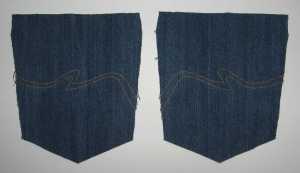
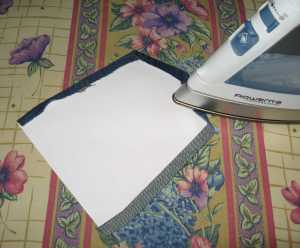
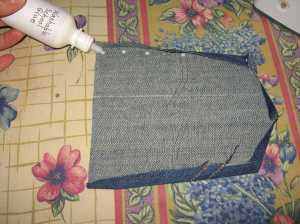
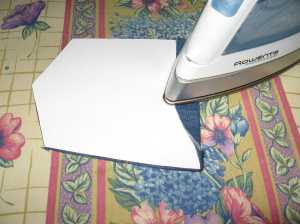
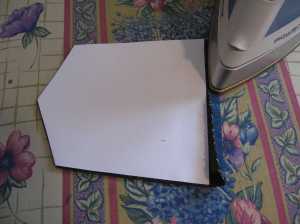
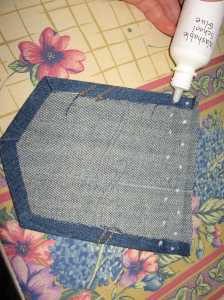
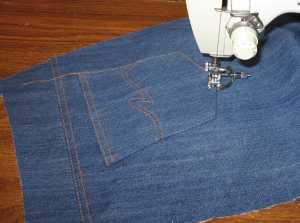
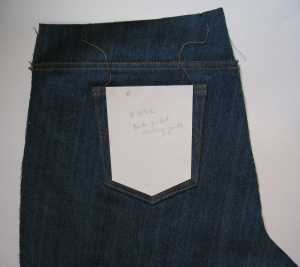
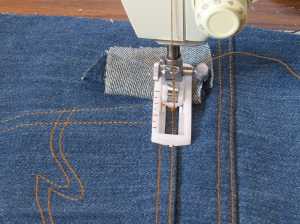
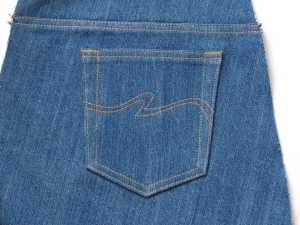
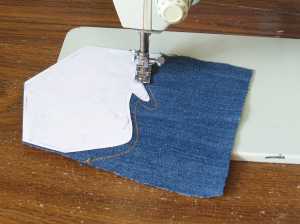
I like my pockets to be as perfect as I can get them, since your eye is always drawn to pockets. Here’s how I make the back pockets on my jeans.

If you like this pocket, you can use my pocket pattern.

Posted in Sewing

The Jeans That Killed My Sewing Machine

KillerJeansI had said before that you don’t need an industrial sewing machine to sew jeans. Well, that is only true up to a point. My Singer Fashion Mate 252 did fine on 12 ounce denim and just barely made it through 13.5 ounce denim as long as I hammered all of the bulky spots first and used double topstitched seams rather than flat-felled seams.
But . . .

JeansUnderliningI had one last piece of denim in my stash I wanted to make into jeans. I’m not sure of the fabric weight, but I think it is 12 oz or less. It’s non-stretch denim, and it’s loosely woven, so I was worried about the jeans stretching out too much as I wore them. I decided to underline the jeans with an especially horrendous piece of quilting cotton from my stash (no, I didn’t buy that fabric- it was given to me as part of a bin of fabric from an estate sale). I didn’t give any thought to how my sewing machine would handle the extra layers of fabric. (The jeans ended up uncomfortably tight, so this was an all-around bad idea.)

Everything was going OK until I was topstitching the inseam and got to the thick spot at the crotch where the seams come together. Then clunk, I heard the sewing machine needle hit metal. I thought maybe I’d bent the needle, but no, it was straight. I cut the thread, removed the fabric, and checked out what was going on. The needle was hitting the shuttle race every time it went down. I thought, oops, I must have thrown out my timing on the thick fabric – no big deal, I can fix that.

BrokenPlasticGearAs I was looking at the bottom of the machine and turning the hand wheel, suddenly the wheel started turning way too easily, and I realized something was broken. It turned out to be a broken plastic gear up in the top, and I think the machine would have to be mostly disassembled to replace it. Everything else important is made of metal, but they just had to put in a plastic gear in an inaccessible location.

This sewing machine had been making some screechy noises for a while, so I think it was already on its way to breaking, and the jeans were just the last straw. So, that was the end of that machine 😥

I tried finishing my jeans on my Janome Magnolia 7306. It really doesn’t like thick fabric, wouldn’t make even stitches, and I was afraid I would break this sewing machine, too. I really don’t like sewing on this machine anyway. I am so spoiled from sewing on my treadle-mounted machine I don’t want to sew on anything else – the stitches are even, and it is so easy to control the speed with the treadle. My Singer 252 is an entry-level sewing machine from the early 1970’s, but it sews so much better than my six year old entry-level Janome.

I had a spare Singer 252 for parts, but the tension assembly screw was bent on that one. I pulled it out of storage and managed to straighten the tension assembly enough that it works. Whew. I’m so glad I was able to fix it! After only a few hours without my favorite sewing machine, I realized that a lot of the joy I get from sewing is from using that particular machine.

WalkingFootSewingMachineI have a semi-industrial portable walking foot machine that I really should have been sewing these jeans with rather than risking my other machines. I found this machine on Craigslist, and just had to buy it after thinking about all of the times I’ve had trouble sewing through thick fabric. It is hard to sew in a straight line on this machine, the stitches don’t stay an even length, and I can’t use a top-stitching foot with it, so I’d rather not use it if I don’t have to. It will sew through just about anything, though. Well, now I’ve realized how fragile my other machines are, so no more risking them. If I have wobbly top-stitching on my jeans from sewing them on the walking foot machine, so be it. Chances are non-sewers will not notice the imperfections unless I point them out. Heck, they probably won’t even notice that my jeans are home-made.

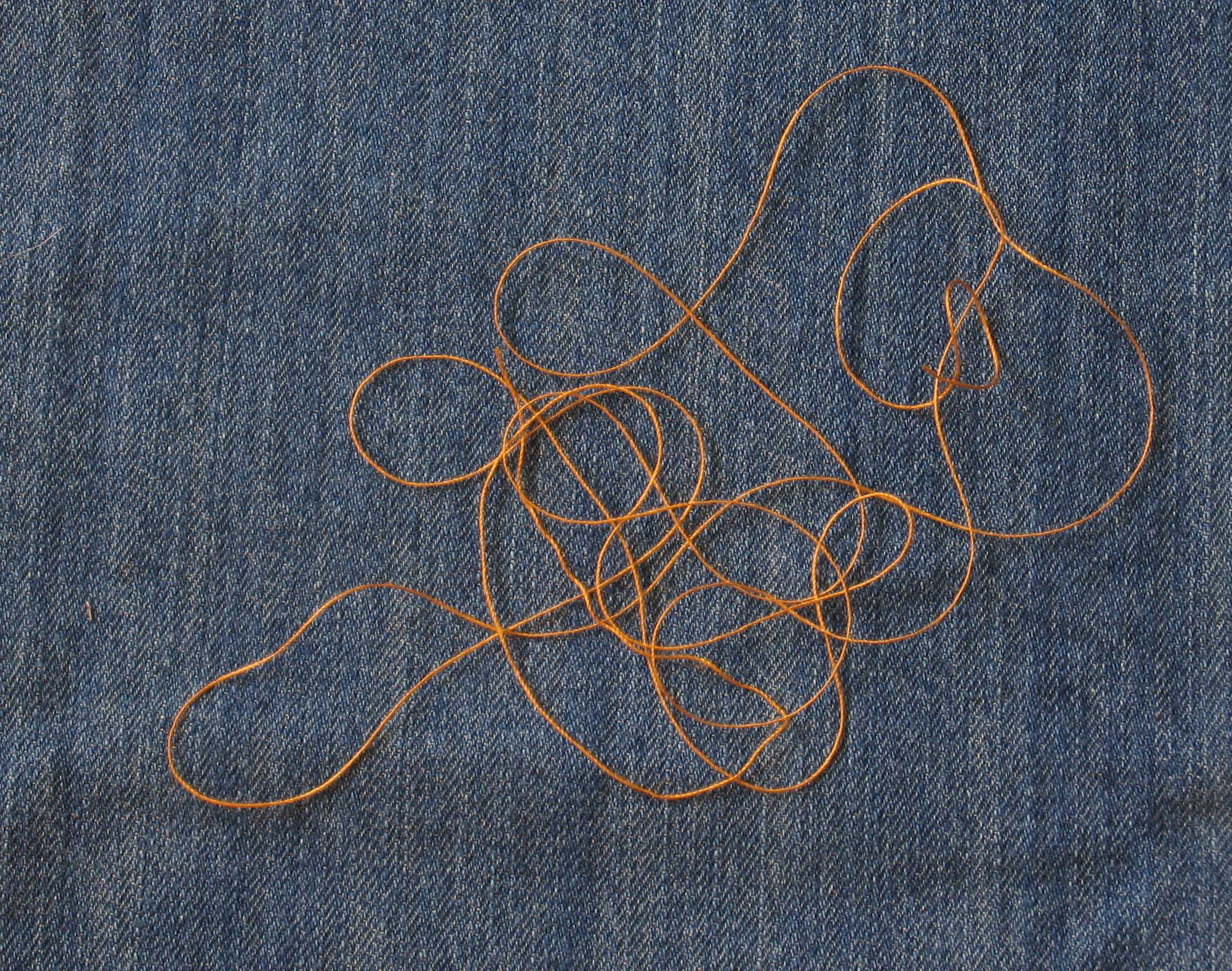
On a good note, I only had a 60 yard spool of topstitching thread for these jeans, and I was carefully conserving it, hoping I would have enough. I just made it with 2 yards to spare!2yardsThread

Posted in Sewing, Vintage Sewing Machines

Jeans for Me!

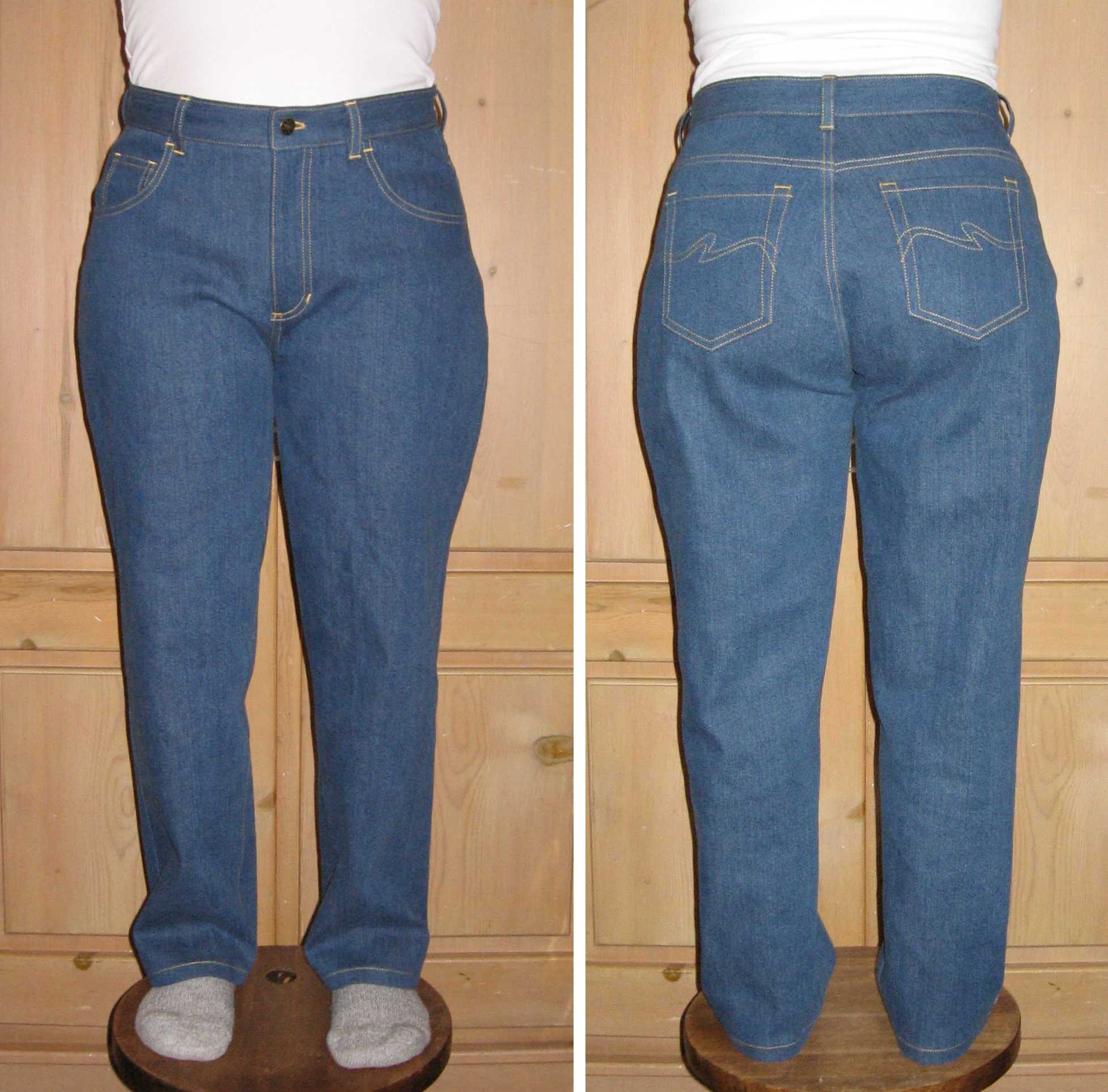
I’ve had denim sitting in my stash for years waiting to be made into jeans, but I kept putting off making them because I didn’t know how to get the fit right. I finally did it. It took making four muslins, but I perfected my jeans pattern enough that I was willing to sew it up in denim.

I’ve had such bad experiences with the fit from commercial patterns, I wasn’t willing to use one. So instead I started with a rub-off pattern from my best fitting pair of old jeans. I altered the pattern to add some length to the back crotch seam, and I got the length right, but I couldn’t quite get the shape right.

After three muslins, I was about to give up and say my figure just isn’t suited to jeans, but I decided to give it one more try. I have a custom pants form I made from a plaster mold last year, and I draped a completely new jeans back pattern on it. I was surprised at how straight the back crotch curve is. I sewed up one more muslin, and finally, the jeans felt right.

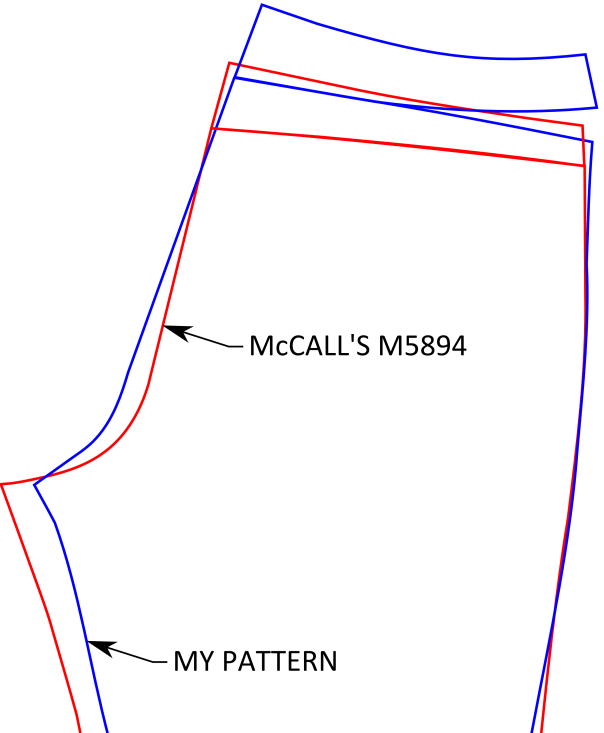
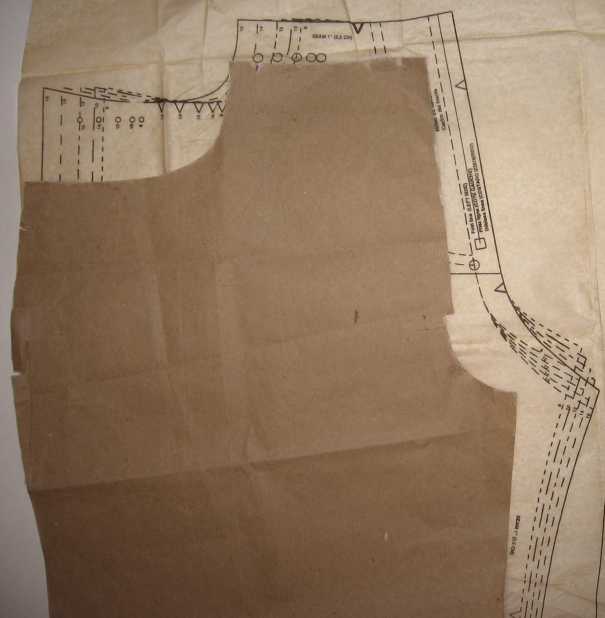
I compared my pattern to McCall’s M5894, a classic fit jeans pattern I have, hoping I could get some clues about how to alter commercial patterns in the future. Maybe these comparisons will give someone else with a similar figure some fitting hints. My pants front pattern was not altered from the ready-to-wear pair I copied. Look how different the McCall’s front crotch curve is (the solid line corresponds to my size). If you look at the pictures of the models wearing these jeans, you can tell there’s some weird bagginess in the front crotch area. I’m thankful I did not use this pattern – I would have had even more fit issues.

And look, no mono-butt! At first I wasn’t too concerned when I noticed that style had become popular. I thought it was just a fad and would be gone in a few years. But now all pants seem to be cut tight under the bum, and I realized how uncomfortable they are, since the tightness on the lower butt cheeks makes the pants pull themselves down every time you move. Also, there is no extra fabric down there to allow you to sit without pulling down the back waist a little too far. This style has lasted so long, there is an entire generation that thinks it’s normal to be constantly tugging up your jeans. Thankfully, I have a jeans pattern for myself now, and I no longer have to be subjected to the discomfort of mono-butt jeans.

016D jeans front and back

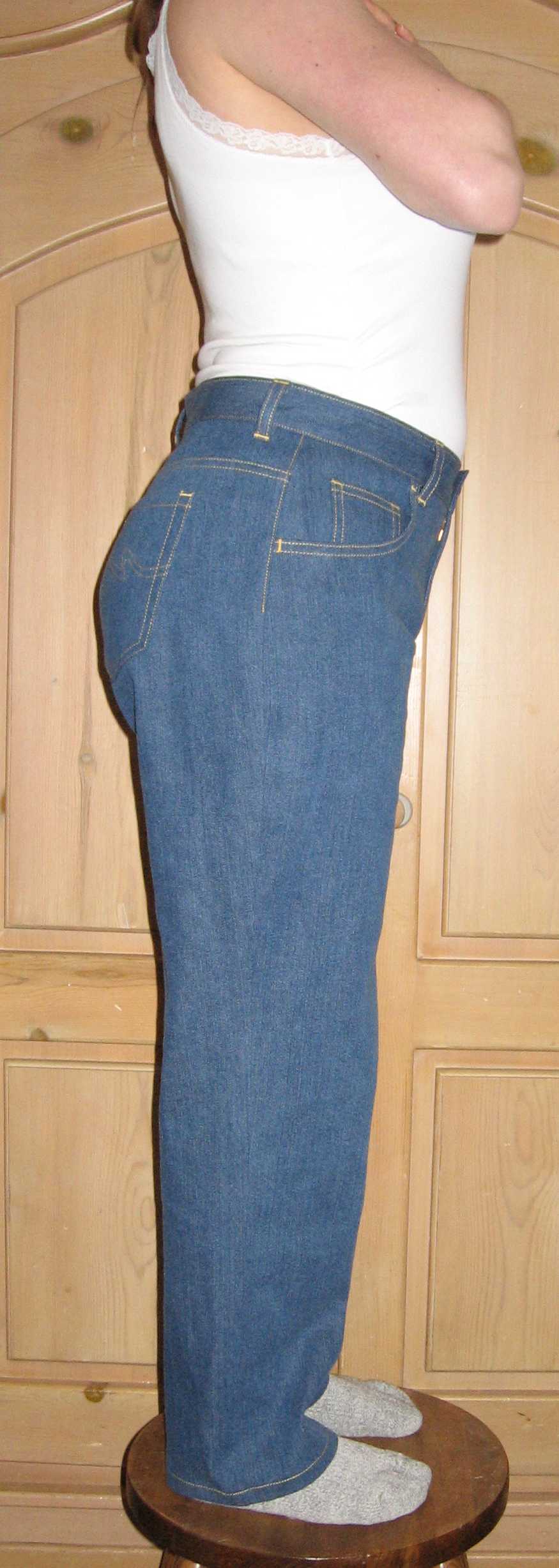
016D jeans side view

The Amazon product links in this post are affiliate links. If you click on these links and purchase something, I will earn a small commission.

I wasn’t trying for completely wrinkle-free pants like those modeled in Pants for Real People – comfort was my primary concern. I’m not sure it’s possible to get the back wrinkle-free for my body shape anyway – I have a lot of curves back there!

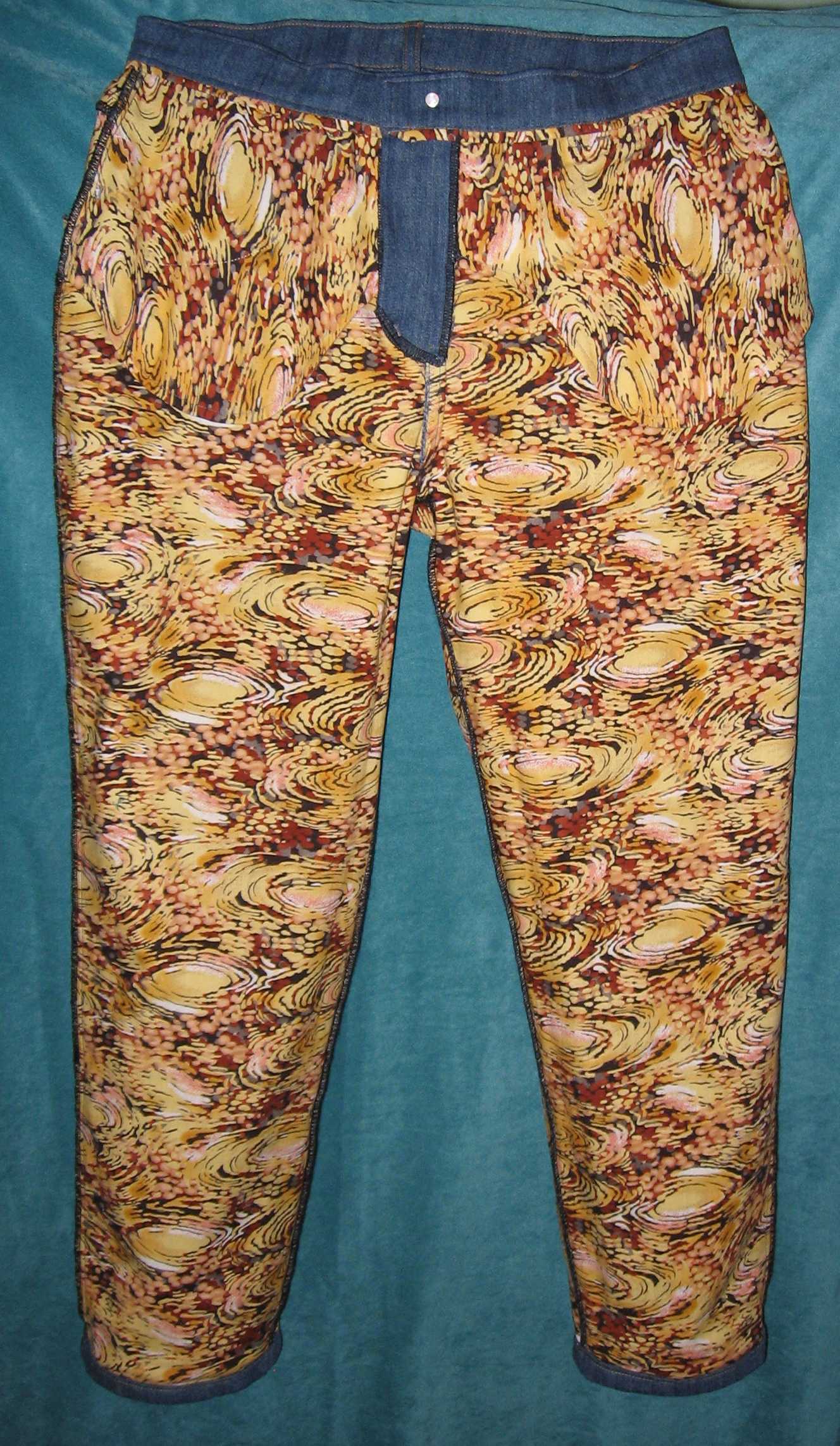
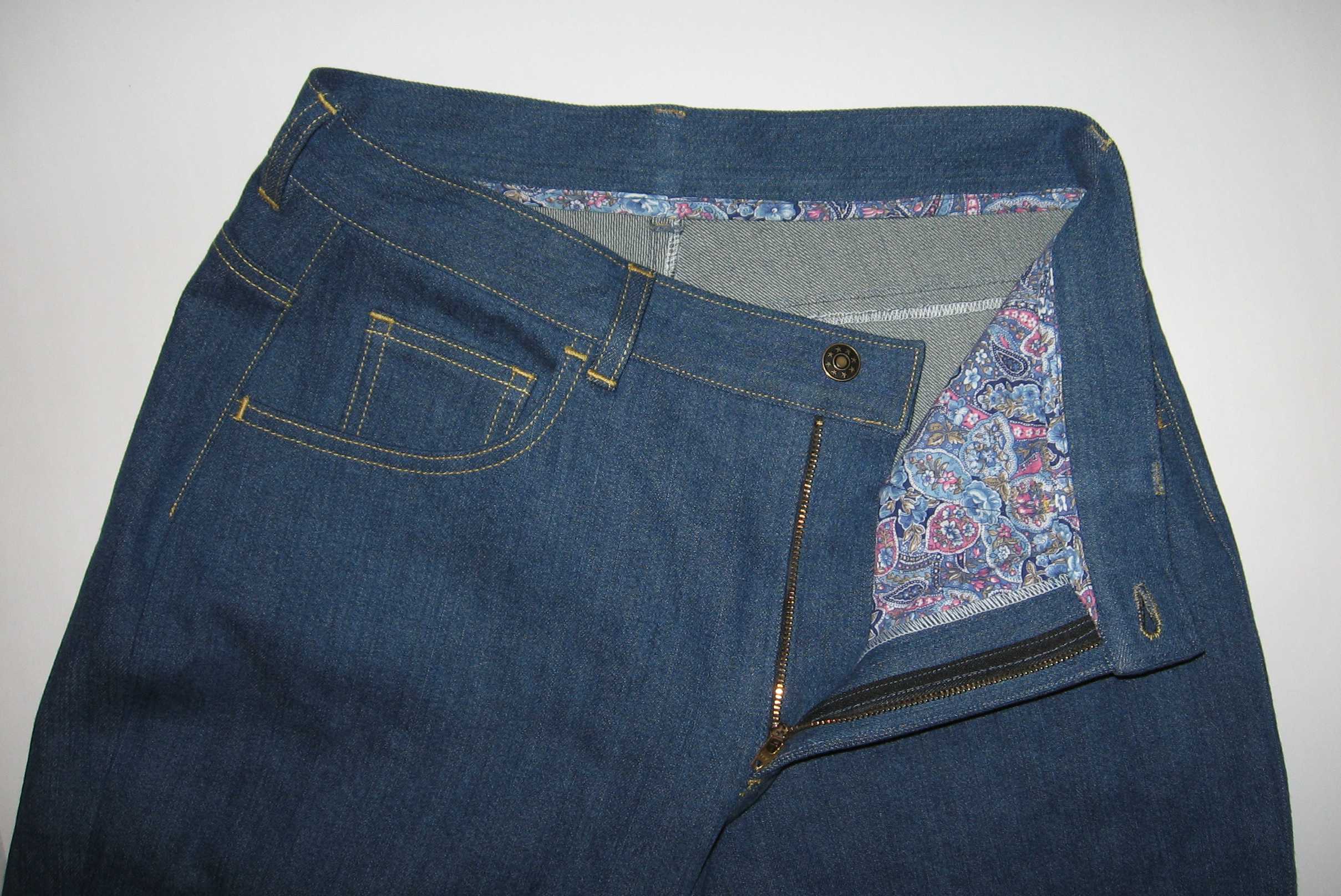
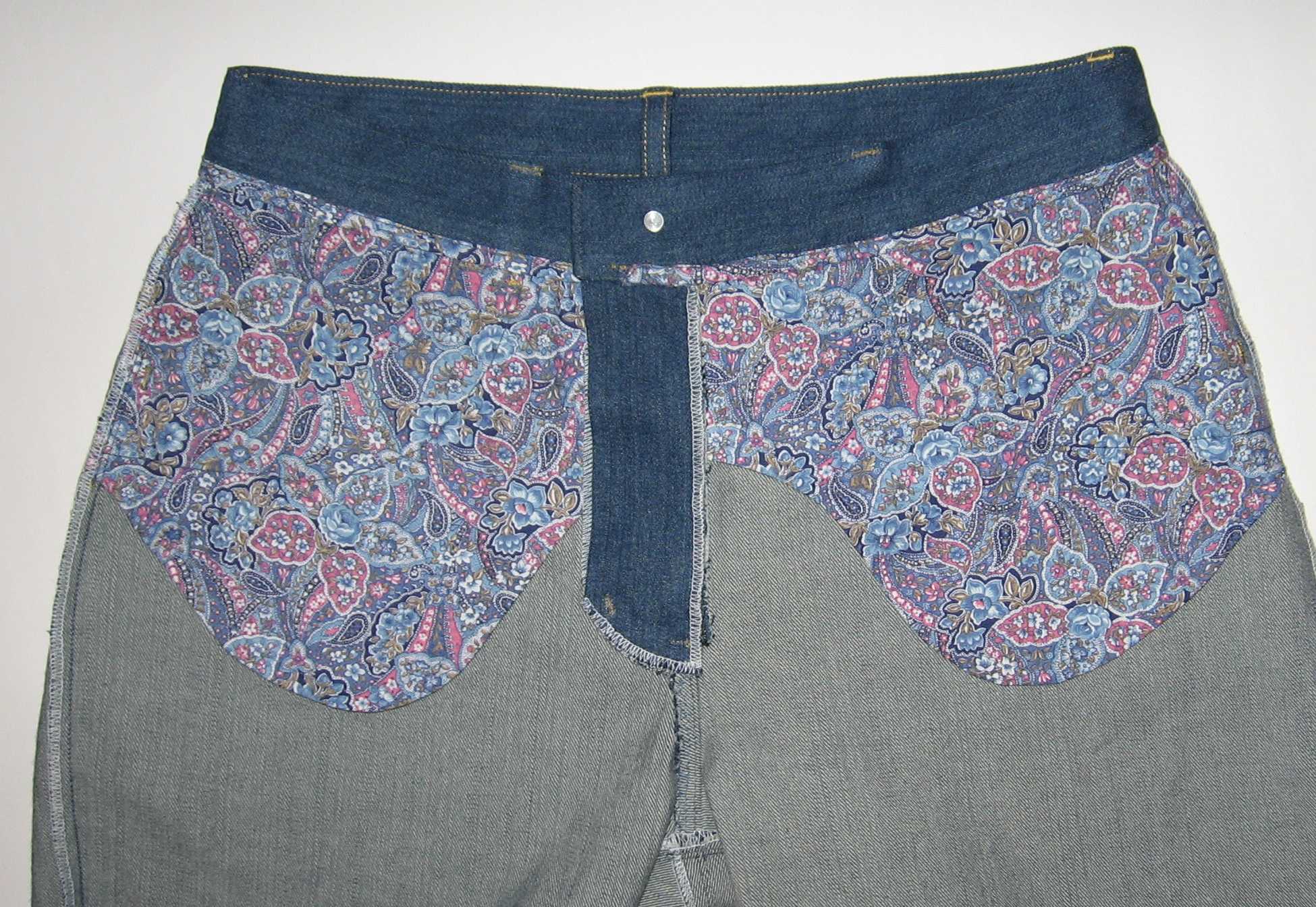
After all the pairs of jeans I sewed for my kids, and the wearable muslins I made, I got pretty good at topstitching. And aren’t my inner pockets pretty?

016D jeans fly

016D pretty jeans pockets

P.S. I uploaded my back pocket pattern, if you want to use that swoosh I have on them.

Posted in Patternmaking, Sewing

Leopard Print Self-Drafted Pajamas

For the longest time, I’ve been avoiding buying clothing, because “I’m going to sew myself some clothes that fit”. Occasionally, I’ll run out of things to wear, because I still haven’t sewn any, and I’ll break down and buy some clothes from a thrift store, since it’s a lot less painful to spend only a little money on ill-fitting clothes I hate to wear than buy them new.

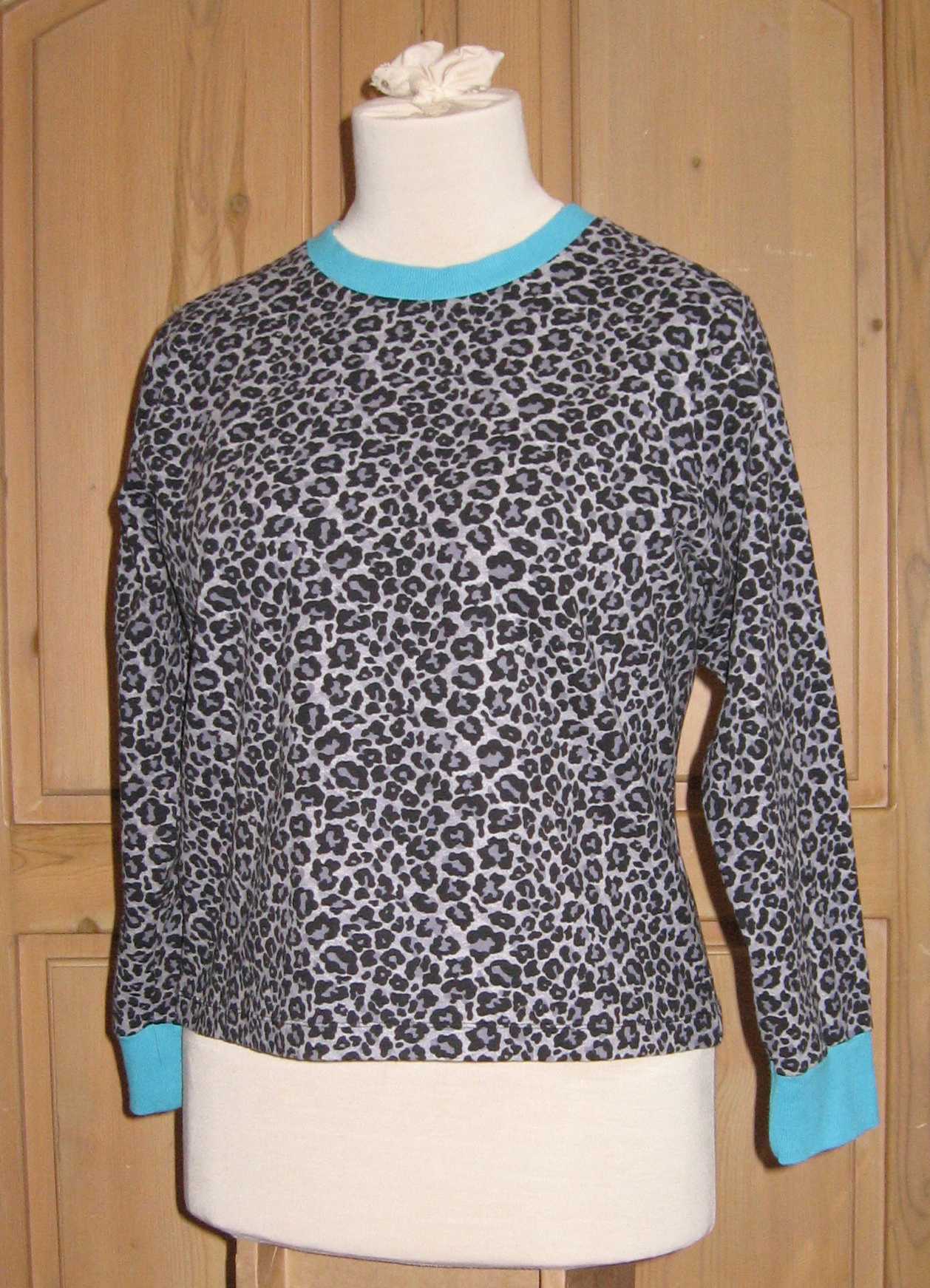
My old pajamas are completely worn out. Seriously, there’s not even enough of them left to make decent rags. But guess what? I finally sewed some new winter pajamas! I used four way stretch leopard print cotton knit. I made three tops and two bottoms, and used up a huge piece of fabric that was taking up room in my stash. Well, almost used it up. There are some good sized scraps I might be able to use – I can’t quite part with those 😉

To draft the pajama pattern, the first thing I tried was copying my best fitting T-shirt to see if I could use it as the base for my pajama top. I made a rub-off pattern from the T-shirt, and it turns out the shirt really doesn’t fit as well as I thought. My version is too tight under my arms, and it is obvious the shoulder slope is too square. Also, the chest is a little snugger than I like. The original fabric stretches and drapes nicely, hiding the fit issues. I guess I at least have a new T-shirt to layer over, if nothing else.

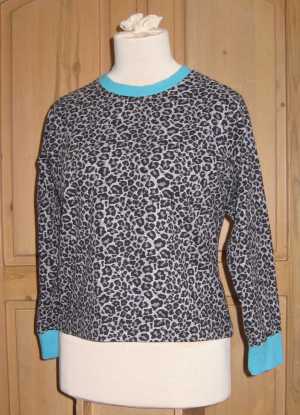
Leopard print pajama topSo I went back to the drawing board. First I tried draping a shirt pattern. After about five minutes I lost patience with that and I pulled out my patternmaking textbooks. They don’t have a whole lot on knits, and none of the drafts were exactly what I wanted, but they did give me some ideas. I pulled out my torso block pattern and rotated the upper bust dart to the armhole where I left it unstitched as ease. I rotated the back shoulder dart to the armhole and left it as ease as well, then smoothed out the armhole shapes.

I looked at some other long sleeve T-shirts to get an idea of the neckline shape, ease around the chest, length, and sleeve cap height that I wanted. I drafted sleeves to fit the armholes, and added seam allowances. I sewed it up, and it was almost perfect. The only change I made was to shorten the sleeves a little.

Drafting from slopers seems like magic to me after all the fitting woes I’ve had. I don’t even really feel like I know what I’m doing, but it works anyway and the fit is perfect.

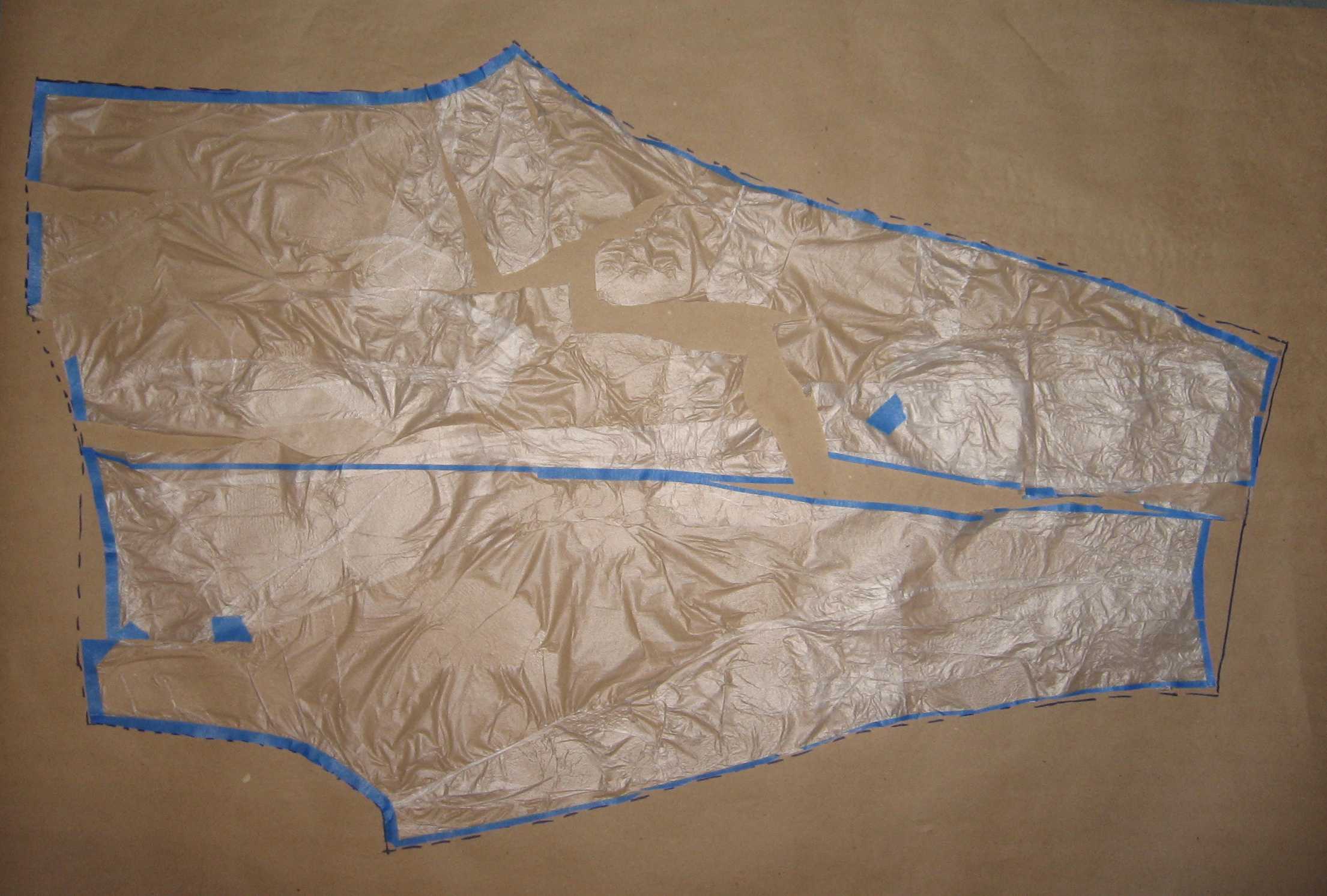
I also made pajama pants to go with the tops. I wanted them to be loose fitting leggings, with zero ease at the hips. Pants drafts based on measurements don’t work for me at all, since they all make assumptions about how much your butt sticks out based on your hip measurement, and I have relatively narrow hips and a round butt, which makes a big difference in how pants fit. I decided I needed to drape a pattern. I basically used the “plastic wrap patternmaking” method.  I stuck Glad Press’n Seal on my body and reinforced it with tape, with seams at the inseam, similar to this tights tutorial. I cut it at the inseam, clipped and spread it here and there so it would lie flat, and traced around it. Leggings PressnSeal Pattern
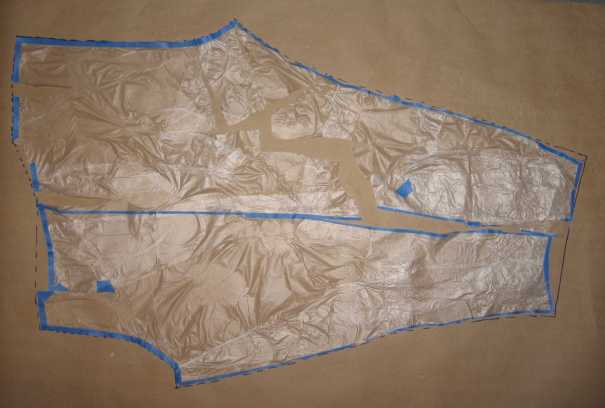
When I sewed up the leggings I realized I needed to take some out of the center back seam from waist to hip, since I’d spread the pattern too much there, but that was easily pinned out in fabric. Here’s what the final pattern looks like:Leggings Final Pattern
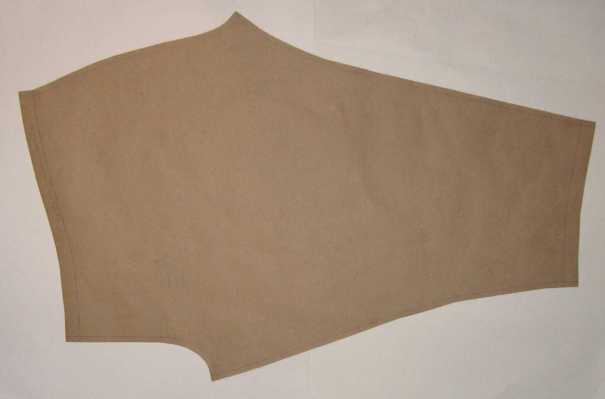
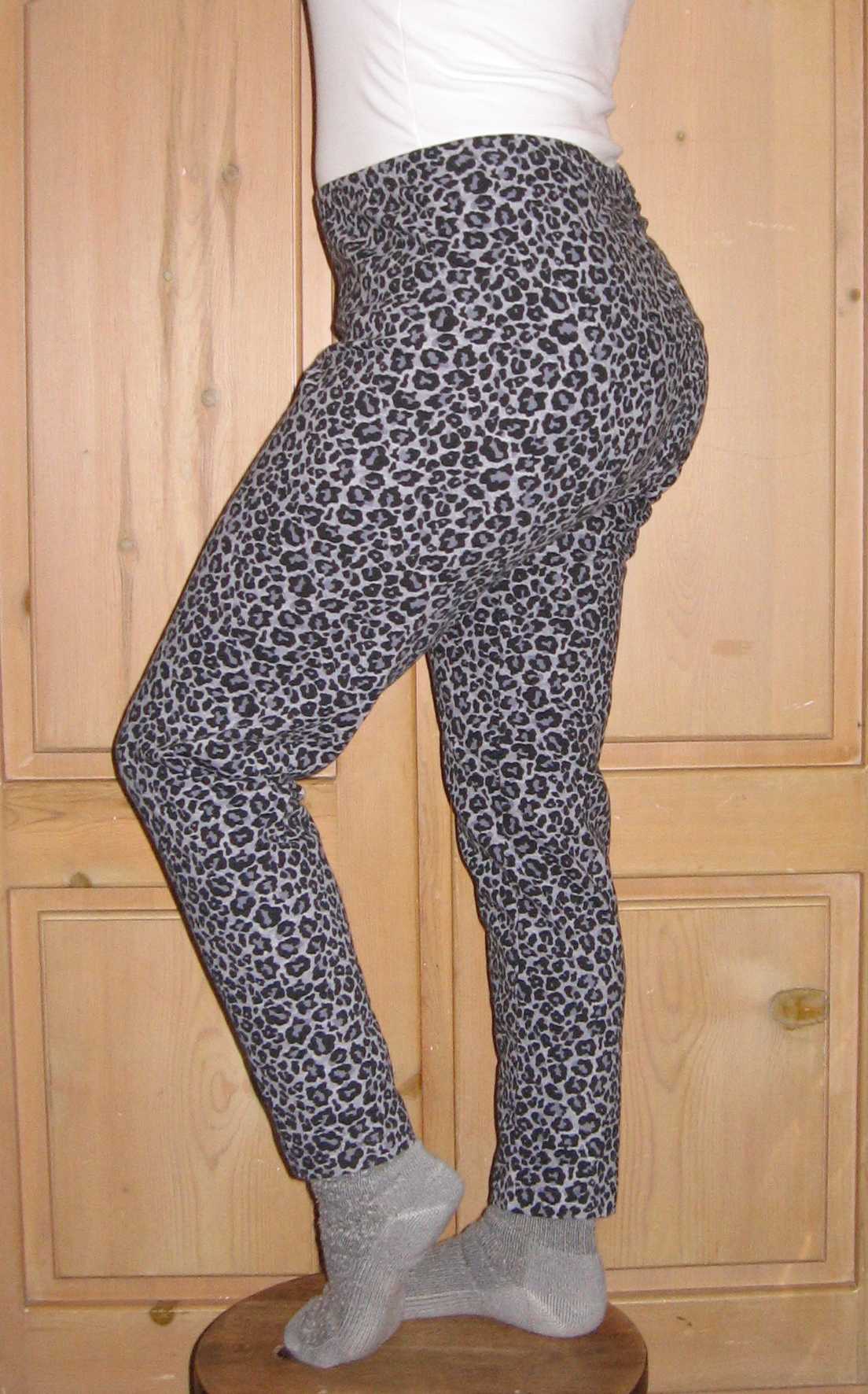
These are sooo warm and comfy. I don’t like being squeezed by tight clothing while I sleep, but neither do I like loose pant legs to get tangled up in, so these are perfect.Leopard print pajama pants
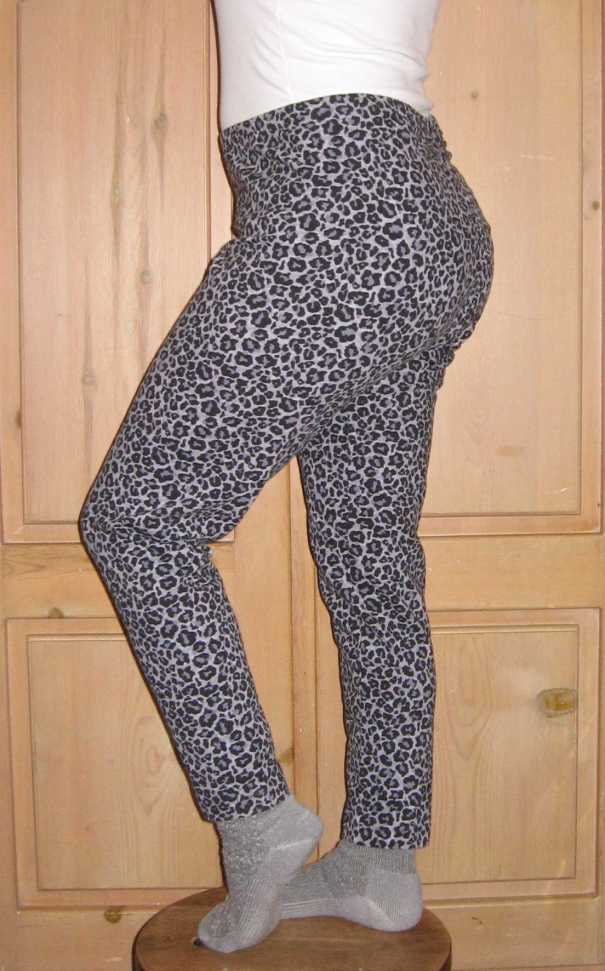
I actually hadn’t planned on sewing animal print this month, but since it’s Jungle January, that worked out pretty well. It’s a good thing I can’t see my pajamas while I’m sleeping, since the print is so loud it just might keep me awake!

I’ve made a list of the things I want to sew and next on my list is jeans for me. I’m not sure I’m ready for that, though, because I still seem to be burned-out on sewing jeans after the nine pairs in a row I sewed last fall (mostly for my kids). Maybe I’m ready. I might try draping a pattern, because for the life of me, I can’t get the back thigh and crotch area to fit right, and I hate sewing up one muslin after another, only to discover my latest alteration actually made things worse.
Posted in Sewing

My First Tried and True Pattern!

Looking back over what I sewed in 2014, I counted 26 items for other family members and 2 for me. The 2 for me are actually just wearable muslins for my jeans that I sewed up in gray canvas (which I’m wearing in the pictures below), since I’m still not happy enough with the fit to make them in denim. I also spent a lot of time last year working on half-scale dress forms and patterns. Actually, when I started designing the paper half-scale dress form, it was because I was procrastinating on making jeans for myself, because I knew I’d have lots of trouble fitting them. I’ve decided 2015 is going to be the year I sew myself a new wardrobe.

I’ve been purposely not buying any clothes for myself, hoping that not having anything decent to wear will motivate me to do the hard work of designing some clothes that fit me. I actually have plenty of clothes; I just don’t wear most of them because they are uncomfortable due to poor fit. It wasn’t until my ready-to-wear jeans were completely disintegrating to the point of being indecent to wear in public that I was brave enough to try to sew some jeans, so I guess it’s working.

I have bodice and skirt slopers I made for myself, but I was too chicken to do anything with them for a long time. My fitting shell has just been collecting dust on my dress form. Designing half scale basic blocks and dresses finally gave me the confidence and knowledge to start designing my own clothes.

The Amazon product links in this post are affiliate links. If you click on these links and purchase something, I will earn a small commission.

Torso_block_patternThe first step I took toward designing my own clothes was to make a torso block from my bodice and skirt blocks. Making a torso block for a real person is not as easy as it is in the patternmaking books. Well, unless you happen to be shaped like a dress form. I used a combination of a couple of different methods (from Armstrong and Knowles) to make the torso block. I wasn’t able to get a close fitting torso block due to my extreme lower back curvature – I had to reduce the back waist dart so it hangs away from my body a bit at the back waist. Even with the looser fit there’s still a big dart back there. But I’m pretty happy with it. It’s not like I’ll usually want a blouse or dress to emphasize my sway back anyway.

Before I got too far into designing my own patterns I decided to do a reality check and sew up a commercial pattern. I wanted to make sure I hadn’t given up too easily on altering commercial patterns. I’ve never been able to alter a commercial pattern to get a good fit – I just have too many fitting issues, and not enough fitting skill and patience. (But somehow I’ve had the ability and patience to teach myself patternmaking. Go figure.)

I decided on the Colette Sorbetto tank top for a test, since it is about as simple as you can get, and Collette designs for a C cup, which is what I measure for. I printed out and traced my size from the Sorbetto pattern. Then I lined up my torso blocks over it, rotated the front upper bust dart, and traced my patterns for comparison.

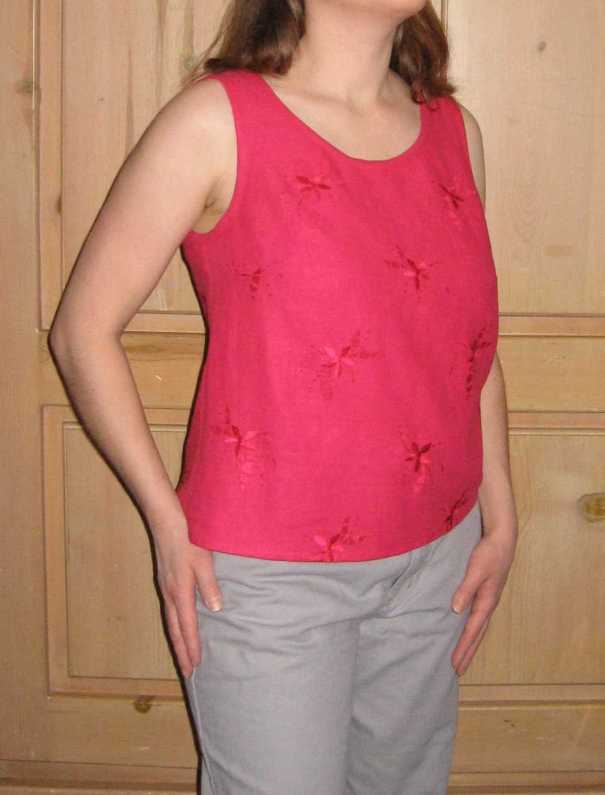
The only significant changes I made to the back pattern were to increase the armhole depth* and increase the width a little at the waist and hip. On the front, the bust dart on my torso block was over twice as wide as the dart on the Sorbetto pattern. I still cannot explain that, since I thought Colette patterns were drafted for a C cup, so theoretically I shouldn’t need to do a full bust adjustment. My final front pattern has a wider waist, a much bigger dart, and a different curve at the armhole. The neckline and shoulder strap position fit well without changes – my bra strap sits right in the middle of the tank top straps. I removed the box pleat down the front, but that doesn’t affect the fit since the pleat is stitched down at center front.

There is no way I would have been able to figure out how to make even this simple tank top fit so well without comparing it to my torso block, so I’ve convinced myself I made the right choice when I decided to design my own patterns rather than alter them. I did like the approach of comparing my sloper to a commercial pattern, though. The fit was really good after the changes I made on paper – when I made a muslin, the only change I had to make was lowering the dart a little more. I’m not sure how well this approach would work for a more complex pattern, however. I may try looking at commercial patterns for neckline shapes, amount of ease, etc. and designing similar patterns from my slopers.

*If you do a Google image search for Colette Sorbetto, you will see lots of people with wrinkles pointing to their underarms, so I think most people will want to lower the armhole on this pattern.

Posted in Patternmaking

KAM Snap Pliers Adapter

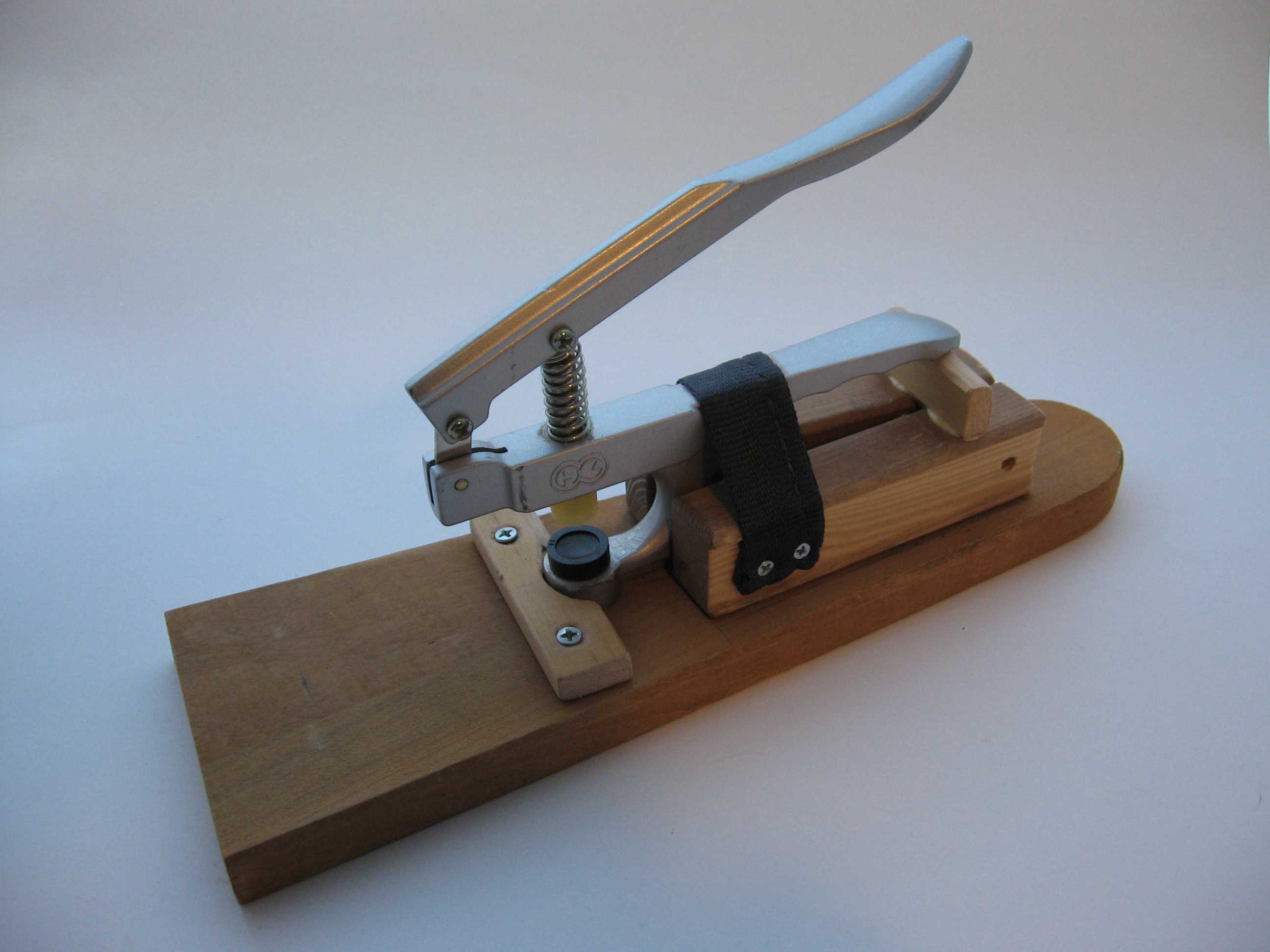
A while ago I got all excited about KAM Snaps and bought a bunch of them (quite possibly a lifetime supply) along with the pliers to install them. I have problems with tendonitis, and it turns out that using these pliers is really painful for me, even for just a few snaps. Since it doesn’t make sense for me to buy an expensive snap press for home use, I adapted the pliers to be used like a press. I cut up some scrap pieces of wood, then wedged in and strapped the pliers down onto a base. It’s not pretty, but it works really well. I just have to press down on the handle, which is a lot less effort than squeezing pliers.
KAM Snaps Pliers Holder/Adapter

KAM Snaps Pliers Holder/Adapter

Update: Here are some more details about making the pliers holder. Also KAMsnaps.com now has a base stand for snap pliers available for sale if you would prefer to buy one.

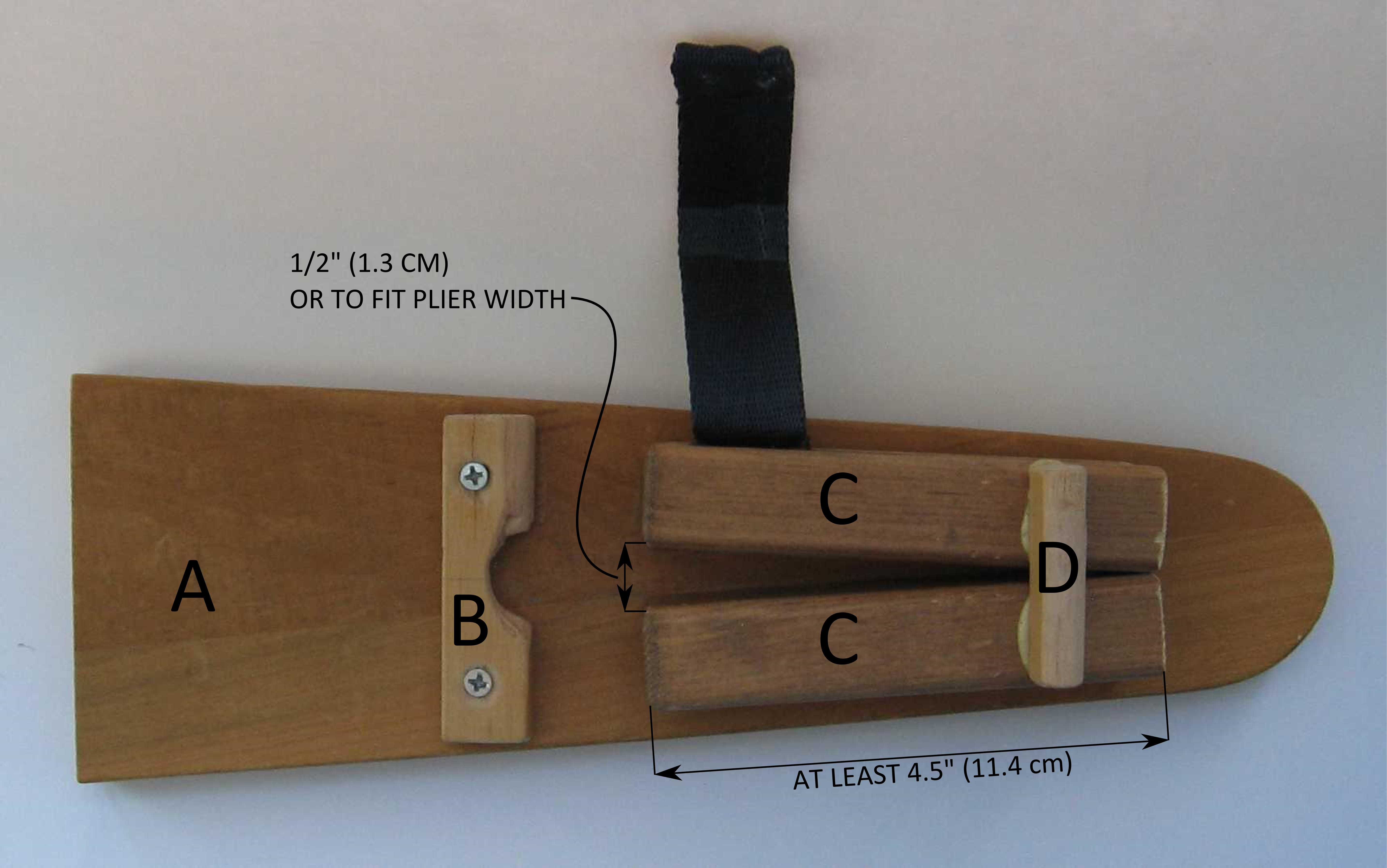
None of the pieces of wood need to be an exact size. They are arranged to fit the pliers. I don’t know if there are different versions of the pliers with different dimensions than mine, so be sure to test fit all of the pieces with your pliers before screwing or gluing anything together. Start with a rectangular wood base (piece A in the picture below) at least 3″ (8 cm) wide by at least 10″ (25 cm) long. The larger you make your base, the more stable it will be. The only reason my base is that shape is because I used a scrap of wood from an old mini ironing board.

For the pieces labeled C, cut two pieces of wood 4 1/2″ (11.4 cm) or a little longer. They should be at least an inch wide (but can be as wide as you want) and between 1″ (2.5 cm) and 1 1/2″ (3.8 cm) in height. Arrange them as shown with a gap at one end to fit the base of the pliers.  To help get an exact placement, glue them in place, and then when the glue is dry screw them in place from the bottom.

Kamsnap pliers holder parts labeled

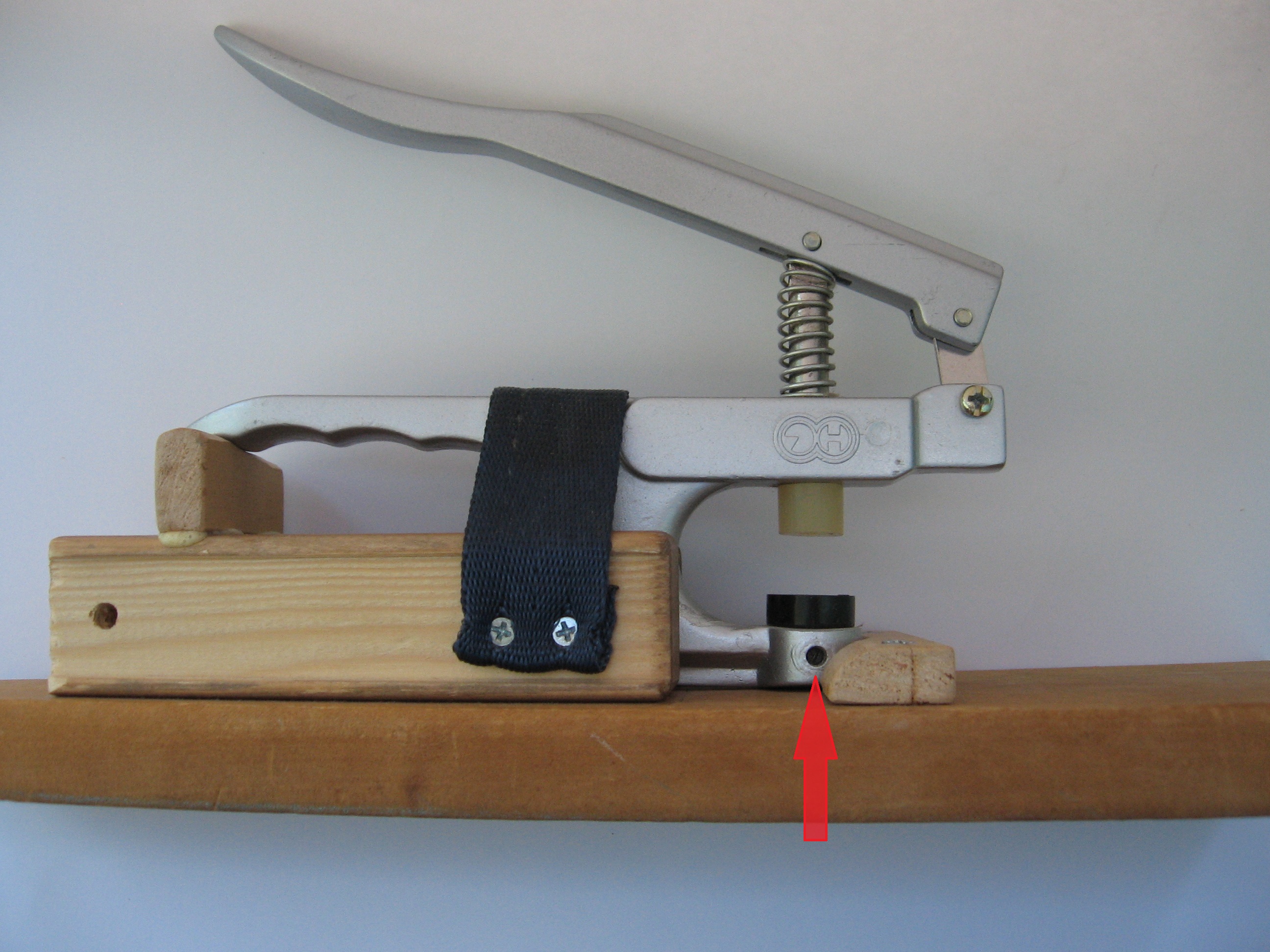
Now put the pliers in place and jam them in tightly between the two pieces of wood labeled C so you can determine the location of piece B. Piece B should be no taller than 5/8″ (1.5 cm), but the other dimensions can be whatever you want. I don’t think that semi-circular groove I cut is actually necessary to hold the pliers in place. It was a pain to cut, so I’d recommend trying a rectangular piece of wood to see if it keeps your pliers stable enough before going to the trouble of cutting that half-circle out. The purpose of piece B is just to keep the pliers from sliding forward. Once you have it positioned correctly, screw it down. If you do decide to cut piece B into the shape I used, be sure you are not blocking access to the screw that holds in the die:

Kamsnap pliers holder screw

Piece D needs to be cut to fit under the handle of the pliers. Glue it in place. Mine kept coming off, so I finally used Gorilla Glue (polyurethane glue), and it hasn’t moved since!

For the strap, I screwed on a piece of strap from an old car seat. If you want the pliers to be easily removable, you could make a strap out of Velcro with a D-ring on one end. Or you could make your strap so it snaps in place. 🙂

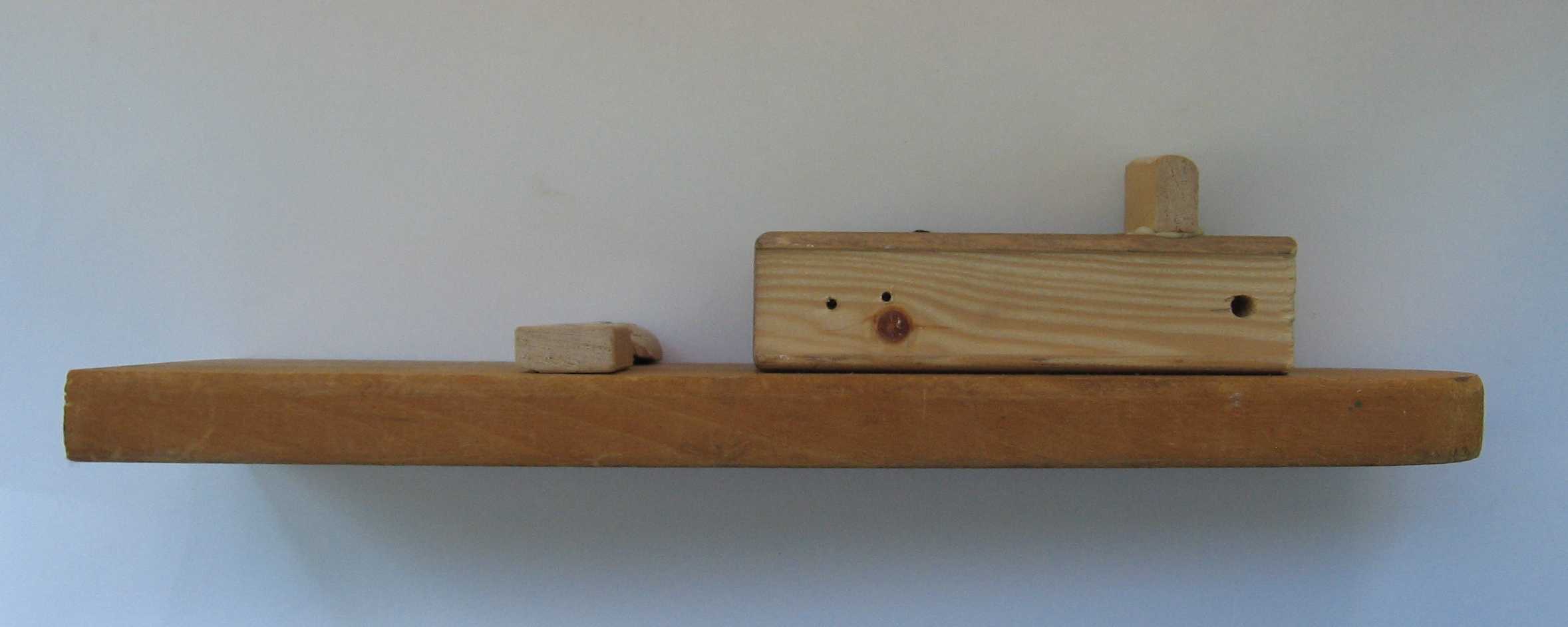
Here is a side view. The hole on the right side of piece C serves no purpose – it was already there in the scrap of wood I used.

Kamsnap pliers holder side view


Posted in Crafts, Sewing

A New Free Half-Scale Dress

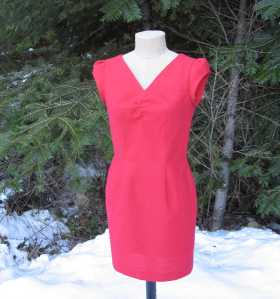
I added another free dress on Craftsy to fit my DIY paper mache or stuffed half-scale dress forms, just in time for the new year.

Posted in Half-Scale Patternmaking and Sewing, Patternmaking, Sewing

Favorite Sewing Tip of 2014

This last year, I’ve been working to improve my sewing, and I’ve learned a lot of new things. I taught myself to sew in the days before the internet, so I missed out on a lot of good tips, and I’m still catching up. However, my favorite sewing tip I discovered this year is something I actually came up with on my own.

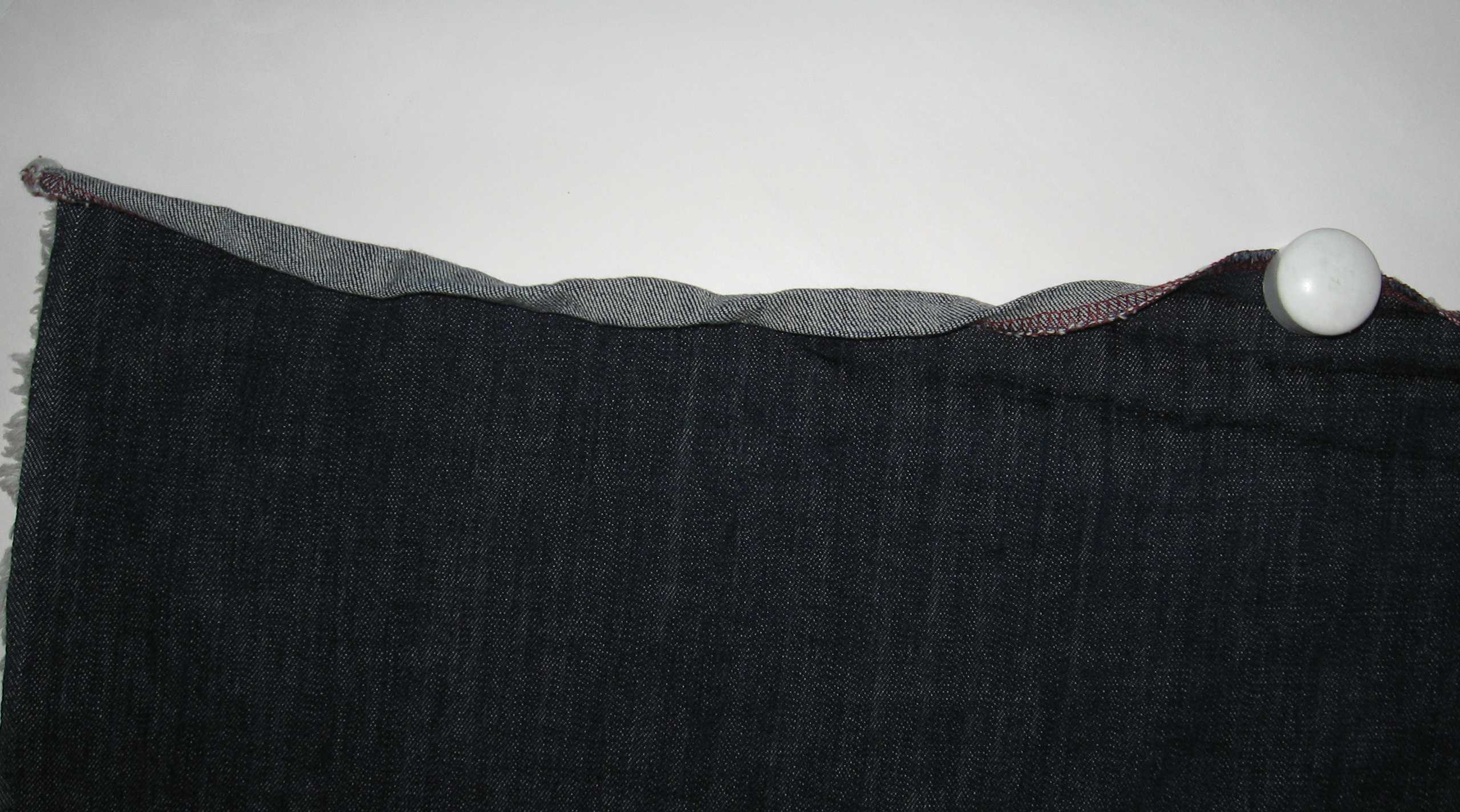
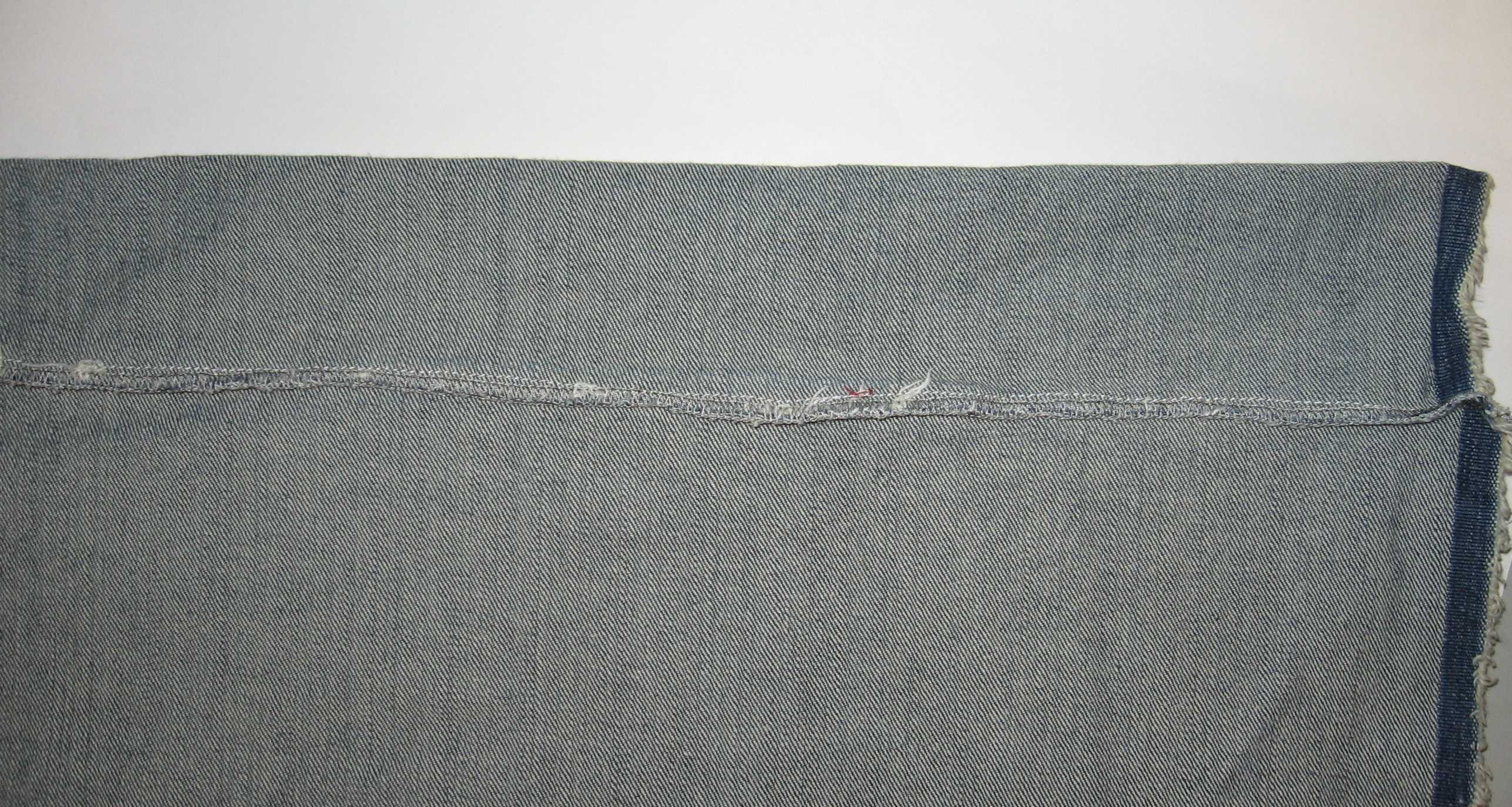
So here’s the tip: Before you pre-wash your fabric, sew or serge the cut ends together. It’s such a simple thing, but it makes a big difference. You will have a lot less problems with the fabric twisting in the washer and dryer, and reduced permanent creasing and fading in fabrics like denim.

sew fabric ends togetherI was sewing jeans when I came up with this idea. It kept bothering me that every time I washed new denim, the ends got creased, with fade marks on the creases, ruining the ends of the fabric. At first I thought about sewing scrap fabric onto the ends of the denim, since creasing and fading mostly happens at the ends of the fabric. Finally it occurred to me that I don’t have this problem with pant legs, where there are no cut ends, and the fabric is sewn into a tube. If I sew my fabric into a tube, there are no ends! So I tried it with some fabric, and it worked great. There were no ruined ends, and the fabric did not get twisted up in the washer and dryer. I was amazed at the difference.

Then I had to do an internet search to see if everyone else had already figured this out. I only found a few references to sewing the cut ends of your fabric together before washing, most notably a brief mention in this Craftsy blog post, so it’s definitely a tip that needs to be spread around some more.

Creased ends on denim that was washed without sewing the ends together.

Creased edge on denim that was washed without sewing the ends together. These creases don’t iron out.

Denim that had the ends sewn together before washing.

Denim that had the ends sewn together before washing.

Happy sewing in the new year!

Posted in Sewing

Cord Keepers

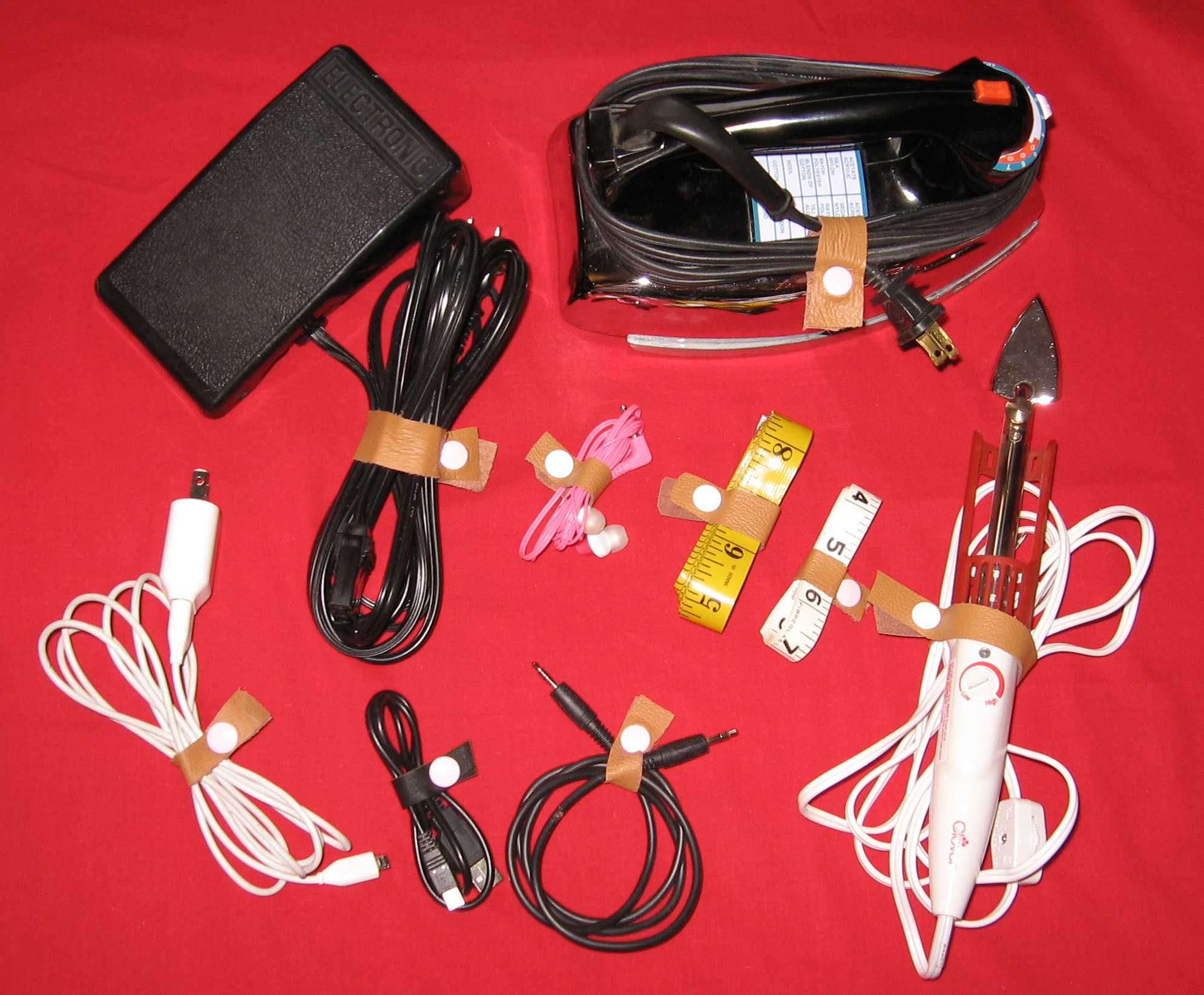
I was always losing or breaking the rubber bands or elastic scraps that I kept around my tape measure and sewing machine cords, so when I saw some leather cord keepers on Etsy, I was inspired to make my own. I’ve gone a little crazy making these. Every time I notice another cord that needs to be tamed, I’ll make another one, plus a few extra.

The cord keepers are fast and easy to make. Just cut a strip of leather and attach a snap at each end. I used KAM Snaps, since I have a lot of them, but metal hammer-on snaps would work just as well.

Leather_cord_keepers Leather_cord_keepers_detail

Posted in Crafts

Free Quarter Scale Sloper Patterns

I made quarter scale versions of a few of the half scale sloper/basic block patterns I developed to fit my paper and stuffed half scale dress forms. I’m putting the quarter scale patterns out there for free so you can print them to use for flat patternmaking practice. I’ve seen several other small scale pattern sets that have dart legs that don’t match, seams that are supposed to sew together that are different lengths, etc., which I find frustrating. This set has been tested: The seams have been walked and I’ve actually sewn up the half scale versions, so I know they fit together correctly. The quarter scale pattern set does not include seam allowances.

Quarter scale patterns include:

  • Two dart front and back bodice
  • Two dart front and back skirt
  • Darted sleeve
  • Dartless sleeve
  • Front and back torso with one double-ended dart

Click on the image below to download the pdf.

Quarter-scale_sloper_patterns_thumbnail

Posted in Half-Scale Patternmaking and Sewing, Patternmaking
Translate
Follow Grow Your Own Clothes on WordPress.com

Enter your email address to follow this blog and receive notifications of new posts by email.

Categories