New Serger and Some Sewing Projects

Juki MO 654DEI finally got a new serger! To everyone who purchased my half-scale dress form patterns, thank you! I wouldn’t have had a new serger in my budget otherwise. It’s been pretty fun having my sewing turning into a self-supporting hobby.

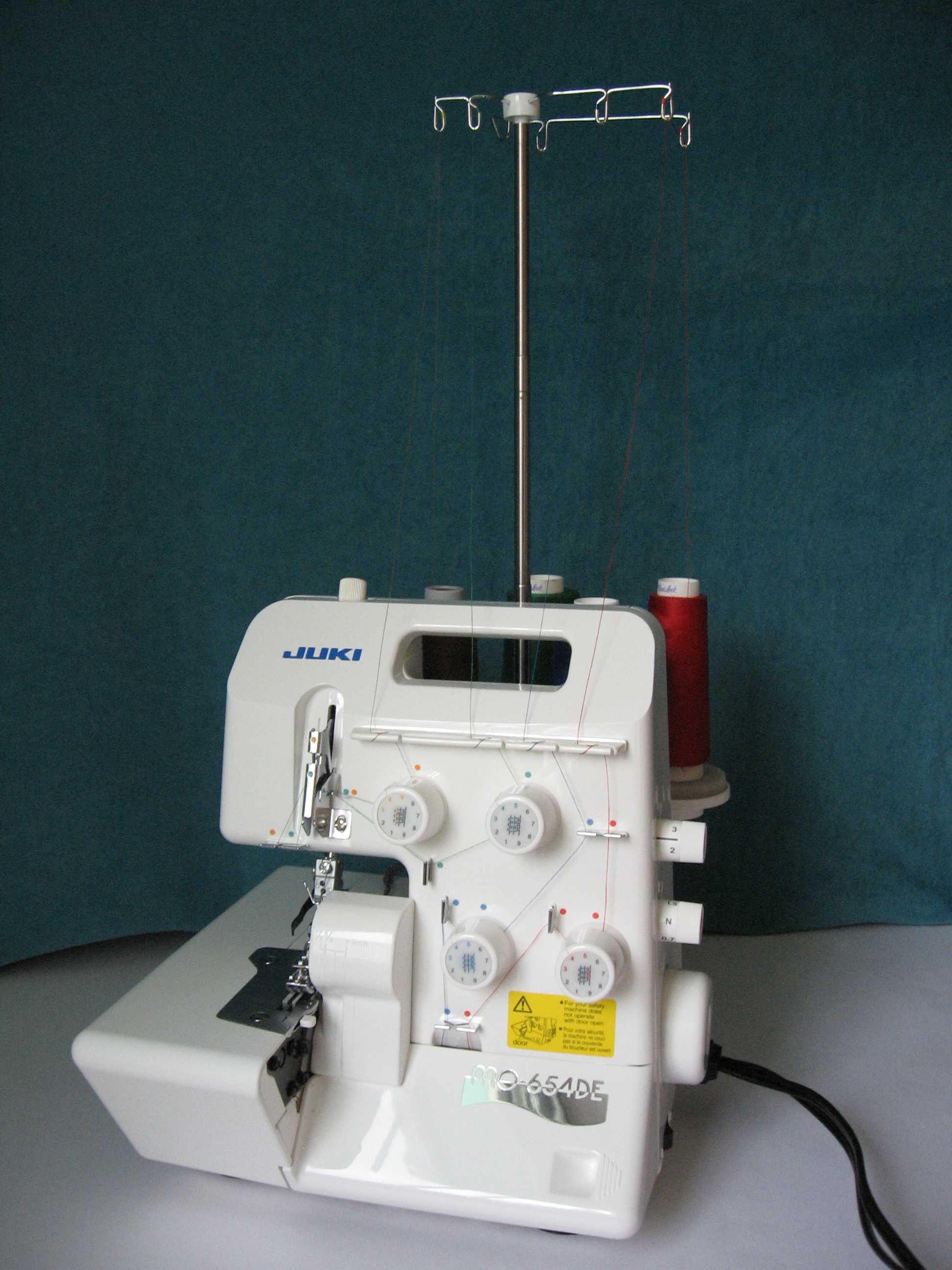
After much research, I decided to buy a Juki MO-654DE. I’ve only sewn one project on it, but so far I’m very happy with it. I plan to do a thorough review of it when I’ve used it for a while. If anyone has any questions, let me know so I can answer them in the review. I know I had a lot of questions before I bought it, since I don’t live anywhere near a Juki dealer and I couldn’t test it before buying.

I realized that four out of five of my last posts were about sewing machines. I have been going nuts acquiring sewing machines lately, but I think I’m done for a while! Except now that I’ve been sewing a lot of knit garments I really want a coverstitch machine . . . well, that one’s going to have to wait.

To prove that I’m not just a crazy sewing machine lady who does nothing but collect sewing machines, here are some of my recent sewing projects:

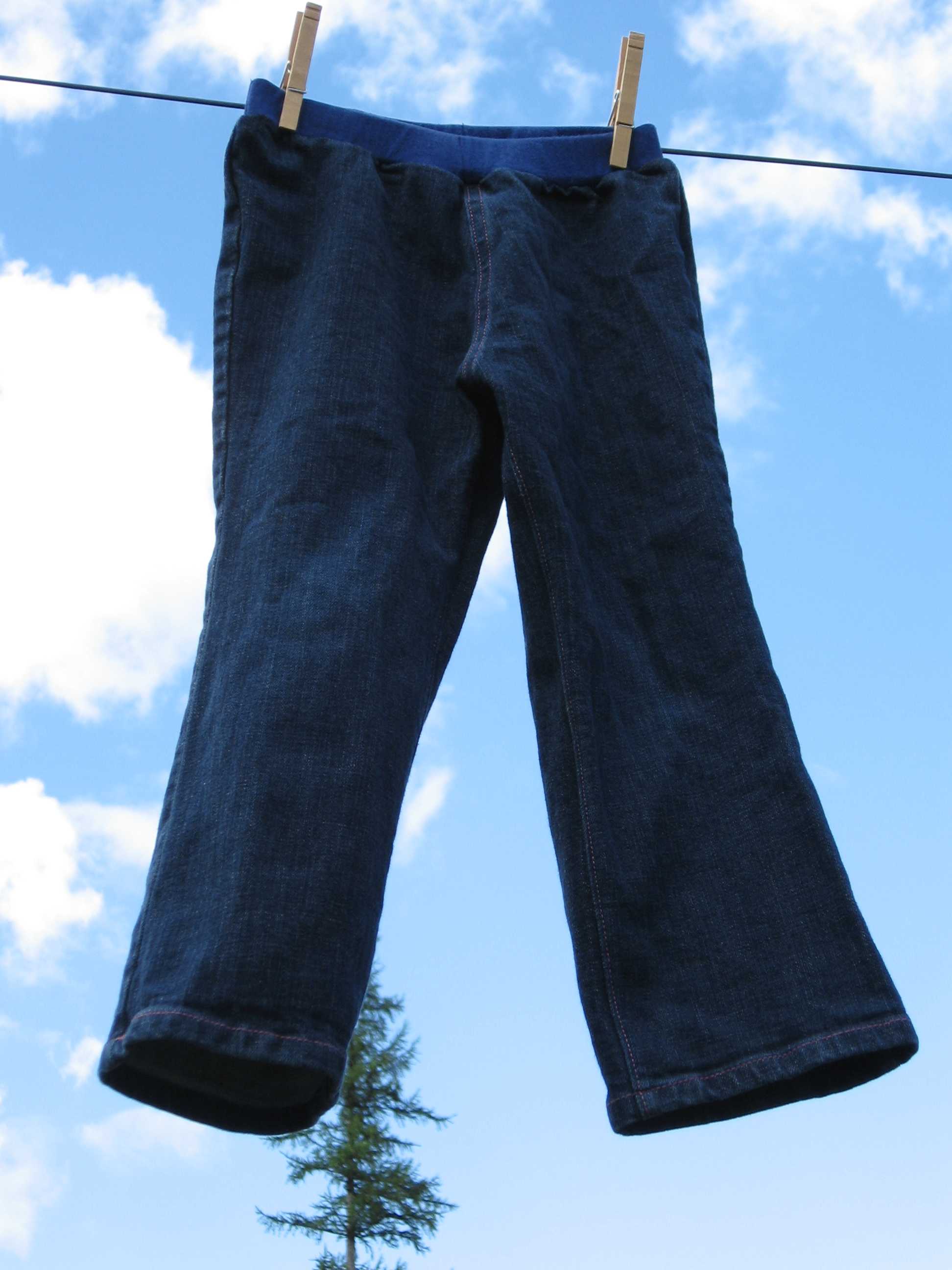
Girls denim elastic waist pants
I made some elastic waist denim pants for my daughter. She was complaining that all her pants were all too small, so I made up a few pairs of these over a weekend. I made the pattern by tracing a pair of her RTW elastic waist jeans, then making some fit adjustments. For the waistband, I folded knit fabric over the elastic, then serged it to the top of the pants. With no pockets, these were super fast to sew.

White underwear
I made some underwear for me. I’ve been meaning to do this for years, and finally got around to it. To make the pattern, I cut the elastic off of three different styles of my old underwear, traced them on top of each other, and sort of averaged out the pattern, making the fit corrections I thought I needed. After sewing three pairs, I got the fit right. Now, for the first time in my adult life, I have underwear that fit like I want them to.

White leggings
These are leggings for me. I started with my pajama pant pattern and made the legs narrower. The first pair was still too loose for leggings, so I pinned out the extra and adjusted the pattern.

Upcycled girls tank tops
These are tank tops for my daughter made from her daddy’s old T-shirts. There were some stains on the T-shirts, but I figured she’d stain them herself the first time she wore them anyway, and sure enough, she did. The pattern was a RTW rub-off.

Rub of long sleeve tee
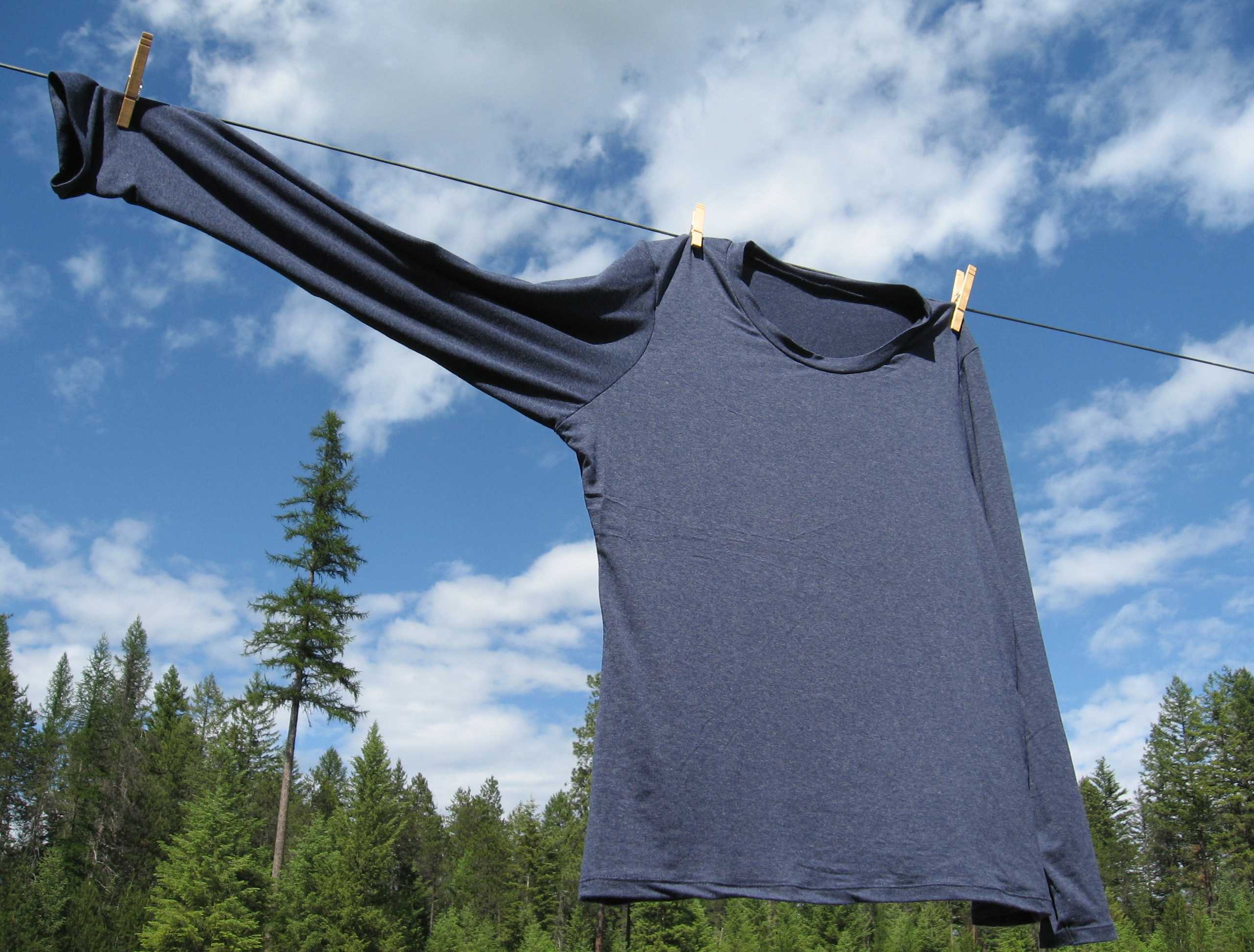
This long sleeved tee was a request from my adult step-daughter. She wanted me to copy a shirt she had. I do take sewing requests sometimes, but my answer is usually, OK, maybe I’ll do it when I feel like it, don’t hold your breath. That way I don’t feel guilty if I never get around to it or if it takes me six months to get to it. Hence the long sleeve tee at the beginning of summer. This was my first project on my new serger. I used a lightweight poly/cotton/lycra blend from my stash. It is super stretchy and difficult to sew, but I adjusted the differential feed and my serger made perfect seams.


Posted in Sewing

Chainstitching on a Touch & Sew

While I was researching my Singer 401A sewing machine, I discovered that there are vintage sewing machines made in the 1960’s and 1970’s that will sew a single thread chainstitch with the right attachments. I immediately decided I had to have one, since I don’t have a serger or cover stitch machine that sews chainstitches, and I hate picking out basting stitches.

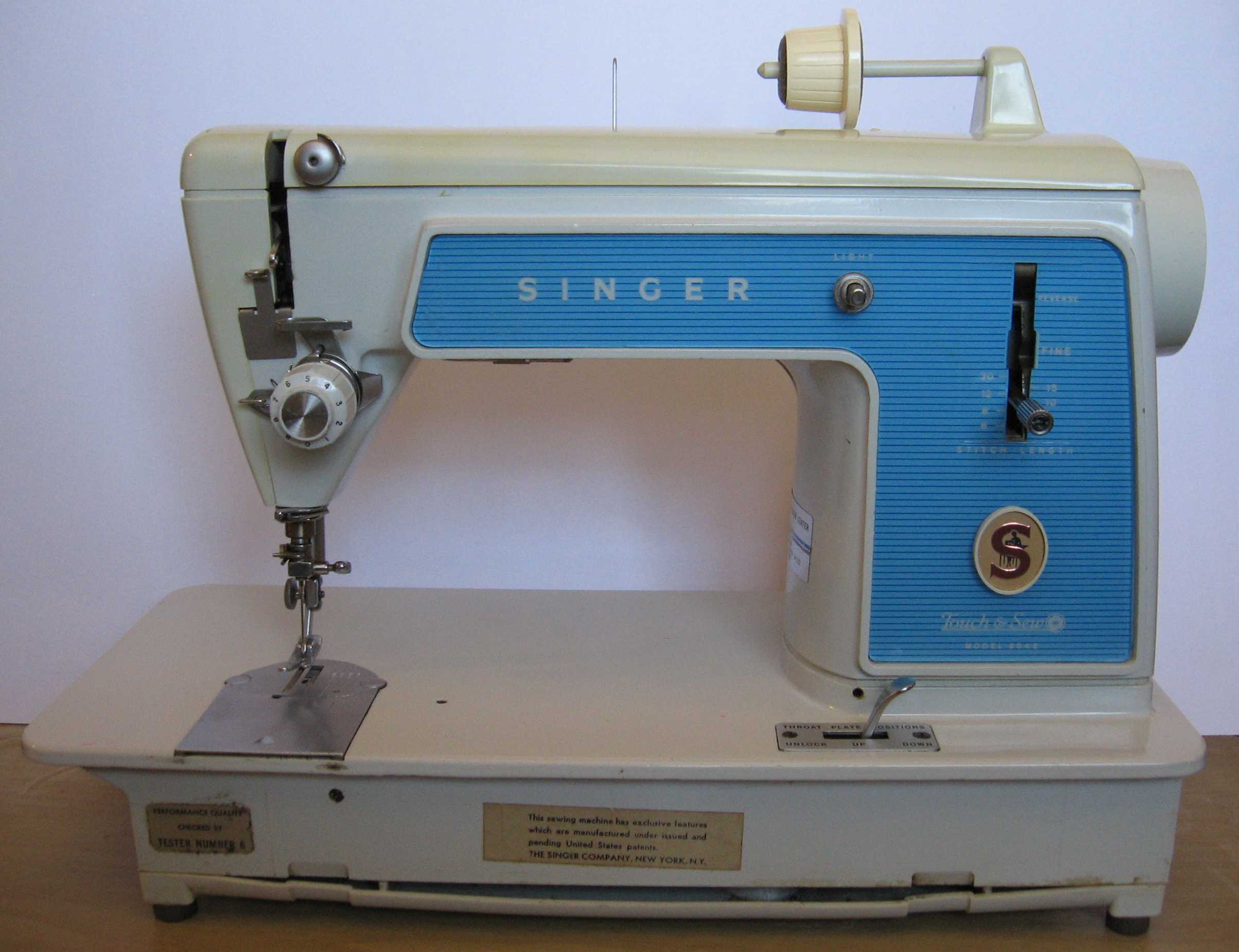
Singer 604E sewing machine with chain stitch attachmentsAfter doing some more research (which I will detail at the end of this post since I want to clear up some misinformation I found) I decided to buy a Singer 604E Touch & Sew. Unlike most of the 600 series Touch & Sews, this is a straight stitch only machine. I decided on this one because there is less to go wrong with a straight stitch machine and I wanted to leave it set up for chainstitching, so I wouldn’t be using the other stitches anyway.

Here are some ways you can use chain stitches, which quickly unravel when you pull on the thread at the end:

  • Basting for trial fittings
  • Marking a hem before you press it up
  • Basting zipper openings closed
  • Use anywhere you need to machine baste but will not be sewing directly over the basting stitches
  • Attaching collars and trims that need to be removed for laundering
  • Sewing hems that will need to be altered
  • If your weight fluctuates, you can take in side seams, then easily let them out later
  • Use single thread chain stitches as a stretch stitch on knits (2-thread chain stitches like you find on sergers and cover stitch machines are not stretchy)

I am having so much fun sewing basting stitches. Pulling out a seam in less than a second hasn’t lost its novelty yet. I’m like a kid playing with my new toy – sometimes I’ll sew a seam on a scrap of fabric just so I can pull it out!

P.S. I thought I’d throw in this basting tip – if you don’t have a chainstitch machine, try using wash-away basting thread for easy basting stitch removal.


The rest of this post is about the research I did on vintage chainstitch machines, which will probably only interest you if you are looking to buy one.

I very briefly considered getting a toy machine that chainstitches, but they usually don’t work, and for sure won’t work on thick fabric. Just go check out all the one star reviews on Amazon. I have memories of being frustrated with my toy sewing machine as a kid – I think maybe I got it to work once or twice for a few stitches. I looked at industrial chainstitch machines, and even simple vintage ones are at least as expensive as a cover stitch machine. Antique chainstitch machines are pretty, but they are expensive, may or may not work, and many of them use needles that are no longer manufactured.

As I was researching my Singer 401A, I read a lot of forum posts about vintage sewing machines, and I was excited to discover that there are some sewing machines made in the 1960’s and 1970’s that can chain stitch with a few simple attachments. Some of these machines are the Singer 600 series Touch and Sew machines (the 700 series Touch and Sews chainstitch too, but they all have plastic gears, so I would avoid those). The Singer 411G and 431G can chain stitch. Some Kenmore machines (many in the 158 series and some others) can also chain stitch with the right attachments. See this blog post and this thread for more info on Kenmores. Note that the Kenmore chainstitch attachments look completely different than the Singer chainstitching attachments.

I had a hard time doing research on these sewing machines. I found lots of conflicting information on blogs and forums, so I’m collecting what I learned here in one place, hopefully minus most of the mis-information other people have spread around the internet. I didn’t find as much information on Kenmore sewing machines, and I ended up buying a Singer, since the machines and attachments were less expensive and easier for me to find. The vintage Kenmores are good sewing machines, and they kept using metal gears even after Singer switched to plastic gears sometime in 1966, so if you can find one, don’t overlook a Kenmore as an option for chain stitching even though all of what I discuss below is about Singers. You might have trouble finding the right attachments to go with a particular Kenmore machine, so I’d suggest if you’re going to buy one, try to get one that comes with the chain stitch attachments.

Just to clarify, not all Singer sewing machines with model numbers in the 600’s are Touch & Sews, and not all Touch & Sews have model numbers in the 600’s. “Touch & Sew” machines have wind-in-place bobbins. The Touch & Sew machines I’m going to talk about are “600 series Touch & Sews” manufactured in the 1960’s. The 700 series Touch & Sews all have plastic gears, and as old as these machines are, if those gears haven’t broken yet, they will fail soon since the plastic is at the end of its expected lifespan. Singer has also re-used the name “Touch & Sew” for some modern sewing machines. Those are something completely different and I’m not discussing those at all.

All Singer 600 series Touch & Sew machines can chain stitch with the right attachments, despite what you might find on the internet leading you to believe otherwise.

The earliest models in the Touch & Sew series for sure had metal gears. These are the 600, 600E, 603, 603E, 604, and 604E. You sometimes find metal gears in later model numbers, like the 620 series models, but you’ll have to unscrew the bottom cover and look inside to find out if the gears are metal or plastic. I’m going to ignore any other Touch & Sew models, because . . . old plastic gears.

The only difference between the earliest Singer Touch & Sew models (600, 603, 604) and the later versions with “E” at the end of the model number (600E, 603E, 604E) is the location of the bobbin winder button. The very earliest 600’s were called Auto-Reel, before someone decided Touch & Sew was a catchier name. A “Singer 600 Auto-Reel” is exactly the same machine as a “Singer 600 Touch & Sew”.

Of the vintage Singer machines that can chain stitch, I would recommend choosing one with metal gears. These include (but are not limited to) model 600/600E (lots of built in stitches plus takes “top hat” special discs), 603/603E (will only make zig-zag or special stitches with a “top hat” special disc – no built in stitches), the 604/604E (straight stitch only), 411G (rare – built in stitches plus takes “top hat” special discs, and can be hooked up to a treadle base), or the 431G (rare – built in stitches plus takes “top hat” special discs, and has a free arm).

I wanted a machine to leave set up for chain stitching, so I chose the 604E, since as a straight stitch machine it has fewer parts to to break, it for sure has metal gears, and I happened to find one on ebay at a low price. I found a free Singer pdf manual for the 604, but not the 604E, so I also downloaded the 600E manual for the updated bobbin winding instructions. Here is a copy of the 600 series chain stitching guide. The Singer 24 manual has additional tips for sewing with single thread chain stitches.

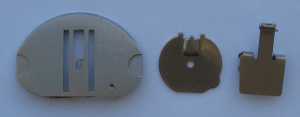
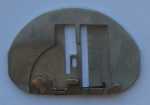
You need three attachments to chain stitch with any 600 series Touch & Sew sewing machine. They are the chain stitch throat plate (part #21913 for zig-zag models OR part #21915 for straight stitch machines), bobbin cover (part #21906), and thread guide (part #163455).

Here’s what the 600 series Touch & Sew chain stitch attachments look like. You might find them for sale mis-labeled or in with other attachments, so it helps to know what you’re looking for.

For the 411G or 431G, you will only need a chain stitch throat plate (part #503599 for the 411G; part #503601 for the 431G) to chain stitch. It looks similar to a mirror image of part #21913.

Posted in Sewing, Vintage Sewing Machines

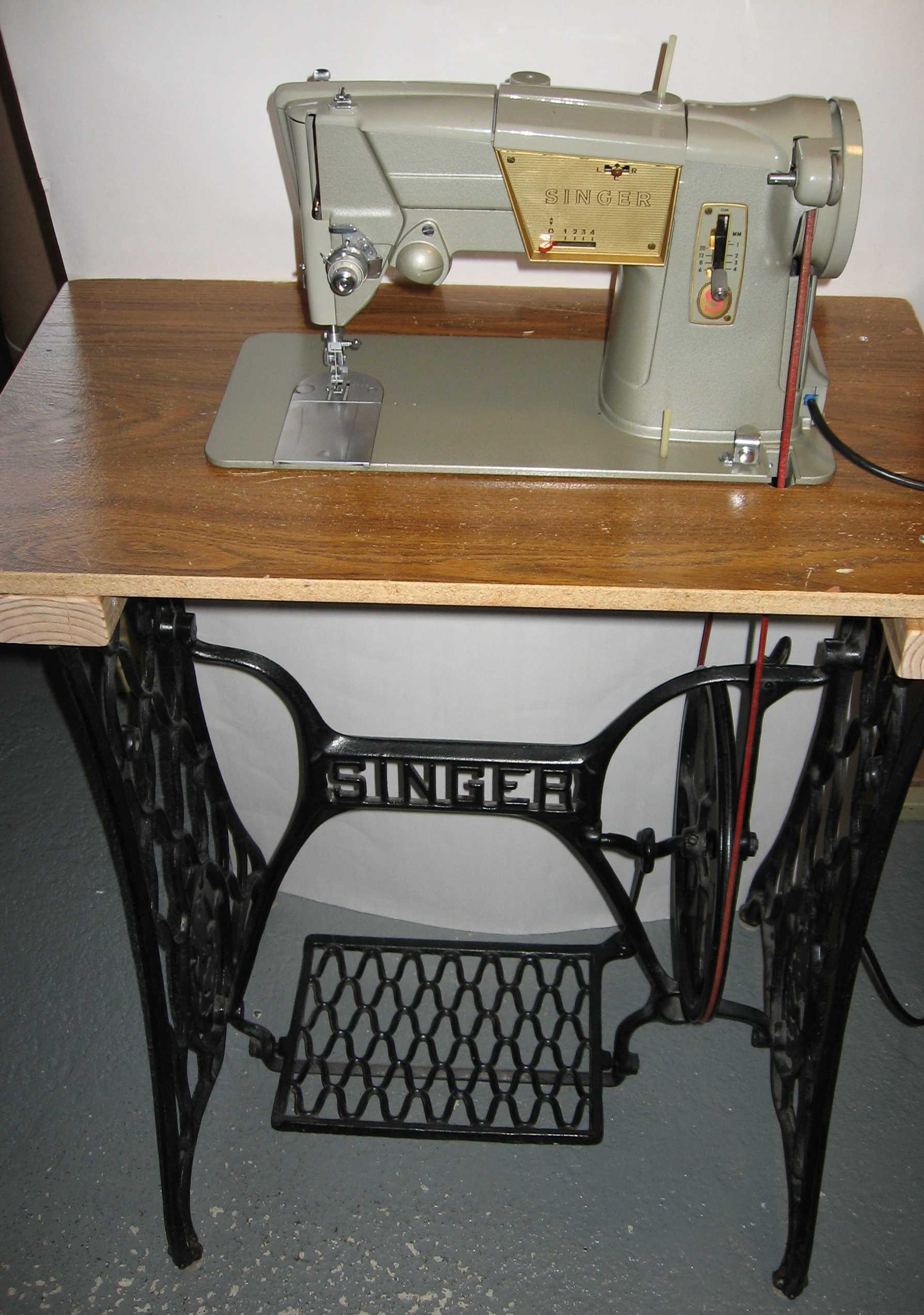
Treadle-izing My Singer 328K

I’ve been looking for a vintage all-metal zig-zag sewing machine to keep in a treadle base ever since I was confronted with my Singer 252’s limited life expectancy. This search led me to the Singer 328K.

My requirements for a sewing machine were:

Singer short shank sewing machine so all my attachments and accessories are compatible
All metal gears and no timing belt to break
Takes special stitch cams (fashion discs)
Can be used with a treadle base
Uses regular sewing machine needles
Top-loading drop-in bobbin (they have fewer thread snarls than front or side mounted bobbins)

I wasn’t sure my perfect sewing machine existed, but then I found the Singer 328, and it seemed to meet all of my requirements. The only thing I wish it did that it doesn’t was hold two fashion disks at once so I can switch between zig-zag and 3-step zig-zag easily.

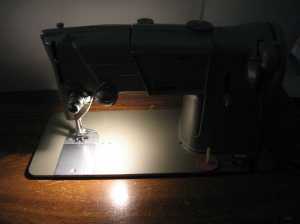
Singer 328K treadle

I bought my Singer 328K on ebay. On the auction listing there was a video of the seller putting it through its paces without thread, but the motor worked, the needle went up and down, and the feed dogs moved, so I thought there was a very high chance it was in good working order.

When I got the sewing machine, it had survived shipping. I attribute that more to the shape of the sewing machine and the fact that it was in a case than the limited amount of packaging material. I cleaned and oiled the machine, then put thread in it. As soon as I started to sew, the thread immediately jammed in the bobbin area.

I finally figured out that the spring on the bobbin case was broken off and the bobbin tension screw was missing. Well, I just happen to have a Singer 252 parts machine with a very similar bobbin case, so I took the spring and screw off of its bobbin case and put it on the 328K bobbin case. They fit just fine, and the sewing machine works! Do you know what lesson I took from this? NEVER, EVER get rid of vintage sewing machines or sewing machine parts. Which means I will have to be very careful not to acquire too many sewing machines, or my house will be too crowded to live in.

One of the things I noticed about this sewing machine is that the shuttle race oscillates rather than spinning around in a complete circle. I suppose it is cheaper to manufacture an all metal machine this way, since you don’t have to have gears down below the bobbin. Also you don’t have a timing belt that can break. The affect of this design is that the machine vibrates when sewing at high speeds, which is kind of annoying. It’s not quite as bad as my antique vibrating shuttle machine, though. Now that it is on a treadle base, I can’t sew fast enough to have the vibration be an issue.
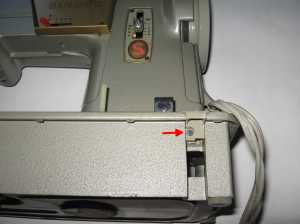
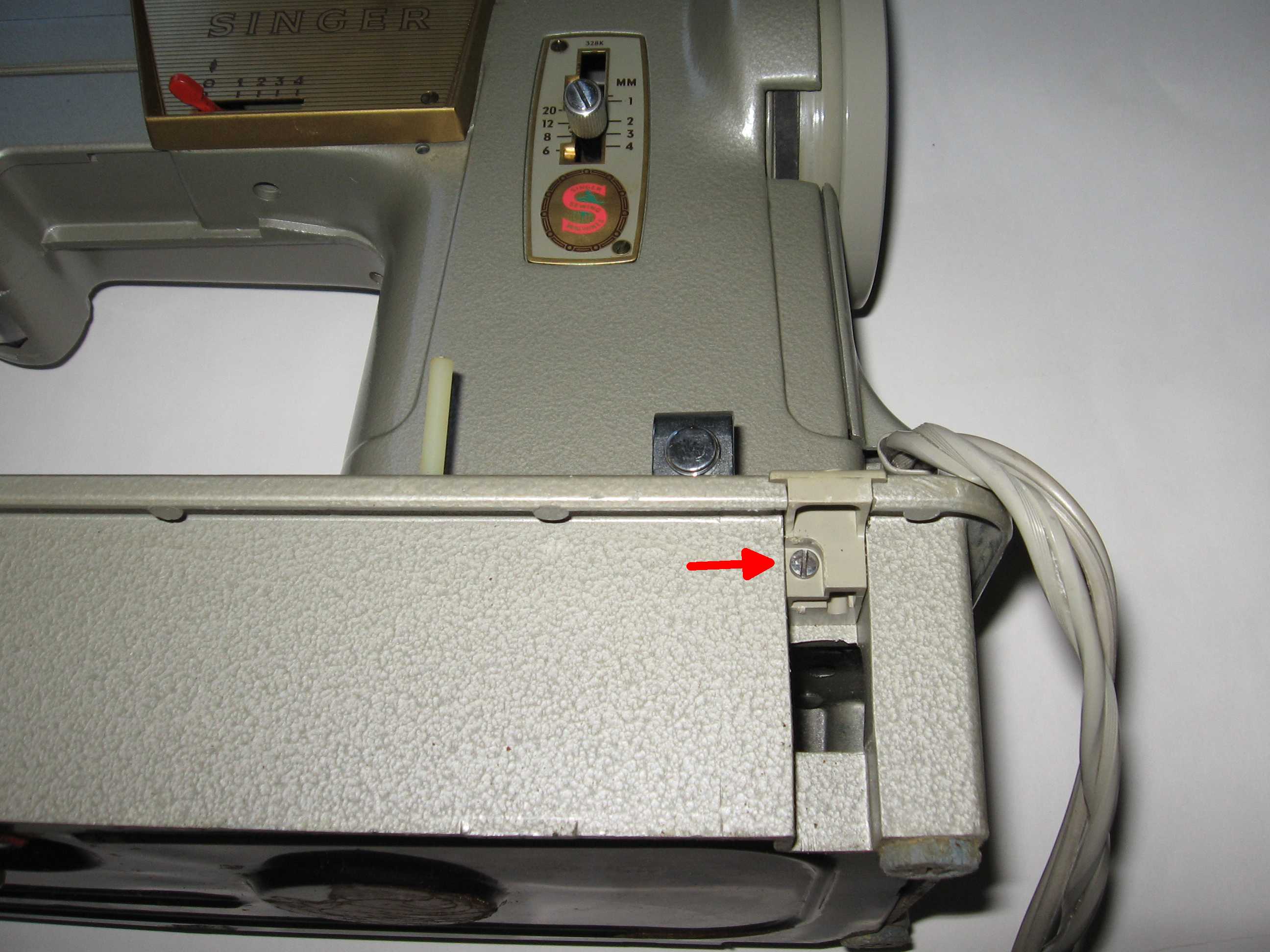
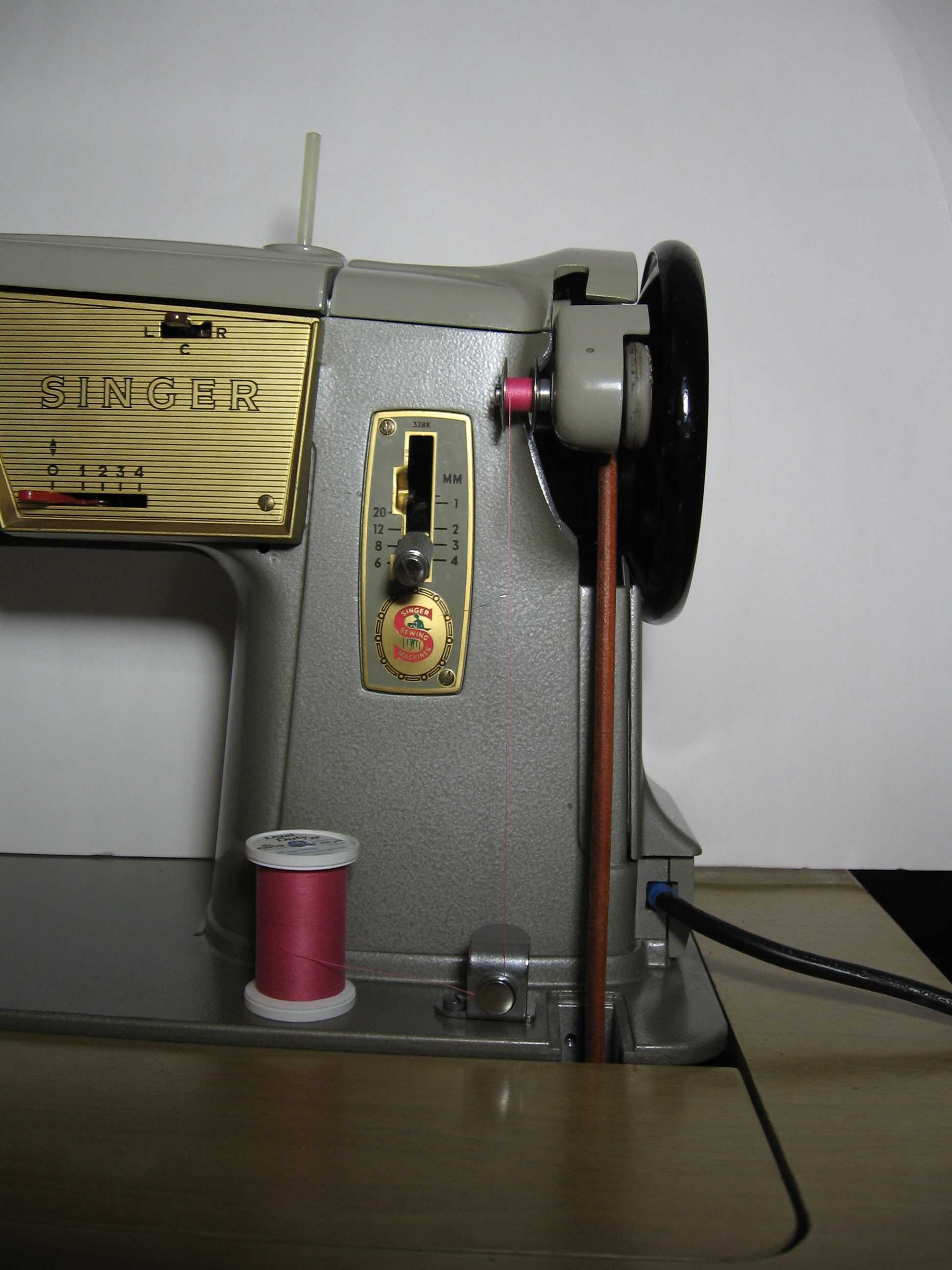
Singer 328K plug for treadle belt notchIf I hadn’t read that the Singer 328 can be put in a treadle base, I never would have guessed that it would work. On the bottom right of the sewing machine bed there is a plastic plug that unscrews to reveal a notch for the treadle belt to go through.

After removing the plug, the motor belt needed to come off. I found this blog post that helped me figure out how to get the motor belt off.

I have two treadle bases; one is a Singer base from the early 1900’s and the other is a German treadle with a larger wheel. There is so little clearance for a treadle belt I figured the Singer base would be the only one that would work.
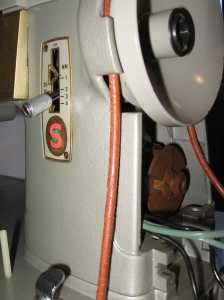
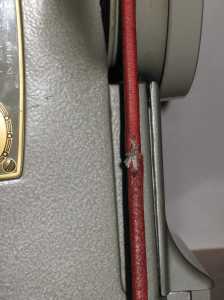
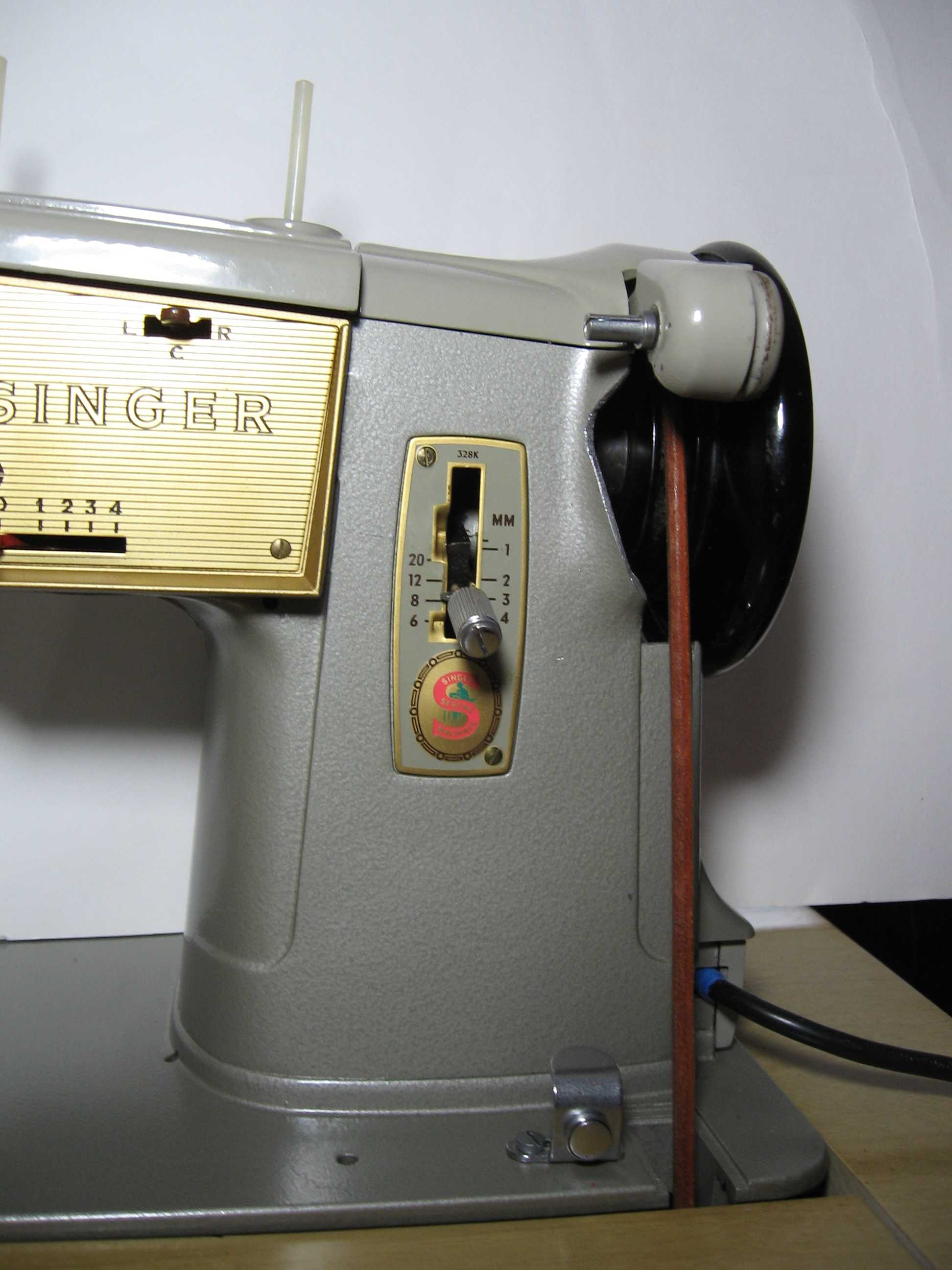
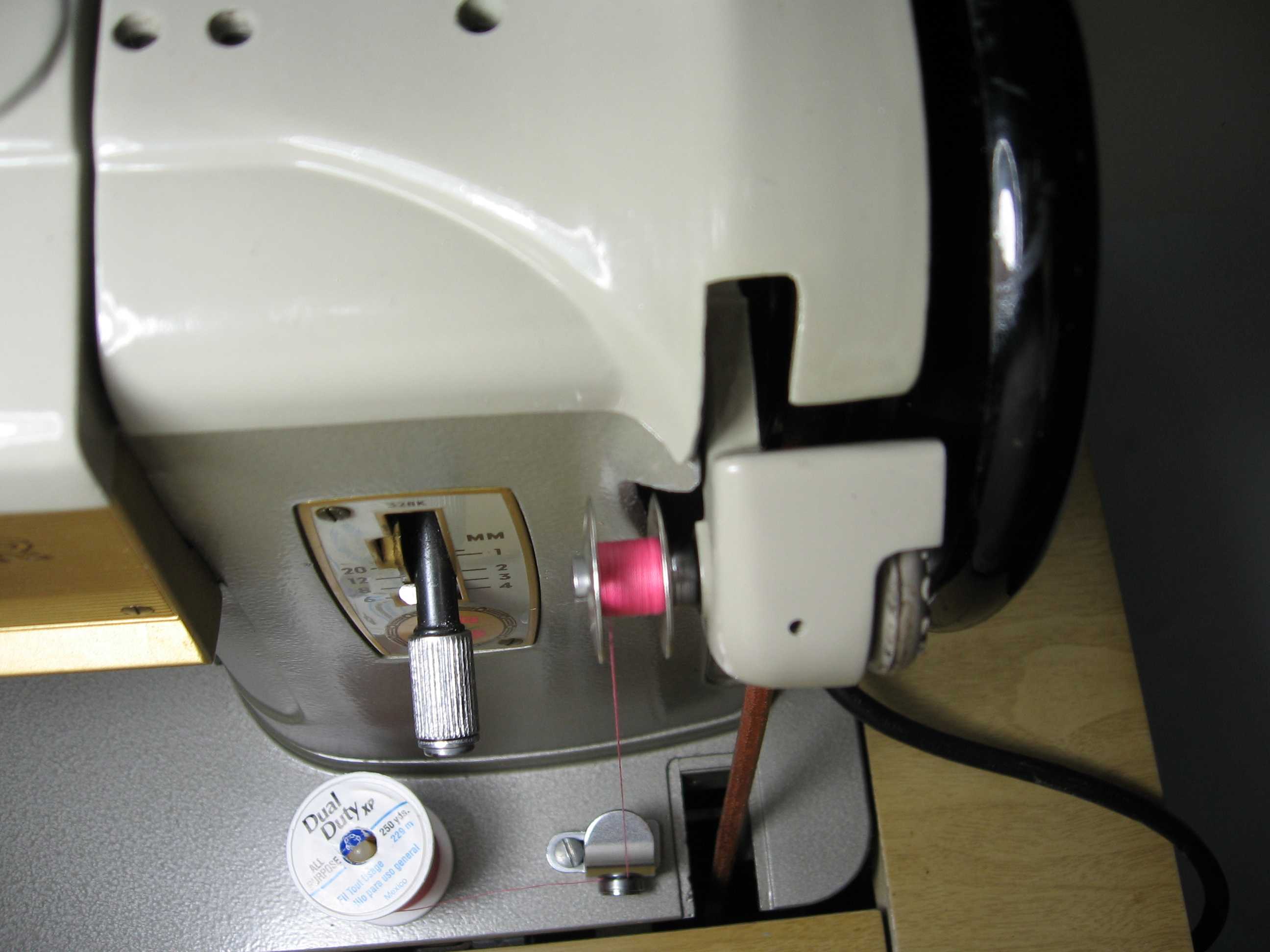
Singer 328K belt rubsI made my own table top with a custom hole (nothing fancy – it’s made from scrap wood) so I could position the sewing machine exactly in the right spot to get the best clearance for the treadle belt. I quickly realized that no matter how I positioned the machine, the treadle belt would rub on the front of the sewing machine frame just below the bobbin winder. I think you are supposed to replace the handwheel with one with a smaller pulley before hooking it up to a treadle, but I don’t have one that fits. I’ve seen pictures of a Singer 401G (which has a similar shape to allow for a treadle belt) with leather shavings all over the machine from the belt rubbing. Yeah, that wasn’t going to work for me. Some of the sewing machine frame had to come off.

I’ve marked below the part I cut off. The frame is aluminum, so it wasn’t too hard. I drilled holes along the cut line, then filed down the edge. A Dremel would probably be good for this, but I don’t have one. For anyone else doing this, learn from my mistakes – mask off the end of the machine so it doesn’t get metal shavings all over inside and put tape on the front of the machine so you don’t scratch it when your drill bit or file slips.

I could have just left the original wiring in place, but the old cord was getting a little stiff and I didn’t want to have the foot controller in the way, so I put in a new power cord to the light only. Since the machine is metal, my electrician husband suggested grounding the machine to avoid the possibility of electrocution if there is an electrical fault. Sounds like a good idea to me! There are moving parts in there right next to live wires, so I could see the possibility of something bad happening.

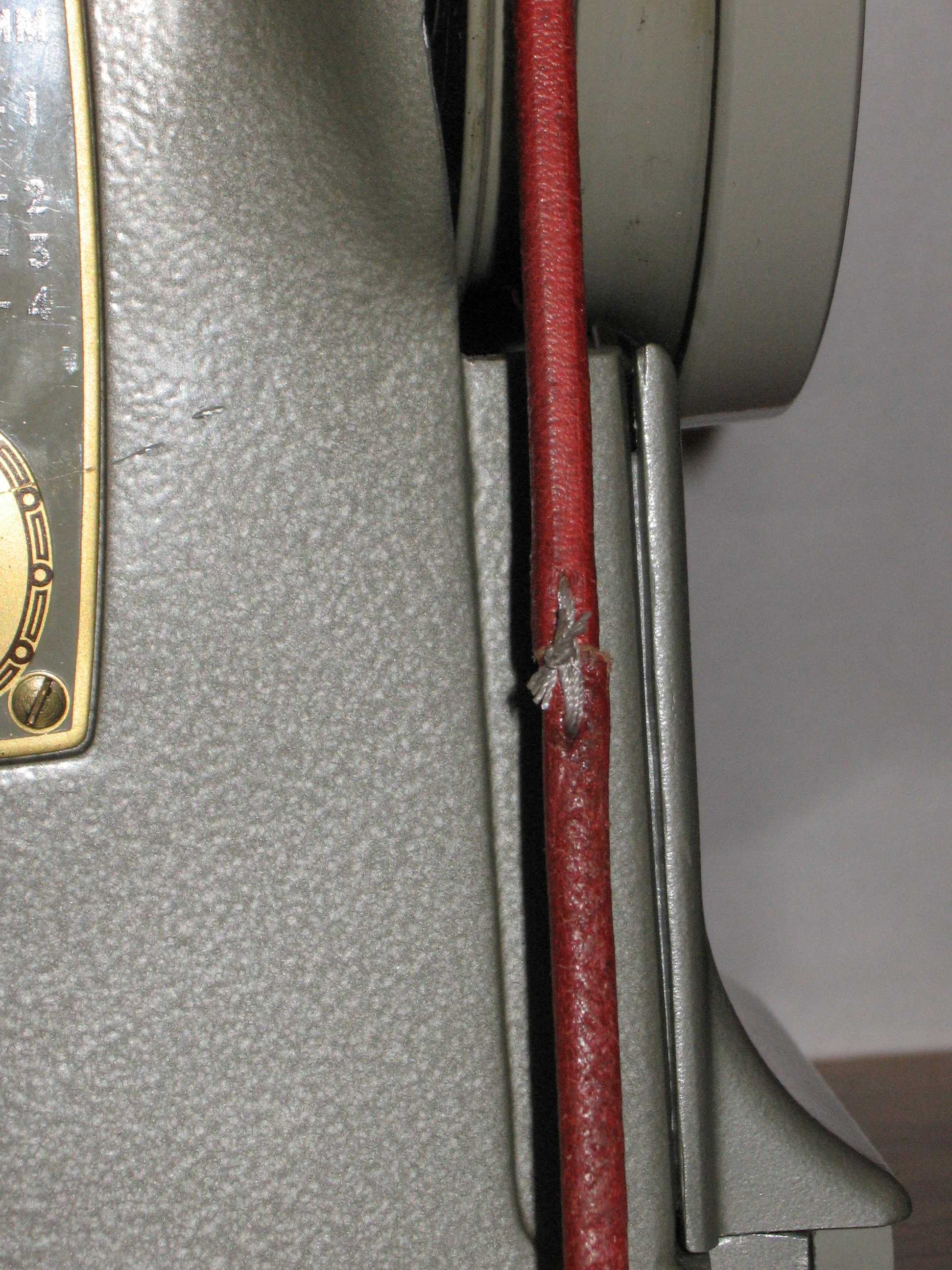
Singer 328K treadle belt no stapleSince there is so little clearance for the treadle belt, I didn’t want to use a metal staple to connect the ends of the belt. I figured it would scrape on the inside of the sewing machine. Instead I connected the belt ends with upholstery thread and put Fray Check all over the thread. We’ll see how it holds up.

I would not describe the Singer 328K as “treadle ready”. It took a lot of work to get it set up, and even now there is barely room for the treadle belt. Maybe someday I’ll get a replacement handwheel that works better for this machine.

Would I recommend this machine for treadling? Not really. It’s not terrible, but it takes some modifications to make it work and it sews slowly since the pulley on the handwheel is so large. It should be a good machine for teaching young kids to sew on, though, since it treadles slowly and easily. I just happen to have a couple of kids I’m teaching to sew, so maybe this isn’t a bad thing.

Update 11/5/2015:
I found a handwheel that sort of fits on this machine and lets me sew much faster. Spoked handwheels are too thick around the edge, so they hit the cover on the side of the machine and won’t go on all the way. You might be able to use one with the cover off, but I didn’t want to do that, since then I’d have exposed wiring and and ugly gaping hole.

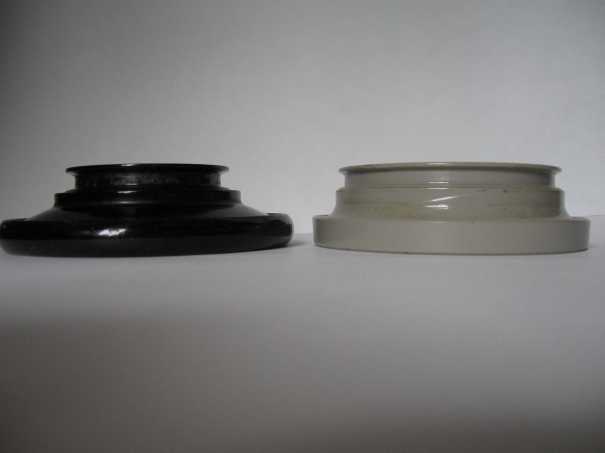
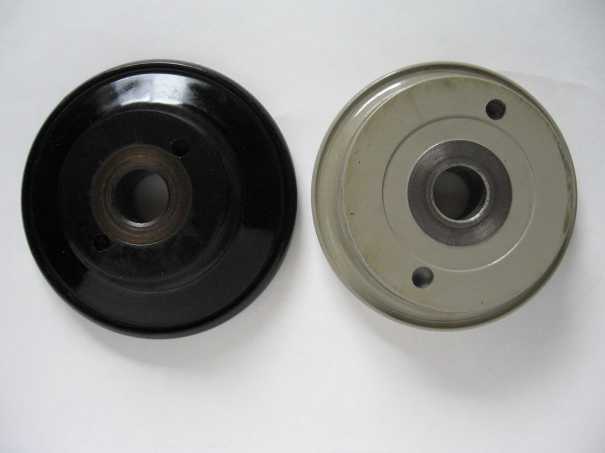
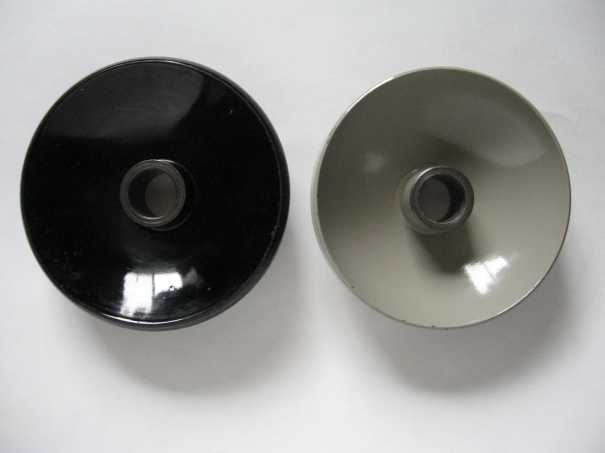
The handwheel I used is a solid black one from a motorized Singer 128. Unlike most solid handwheels, this one has the same diameter at the belt groove as the spoked handwheels.

I put the new handwheel on and moved this sewing machine to a different treadle base that has a slightly larger wheel than Singer treadle bases, so now I’m getting 6 stitches per treadle instead of 3. About 5 stitches per treadle is typical for a Singer treadle sewing machine. Sewing faster means treadling is a little harder, but it’s still reasonable.

The only problem with this handwheel is that I couldn’t use the bobbin winder because the ridge that the bobbin winder makes contact with is in further. I really wanted to be able to use the bobbin winder on this machine since it winds really nice bobbins, so I cut and filed off some more of the aluminum sewing machine frame so the bobbin winder could make contact with the handwheel. I kept filing off a little more, then a little more. I was getting worried it wasn’t going to work and I would have hacked up my sewing machine for nothing, but eventually I got enough taken off, and the bobbin winder works.
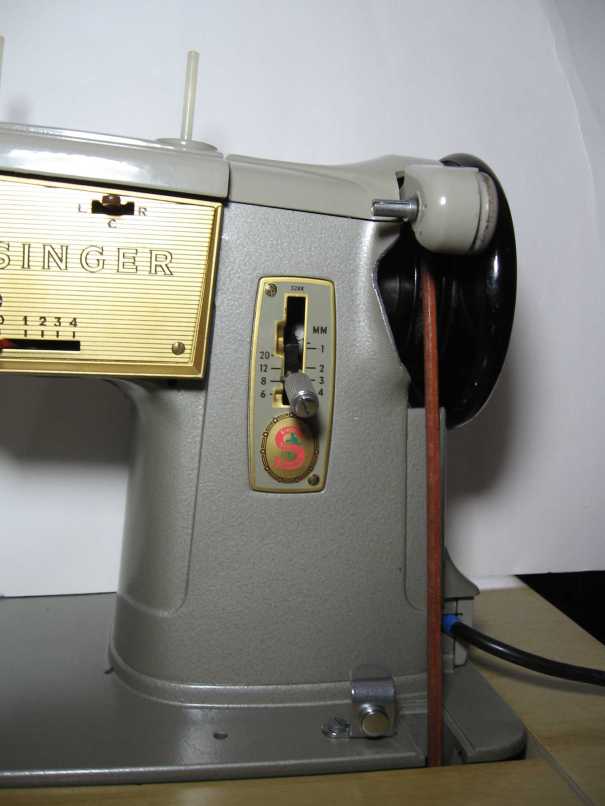
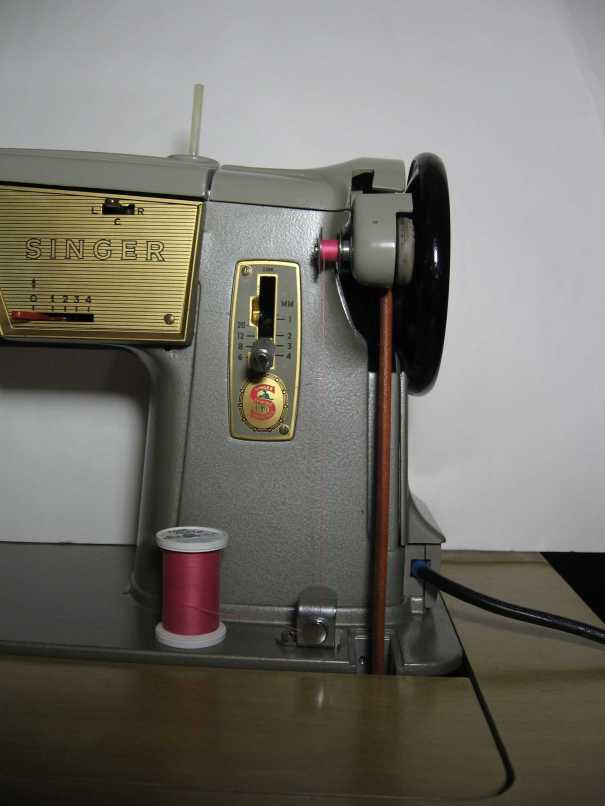
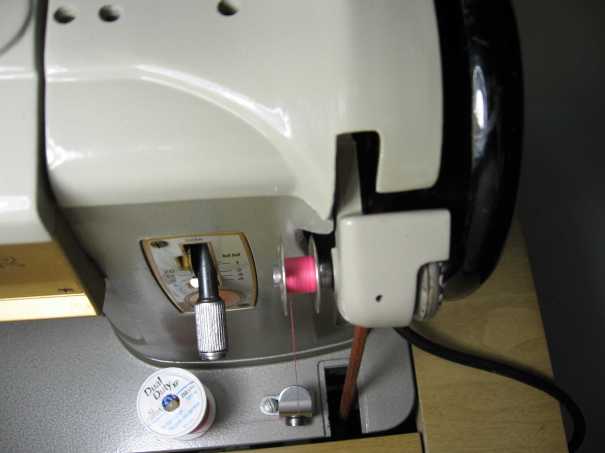
Singer 328k modified for treadlingSinger 328k modified for treadling bobbin winder upSinger 328k modified for treadling bobbin winder down

I was trying to use the 328k as my main sewing machine, since I know the plastic gear deep inside my Singer 252 is likely to break at some point in the next few years. I just don’t enjoy sewing on the 328k, though. It doesn’t have a lot of harp space, doesn’t have the extra-high presser foot lift feature most machines have, and I have to make extreme adjustments to the tension when using various stitches. Also I just think it looks like an ugly alien grasshopper, so it’s hard to fall in love with. I just got a straight stitch only Singer 201 to use as my main treadle sewing machine. I’m happy enough with the 328k to use it a secondary machine when I need to use zig-zag or other utility stitches. So I think I’m finally set for life with sewing machines.
Posted in Treadle Sewing Machines, Vintage Sewing Machines

A Treadle and a Quilt

Singer 127

After my recent sewing area re-arrangement to accommodate my new Singer 401A, my antique Singer 127 treadle sewing machine is now accessible instead of being buried behind my main sewing machine. I haven’t sewn much on this machine, since the stitches were uneven and the tension went from tight to loose every few stitches.

I decided to try to fix it up some more. I polished the rust off of the tension disks, cleaned some bits of ancient thread from under the spring in the shuttle, and replaced the missing oil wick. I also switched out the tension dial and worn feed dogs with the ones from my parts machine. After a good oiling, this 99 year old sewing machine works almost as good as new. The tension is a bit fiddly, but it’s making pretty decent stitches now.

Unlike modern home sewing machines with plastic gears that choke on thick fabric, this machine will happily sew through anything that I can fit under the presser foot. It doesn’t like topstitching thread, though, so I won’t be using it to make jeans.

After fixing up this sewing machine, I wanted to sew something with it. I decided to sew a baby quilt for my niece-to-be, which has been on my to-do list, and it’s a project that only requires straight stitches.

Surprisingly, my modern snap-on quarter inch foot works perfectly with this machine. It works even better than the original presser foot, which tends pull the fabric to the side when I sew near the edge of the fabric. My walking foot works with this machine, too.

Singer 127 with quilting foot

I love looking at those patent dates on the slide plate (the slide plate came off of an older machine).

Singer 27 slide plate patent dates

I’ve never been a huge fan of quilting, but this time I added an ingredient that made it so much easier and more accurate – cornstarch. I used one teaspoon of cornstarch per cup of water, sprayed it on the fabric, let it soak in for a few minutes, then pressed the fabric dry before cutting out the pieces. I highly recommend starching when quilting – it is so worth the extra time.

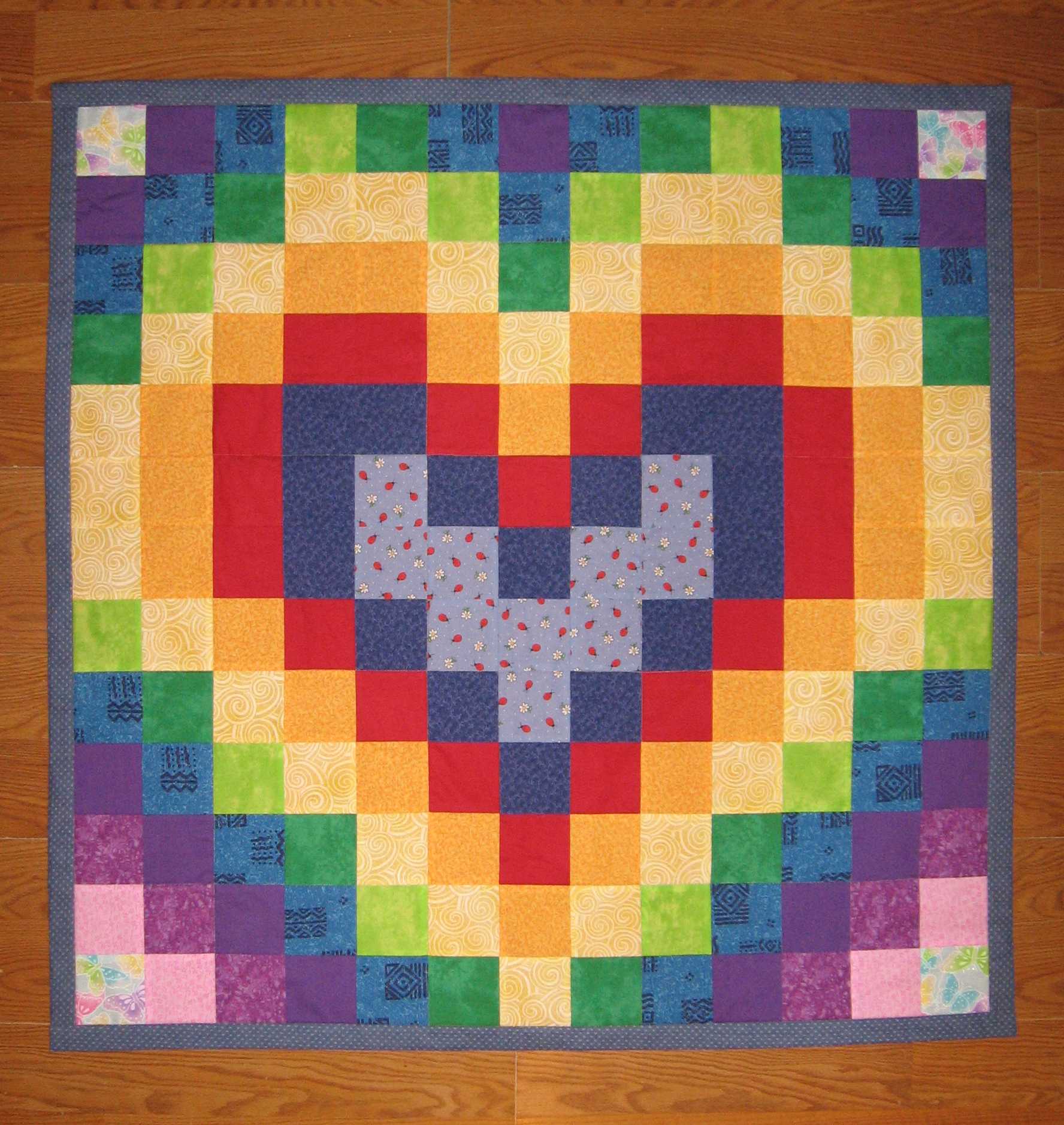
Here’s the finished rainbow heart quilt, sewn entirely on my antique treadle sewing machine:

Heart_baby_quilt


Posted in Sewing, Vintage Sewing Machines

Creating Tiled PDFs in Inkscape

Do you want to make professional looking print-at-home PDF patterns? How about doing it with free software?

There are many ways to create a tiled PDF pattern. Here’s how I do it in Inkscape, which is a free vector graphics program. I wrote another post on getting started with Inkscape, so check that out to see tips for getting started with Inkscape and work-arounds for some of the bugs I’ve run into.

If you want to see what my finished PDF patterns looks like using this method, download one of my free patterns.

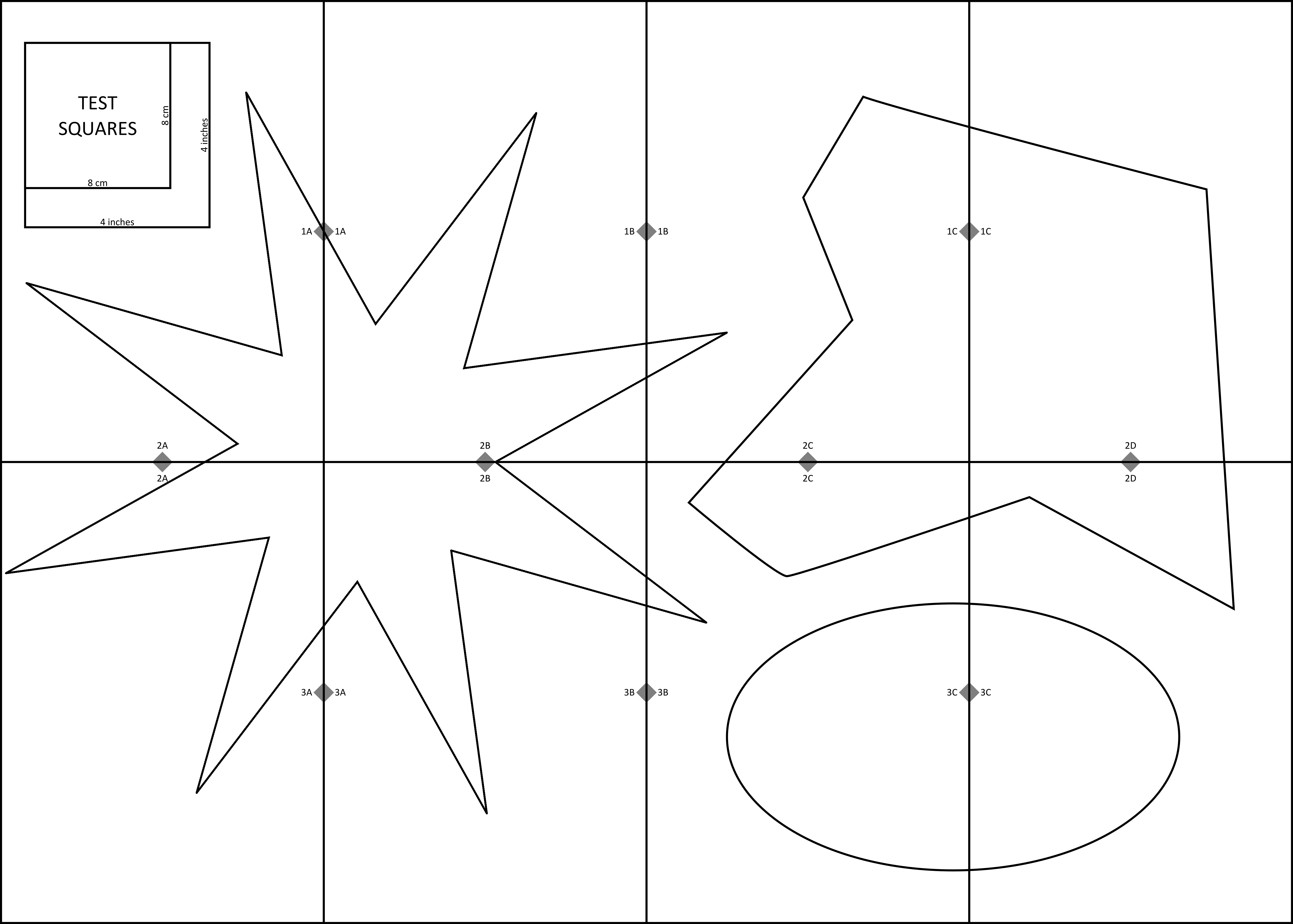
I made an example .svg file that you can use to follow along with the steps below. Click the download button in Google Drive to save it to your computer (that upper bar auto-hides, so move your mouse cursor to the top of the screen to see it). Feel free to copy and paste from this file if you want to save yourself some work making borders, test squares, and alignment marks. It is set up for 8 1/2″ x 11″ paper, with a 7″ x 10″ pattern area.

DownloadGoogleDrive

Decide what size border you want on each sheet. I usually use 7″ x 10″. You may need to match a standard size if you are uploading your pattern somewhere – for example Burda style border size is 6.625” by 10”. Pick a size that will print well on both 8 1/2″ x 11″ paper and A4 paper. I recommend a maximum width of 7.25″ and a maximum height of 10″.

Note: I don’t suggest using strokes thicker than 0.5 px for any borders that are used as match lines, test squares, etc. I make my pattern lines 0.5 px, too, so that they can be cut accurately.

In Inkscape, draw a rectangle the size you chose for your border. Use a thin stroke and no fill. Turn on object snaps and make sure snap nodes or handles is selected. Duplicate the rectangle and create a grid big enough to fit all of your pattern pieces on.

Fit copies of your pattern pieces into the grid, and draw and label alignment marks. Make sure to add test squares so people can check that they printed to the correct scale. Make the test squares a minimum of 2″ x 2″ (5 cm x 5 cm), and make sure the stroke is 0.5 px or thinner. I’ve seen 1″ test squares drawn with a marker, and they are useless.

pattern in grid

Now group all of your pattern pieces and the grid together so you can click on it as one object (select the objects, then press Ctrl-G).

In the page layout area, draw a rectangle the size of the paper (snap to the page border), then another one inside it that is 7″ by 10″. Make sure the inner rectangle is on top (select the rectangle, then use PageUp and PageDown keys to change which object is on top). It helps to temporarily set the fill for each rectangle to a different partially transparent color so you can see what’s going on.

Borders1

Select both rectangles, and from the menu, select Path > Difference. Now select the border, change the fill opacity to 100%, and change the fill color to white (don’t remove the fill – actually set it to the color “white”). I’ve left it pink in the picture below so you can see what shape it should be.

Borders2

Create a new layer that is above all other layers, and put the border on this layer (select the border and press Shift-PageUp to change its layer).

If you want to add page numbers, make a text object on its own new layer that is above the border’s layer. You will have to manually update the text before exporting each sheet.

Now turn on object snaps, making sure snap to paths and snap to cusp nodes are selected. Select the grid and pattern grouped object, and snap the upper left corner of your pattern grid to the upper left corner of the inner rectangle on the page border. Edit the page number if necessary. See how the white border is masking off the pattern around the edges?

snap grid to border

Now you are ready to export the first page to a PDF. From the menu, select File > Save a Copy. Change the file type to Portable Document Format (*.pdf), choose the folder to save in and a file name, and Save.

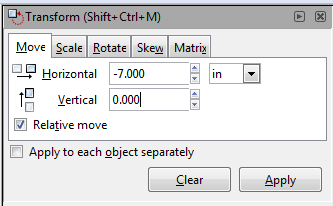
Move the grid over to the next sheet, update the page number if you are using them, and repeat to create the rest of the pages. I find that snapping to the page border is sometimes buggy, so if I’m having trouble dragging and snapping the grouped pattern pieces over for the next sheet, I use Object > Transform, Move to move the pattern to the left/right and up/down as needed. For example, if my border is 7″ by 10″, I would move it -7 inches horizontally to go to the sheet to the right or 10 inches vertically to go to the next row down.

transform move Inkscape

Now you will probably want to combine the PDFs into a single file. I use the free software PDF Split And Merge Basic to combine PDF files, but there are a lot of other free options available too.

Update 12/3/2019:
I had a request for a video of making tiled pdfs. So, here it is.

Posted in Inkscape, Patternmaking

A Surprise Singer 401A

Singer 401A in cabinetMy husband went to the feed store to buy chicken feed, and when he got home he showed me a couple of little things he picked up at a thrift store on the way back. Then he said, “Come out and see your new sewing machine!” So, I’m thinking oh no, a random thrift store sewing machine, what am I going to do with that? I mean, it was sweet of him to think of me, but, really? He doesn’t know anything about sewing machines.

So we bring it inside, and I open up the cabinet. It’s all metal, so that’s a good sign. Then I open up the inside, and that’s all metal, too. And everything is gear driven; no belts. So now I’m thinking this could be the jeans machine I’ve been needing! Score! It’s a Singer 401A. Out of curiosity I looked these sewing machines up on ebay, and they can sell for over 10 times what my husband paid, and that’s without the original cabinet and stool.

I had to bang gently tap on the innards a bit to un-stick the stitch selectors, but now it’s oiled up and working smoothly. The red arrows in the picture below point to the parts that were stuck. The metal parts are very well made and survived my less than gentle repair efforts. I think I maybe knocked something out of alignment, though, because one of the stitch selector knobs won’t go to the last setting, and I can’t figure out how to fix it. I don’t think I’ll ever actually want to use the “J” stitch settings, but it still bugs me anyway.

Singer 401A stuck parts

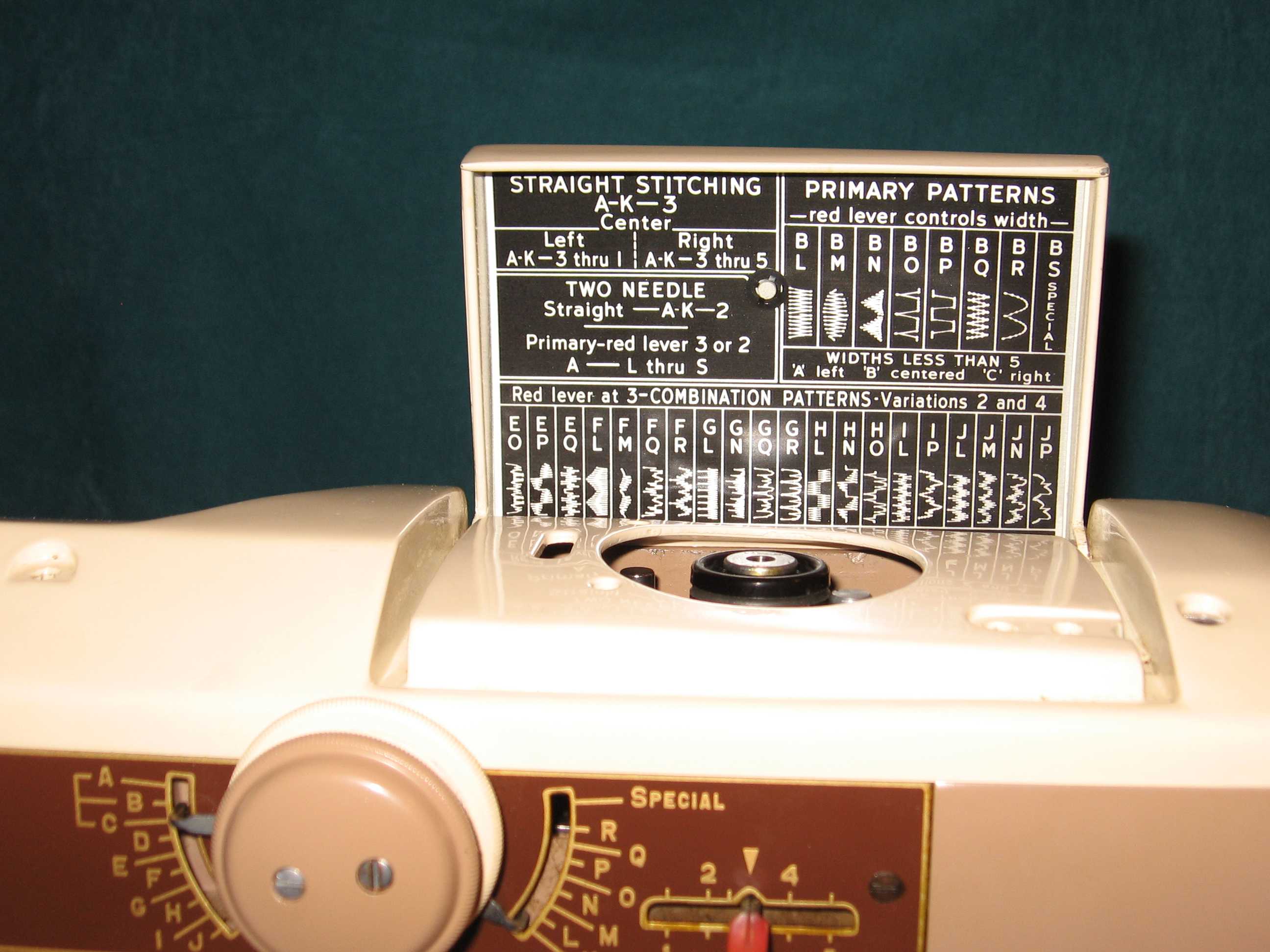
Here are the stitch settings. I found it odd that instead of a 3-step zig-zag stitch, it has a 4-step multiple zig-zag stitch. The quality of the straight stitches wasn’t that great at first, but the stitches got more even when I increased the presser foot tension. So hopefully it will do nice topstitching on jeans. One interesting feature this machine has is you can put in two regular needles side-by-side, so you can do narrow double needle stitching without having to buy expensive twin needles.

Singer 401A stitch settings

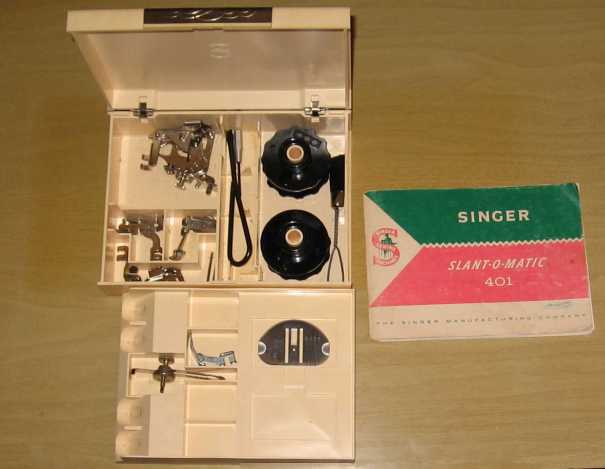
It came with all of the accessories, but only one bobbin. Luckily, I just happened to have a set of these bobbins that came with my Singer 252. I have a bunch of plastic bobbins I use in the 252, and they work just fine, but I don’t like to alternate between metal and plastic since the bobbin tension might need to be adjusted differently, so I’ll keep the metal ones with the 401A.

Now I just have to get used to using an electric machine again, and I can sew jeans without worrying about breaking my sewing machine. I’m so spoiled by the perfect speed control I have on my treadle-mounted Singer 252. The 401A starts and stops smoothly, so I’m not too worried. I’ve never had a machine with a knee lever before, though.

I spent the weekend re-arranging my sewing area to make room for the new machine, and the new arrangement actually works better despite the additional sewing machine I squeezed in. The 401A’s cabinet doubles as a serger table next to my primary sewing machine.

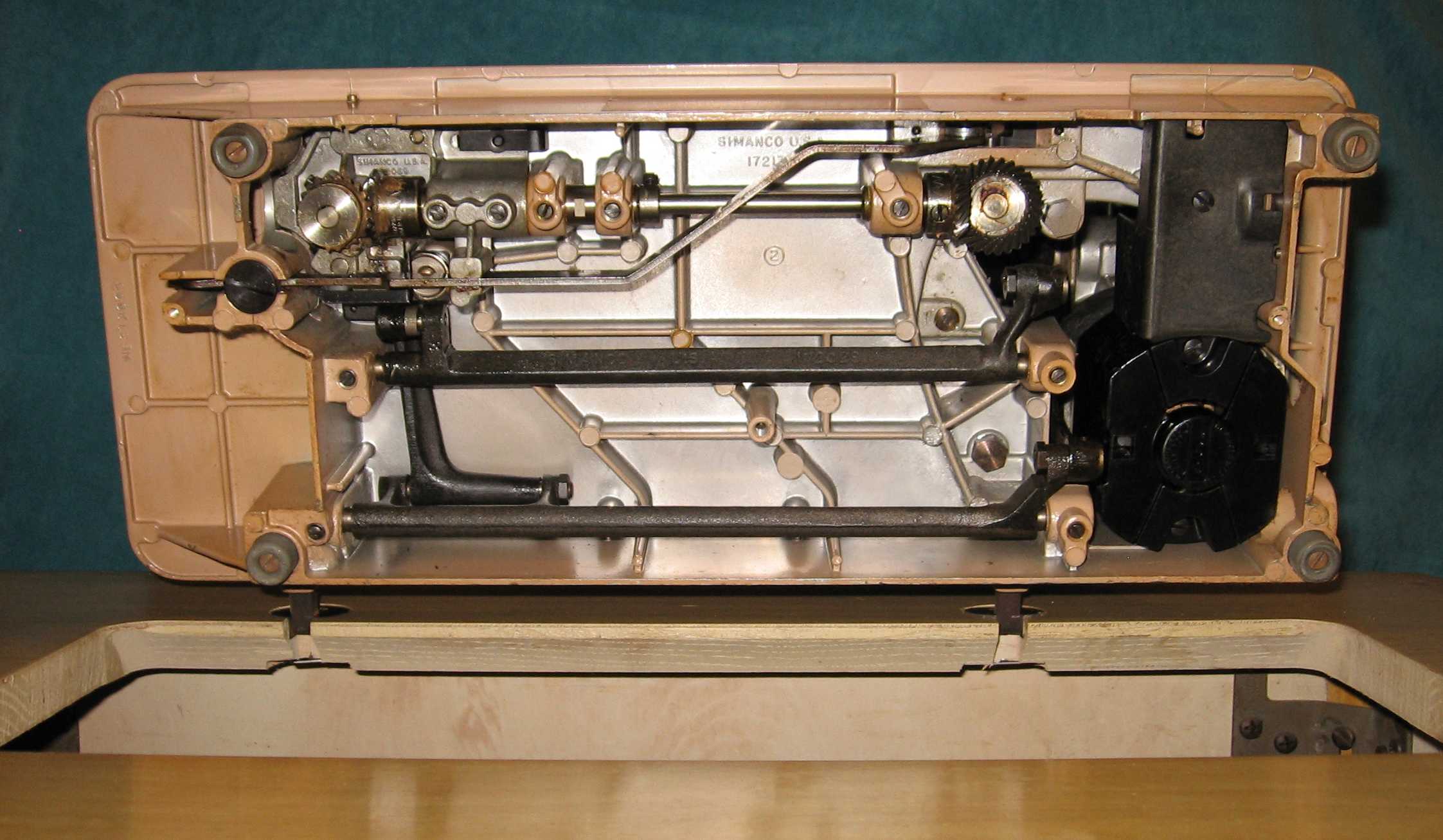
How about a little more sewing machine porn? Want to see those metal gears she’s got under her cover?

Singer 401A inside top

Singer 401A under side

Singer 401A left face

Posted in Sewing, Vintage Sewing Machines

New Half-Scale Knit Dress Pattern

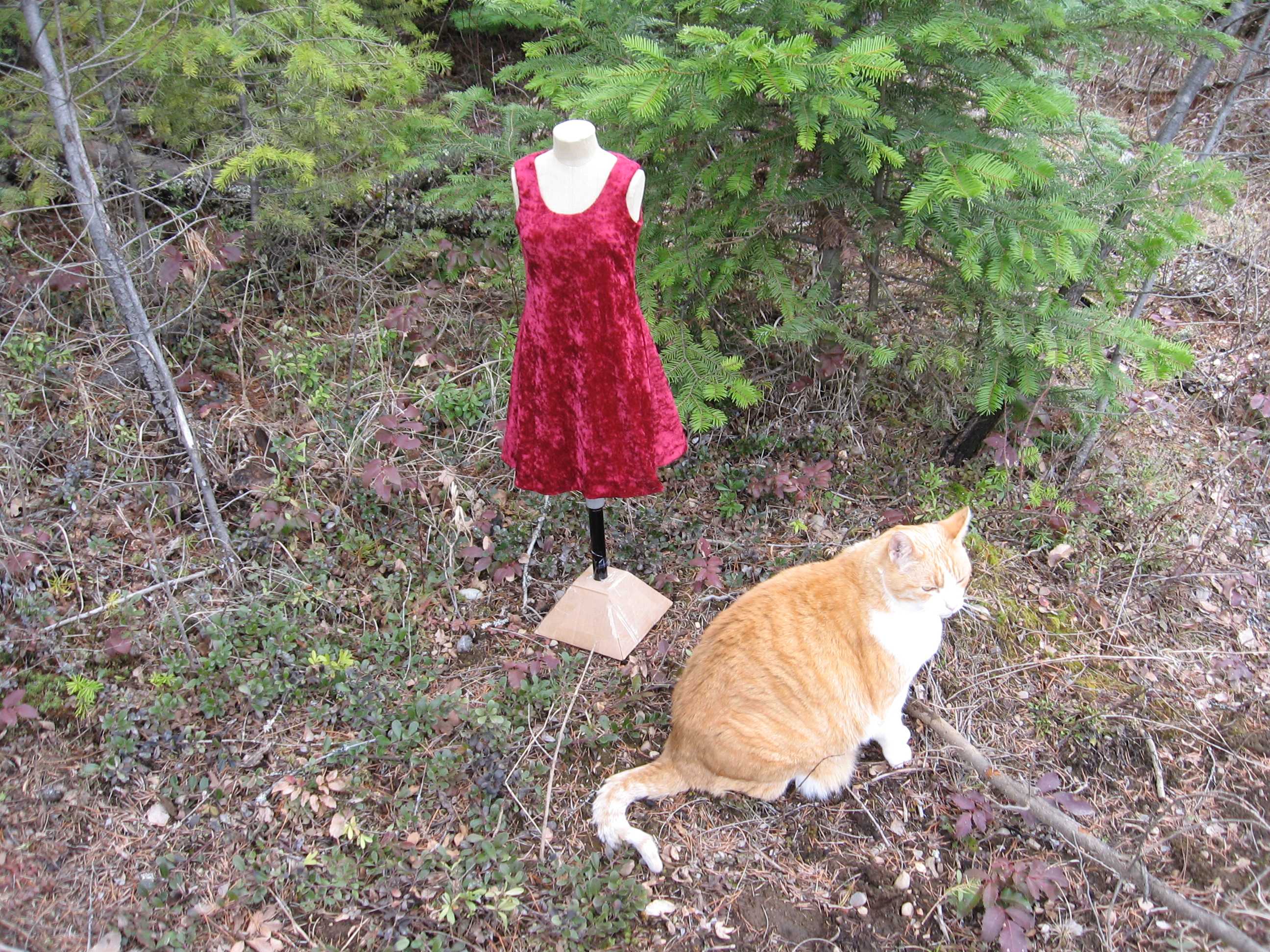
I have a new free half-scale pattern on Craftsy. This one is a sleeveless dress designed for knit fabrics.

The dress has a one piece neck and armhole facing that is sewn entirely by machine using this method, which I really like.

KnitDressSideFront

When I was out taking pictures of the dress, my cat Felix came over and wanted his picture taken too, so of course I obliged him. I took more kitty pictures than dress pictures.

KnitDress-Felix

Then he needed his chin scratched . . .

FelixChinScratching

Posted in Half-Scale Patternmaking and Sewing, Sewing

Upcycled Kids’ T-Shirts

I’ve been coming up with all sorts of things to do to avoid working on my bra pattern. My latest project was upcycled t-shirts for my kids.

My husband came home with a stack of old men’s work t-shirts someone had brought into his office. For some reason he thought I would use the fabric to make something 🙂

I used rub-off patterns to make the shirts, since I’m usually happier with the fit of kids’ clothes when I go that route rather than using commercial patterns.

I fiddled with my finicky serger and actually got it to work for this project, using ideas from the book The Ultimate Serger Answer Guide: Troubleshooting for Any Overlock Brand or Model. I highly recommend this book for everyone with a serger. There was one suggestion from this book that didn’t work for me, though – they suggested using larger needles to prevent skipped stitches, but I found smaller needles did the trick. I finally ended up using a size 10 Schmetz universal needle for the right needle and a size 12 ELx705 overlock needle on the left, even though those special needles are not recommended for my machine.

I used rolled hems on the long sleeve t-shirts, and when I went to switch the foot back to the normal position I stripped out the screw that holds the stitch finger in place. Figures. It is always something with this machine. I used craft glue to glue the stitch finger into the normal position, so I guess there will be no more rolled hems for a while. I am so looking forward to the day when I have the money saved up for a new serger.
Upcycled kids shirts 2

Posted in Sewing

Full Size Paper Dress Form

Several people have asked me if my half-scale paper dress form pattern can be enlarged to make a full scale dress form, and I wasn’t sure how well that would work, so I decided to try it.

pattern pieces taped togetherI re-made the pdf patterns at twice the size so I could print them on 8 1/2″ x 11″ paper. It came out to 56 pages. Yikes. But each original pattern piece fit on a single piece of paper, so I only had to tape together 4 sheets at a time, which wasn’t that bad. If you’ve bought the paper dress form pattern on Craftsy or Etsy, I will send you the full-scale pattern if you ask me for it. I also have available a pdf that will print on three sheets on a large format printer (copy shop version) in addition to the 56 page version.

pattern pieces on poster boardI glued each pattern piece onto poster board, using a total of 5 sheets of poster board. I had some problems. Poster board is about the right thickness for this project, but it is made from layers of different types of paper, and it wrinkles when it gets wet. I should have used spray glue, but I didn’t want to deal with the fumes, so I used home-made cornstarch paste (without the vinegar), which really adds a lot of moisture.

I tried to fix the wrinkling problem by ironing the poster board pieces dry. This worked pretty well, except blisters developed between the layers that make up the poster board. I had to pop the blisters with a pin and try to iron them flat. At this point, I really didn’t want to re-print all those pages and tape them together again, so I decided to forge ahead.

dress form stuffed with crumpled paperIt went together fairly well after that. I stuffed the form with crumpled paper to help it keep its shape, and I put a couple of small bags of sand in the bottom to keep it from being top heavy. After it was assembled, I covered it with a layer of gummed kraft paper tape rather than paper mache, because paper tape holds less moisture and I was still having problems with the poster board warping when it got wet. I was running low on paper tape, so after that I switched to paper mache, using butcher paper and cornstarch paper mache paste, since I’m gluten intolerant.

I wish I’d thought to cover the form with plastic box sealing tape before adding layers of kraft paper tape or paper mache. That would have kept most of the moisture out of the poster board. Why do I get all of these good ideas after the project is done?

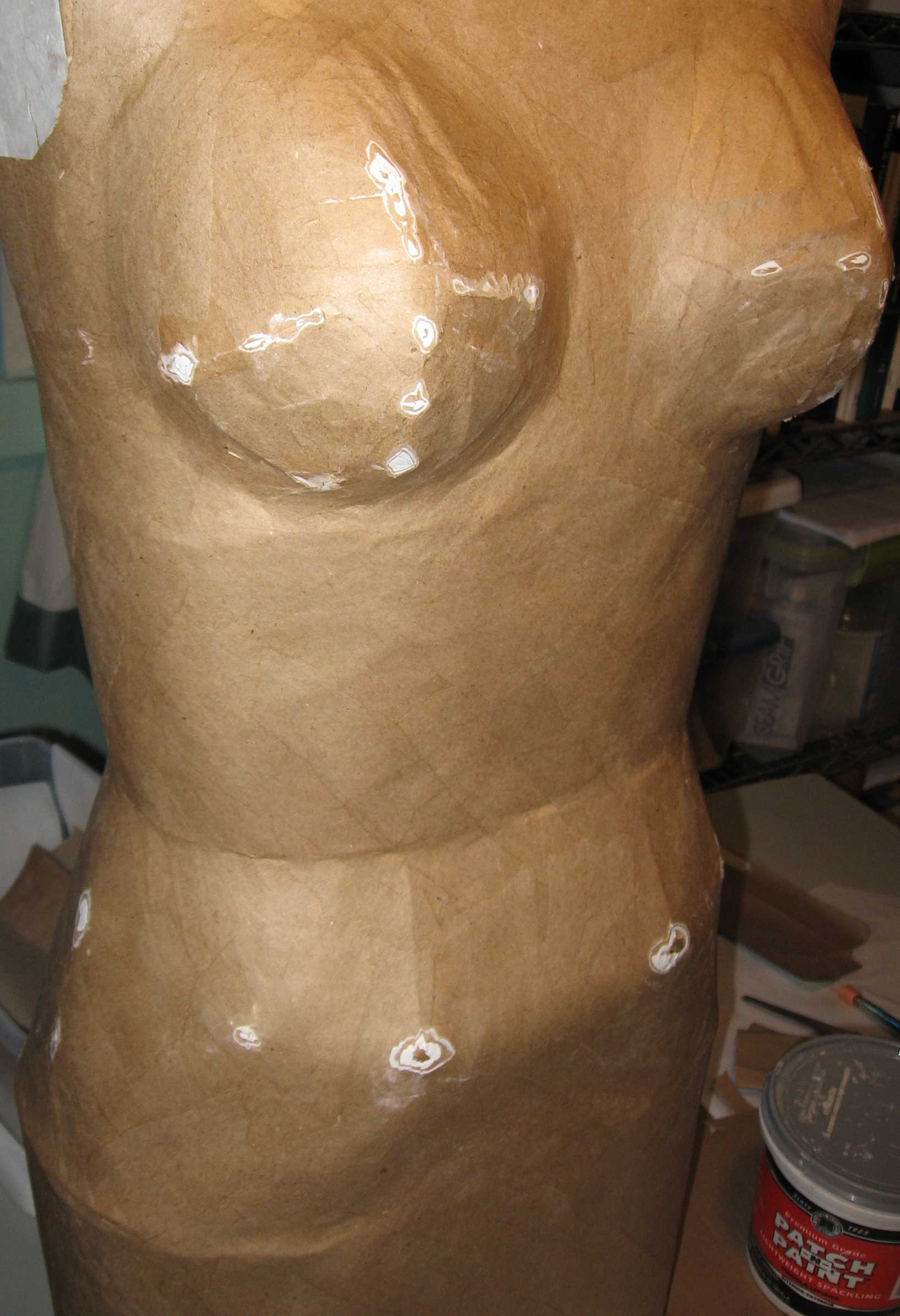
shave off dart pointsAfter the first two layers of paper mache were dry, I used a razor knife to slice off the pointy dart ends, then rounded out the shape as best as I could with lightweight spackling compound before adding three more layers of paper mache. If I’d stuck to using kraft paper tape, I think a total of three layers of tape would have been plenty, which would have saved a lot of time. I don’t think cornstarch paste dries as stiff as white flour paste, so you probably wouldn’t need as many layers of paper mache if you use flour paste, either.

After the paper mache was dry, I sprayed acrylic sealer on the form to preserve it.

It took me a weekend to assemble the dress form, then countless hours over several days to add layers of paper mache. Seriously, I refuse to count how many hours I spent putting paper mache on this thing.

So yes, it is possible to use this pattern to make a full scale dress form. It would work fine as a display item, but it doesn’t quite have a realistic body shape, so I wouldn’t recommend using it for fitting purposes unless you pad it out to match your own body shape.

Posted in Crafts

Beanie Boobies

So, my brother recently signed up as a subscriber to my blog, just in time for a post all about my breasts. Yeah, you might want to skip reading this one, bro.

I’ve never been able to buy a bra that fits. When I was younger, I wore stretchy non-wired bras that didn’t provide much support because they were all I could fit into. My measurements say I should wear a 34C, but they lie. My breast tissue (not just fat) nearly meets in the center, and my breasts extend well under my arms, so there’s more breast volume there than a typical 34C cup size. Lately I’ve been wearing non-wired foam cup t-shirt bras in either 34C or 36B, which aren’t too bad, but I end up with pressure points where the bra cuts into my ribs, I overflow the cups at the center and sides, and they are not terribly supportive. Lately I’ve noticed that there is a lot of tension on my bra straps, too.

Many years ago I decided I wanted to try sewing an underwire bra, thinking that if I custom fit it, I could wear a wired bra. I bought a pattern, fabric, elastic, The Bra-makers Manual, and a whole set of underwires in different sizes. I found a wire that fit the curve under my breasts, and then had to shorten the ends by an inch or two. The wire that fit me was six sizes larger than the one used in a 34C bra. Every day after work I’d come home and sew a new bra, then make some adjustments to try the next day. I made at least a half dozen versions before I quit working on it. I ended up with a bra that almost fit, but wasn’t comfortable enough to wear regularly. The wires still dug into me, and wouldn’t lie flat against my chest in the middle.

I’d like to add that The Bra-makers Manual (I have what is now the first of two volumes) was a huge disappointment for me. It’s almost exclusively dedicated to sewing wired bras, with a couple of notes here and there about non-wired bras. And I just now discovered that near the end of the book, the author mentions that women with breast tissue extending under their arms cannot wear wired bras. Wouldn’t it have been helpful to put that at the beginning of the book? She just jumps right into discussing wired bras, as if they are the only kind. Also, I couldn’t find any info on what to do if there is no room for a bridge between your breasts. The author just says that the bridge should lie against the chest, rather than the bra acting like a hammock. But I can’t figure out how to do that since I don’t have room for a bridge. This book was very expensive, and did not lead me to figure out my fit issues.

After giving up on sewing a bra, I went to be professionally fitted. I came home with an expensive underwire bra that I wore once, and some not very supportive non-wired knit bras. The underwire bra felt OK for the first hour or so, but by the end of the day I couldn’t think of anything other than the pain of the wires digging into me. I’m not the type to be willing to suffer for fashion, so I ended up wearing the knit bras. They didn’t give me a very nice shape, but what else could I do?

I decided I’m going to give making my own bras another try. I figured if I blogged about it, I’d be more likely to follow through with the project, since that worked for finishing my jeans.

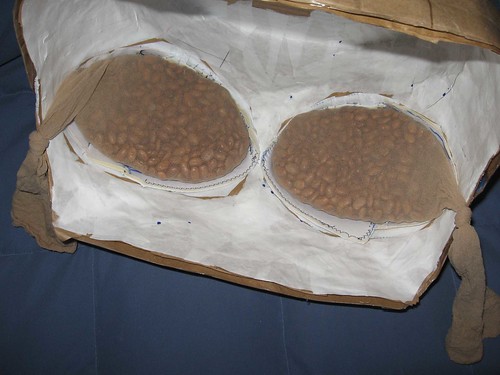
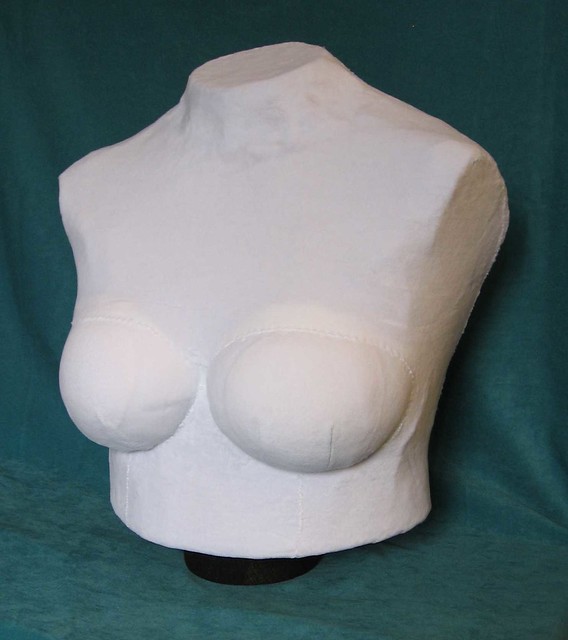
To help me drape a bra pattern, I made an upper body form of myself, with semi-soft breasts stuffed with beans. This was a lot of work, but I enjoyed it simply as a craft project. Apparently I really like cloning myself- I’ve got all sorts of body parts scattered around my sewing area – a dress form, skirt form, pants form, and a pair of plaster feet. It’s really kind of creepy.

For anyone wanting to make a paper tape dress form, I have a few tips on working with kraft paper tape in my skirt form tutorial. I also took lots of pictures while making this bust form. I put them up on Flikr. I added further descriptions and explanations to some of the pictures, so click on the pictures to see the comments. One thing I don’t show in the pictures is that prior to taping the shoulder area, I marked my desired armhole location directly on my body with washable marker. I found this is very important – it is very difficult to get the left and right armholes the same otherwise, especially if you don’t have an experienced sewer doing the taping.

The bean-filled breasts are firmer than I anticipated, since I used foam bra cups and packed the beans in so tightly. But they are nearly in the shape I wanted, and I can pat them into slightly different shapes.

If I end up making a bra I really like, I plan to perform a double mastectomy on my full dress form, put a bra on her, and fill up the bra with lentil filled stockings. Then I’d have a much more realistic bust to work with for fitting.

11 nylons full of beans in breasts

33 finished bust form

Posted in Bra-making, Patternmaking, Sewing
Translate
Follow Grow Your Own Clothes on WordPress.com

Enter your email address to follow this blog and receive notifications of new posts by email.

Categories