DIY Cure for a Slipping Treadle Belt

The leather treadle belt on my Singer 328K was slipping when I sewed over anything thick or used twin needles. I tightened up the belt, but even with the belt tight, it was still slipping. I think there were a few things causing it to slip. The main reason is probably because the treadle belt is scraped up from when I was using the belt with the original balance wheel and there wasn’t quite enough clearance for the belt. Another factor is that I have it on a treadle base with a large wheel to make it treadle a little faster. Also, it is a zig-zag sewing machine, which requires more force to turn than a straight stitch machine.

Someday I’ll replace the leather belt with urethane belting, which I think will work better than leather for this machine, but for now I just wanted to put something on the belt to make it stickier. I figured violin rosin would work. I planned to buy some, but then I thought, hey, rosin is made out of pitch, right? I live in a house surrounded by pine and fir trees, so maybe I could make some rosin? Rosin doesn’t cost much, but I thought it would be a fun project to try to make my own.

A Google search gave me an idea of how to make rosin. Basically, you boil pitch, then add beeswax and other secret ingredients. I didn’t find any actual recipes (I guess that’s top secret info), so I just winged it.

There is snow on the ground at my house and it’s been raining, so I didn’t really want to go tramping around in the slush looking for pitch. I remembered that I had some pitchy firewood, so I decided to try scraping the pitch off of it, since I only needed a little bit of rosin.

Pitchy Wood

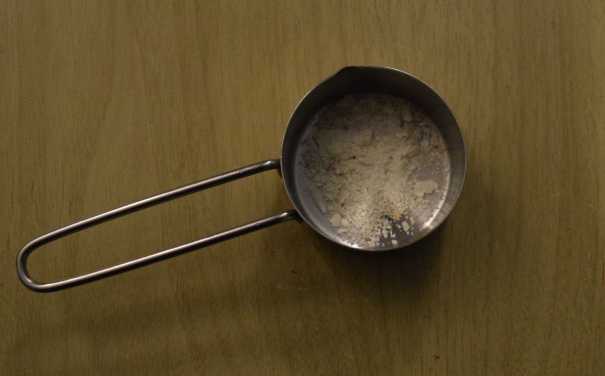
I put the pitch in a metal measuring cup and set it on the wood stove to melt and boil a bit. I added a couple of small chips of beeswax and stirred them in.

Pitch in cup

I made a mold out of pieces of a manila folder, poured in the hot pitch, and let it cool.

Rosin mold

I regretted using my good measuring cup when it came time to clean it up. I had to heat up some rubbing alcohol in it to dissolve the pitch then rub the cup with coconut oil, but I got all of the pitch residue out of my measuring cup.

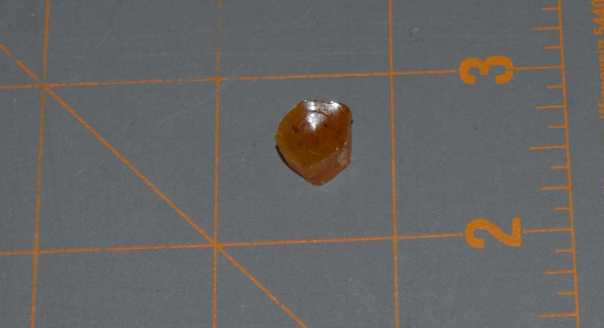
The rosin came right out of the mold. And what do you know, it kinda looks like a tiny piece of rosin!

Mini rosin

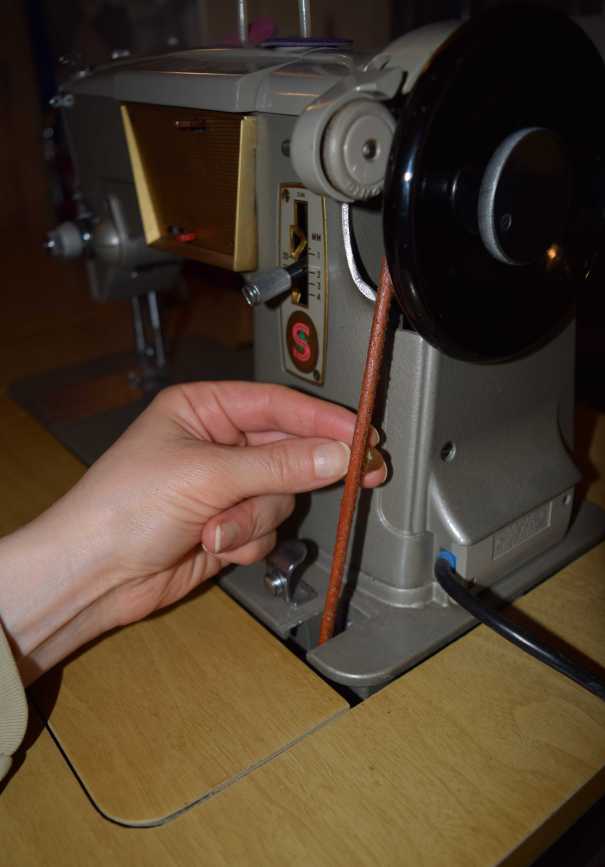
I rubbed the rosin on the leather belt as I treadled until the belt felt just a bit sticky.

Rosin on treadle belt

The belt is slipping a lot less now. I had fun making the rosin, and it didn’t cost me anything to make it, so I got double enjoyment out of the project.

Posted in Treadle Sewing Machines

An Accidental Science Experiment

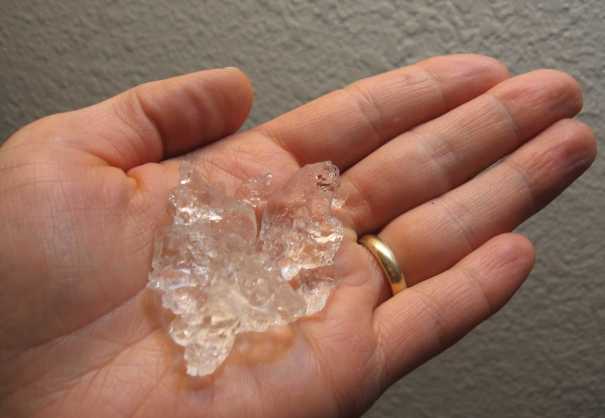
clear_slime

I’ve been sewing up Cashmerette Appleton knit dresses for myself and a couple of other people, and I used a fair amount of Solvy and Sticky Solvy wash away stabilizer while sewing the hems. After washing the last dress in my front-loading washer, I reached into the pocket formed by the rubber door seal to clean out the lint and whatnot that collects in there, and got a bit of a gooey surprise.

I freaked out for a few seconds, then got up the courage to pull the thing out. It was a perfectly clear glob of firm slimy stuff. It took me a minute, but I figured out what it was, since it looked just like the slime I made in chemistry class when I was in school. The PVA stabilizer reacted with my laundry detergent (Charlie’s Soap powdered detergent) to make slime! Amazingly, it came out perfectly clear even though the dresses are black. I dissolved some more stabilizer in a bowl of water and added a little laundry detergent just to check that that’s what had happened, and yes, it solidified into a gooey ball.

I wonder if this has anything to do with the intermittent error messages I’ve been getting on my washing machine?

Posted in Uncategorized

Favorite Sewing Tip of 2015

UltraCleanMarkersNote: Since I wrote this, I got another set of markers, and did a quick test on cotton, this time letting the marks dry for two days, and the colors didn’t seem to wash out as well. The green and blue washed out better, exactly the opposite of my previous results. So do your own tests before marking all over the right side of your fabric!

For all of the years that I’ve been sewing, I’ve struggled to find a good fabric marking tool. I’ve tried pencils that break as soon as they are sharpened and sometimes don’t wash out. I’ve tried air-soluble markers that fade too soon and can’t be ironed or the marks become permanent (how can you avoid ironing your marks?). Traditional chalk isn’t too bad, but you have to sharpen it frequently to get a fine line, and it’s difficult or impossible to use on some fabrics, like stretchy knits and fleece.

The Amazon product links in this post are affiliate links. If you click on these links and purchase something, I will earn a small commission.

Well, thanks to Lauren’s blog post last May, I found the perfect marking tool for most fabrics: Crayola Ultra-Clean Washable Markers.  The Ultra-Clean markers wash out even better than regular washable markers, and are better than any marker I’ve found in the notions aisle of a fabric store. I used them to mark all over white t-shirts I sewed, and the marks washed out without a trace.

Now that I have a marking tool that I’m confident will wash out, I find myself marking all sorts of places that I wouldn’t have before. My favorite use for these markers is marking hems. I mark the crease line on the right side of the fabric using a marker along the edge of a quilting ruler. It makes pressing the hem much easier to have it marked first rather than trying to measure as I press.

Lauren did some testing on these markers, but I accidentally discovered that they don’t wash out of silk as well as cotton, so I did some further testing with fabric I had on hand.

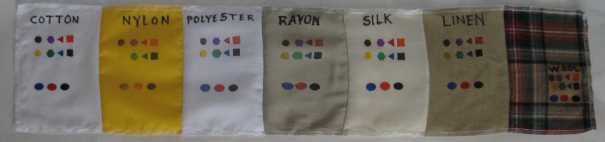
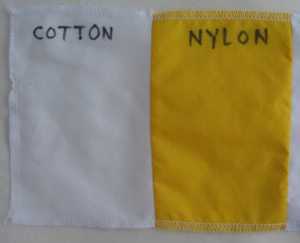
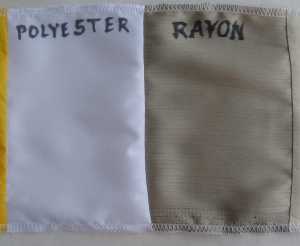
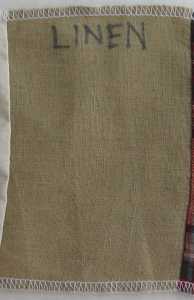
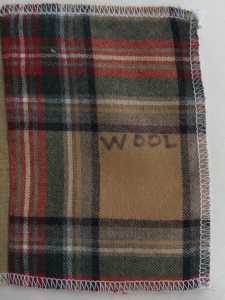
I didn’t have white fabric in every fiber I wanted to test, so I just picked the lightest colors I had. I tested cotton, nylon, polyester, rayon (viscose), silk, linen, and wool. The eight geometric shapes on the upper portion of the swatches were drawn with each color of Crayola Ultra-Clean washable markers. The three ovals below them were done with regular Crayola washable markers for comparison.

MarkerTestSwatches

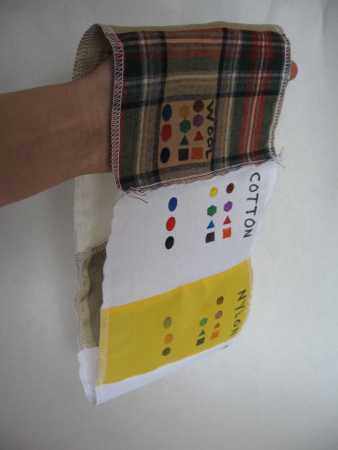
I basted the ends of my swatches together into a tube to keep the fabric from twisting up in the washer (that was last year’s tip). I let it dry for a couple of hours, then I threw it in the washer with some towels and washed it in cold water.

SwatchesSewnLoop

For all fabrics except silk and wool, all of the marks from both the Ultra-clean and regular washable markers disappeared without a trace. On the off-white silk swatch, I could just barely detect marks from the Ultra-Clean markers, but the blue and red regular washable markers left noticeable pink stains (they look worse in person than in the picture). On the tan colored wool, I could just barely see a pink stain from the red regular washable marker.

Even after this test, I wouldn’t hesitate to use Crayola Ultra-Clean markers on light colored silk and wool. I wouldn’t use the regular washable markers on silk or wool, though. Surprisingly, black seems to wash out better than red or blue, so on silk or wool I’d stick to the black marker and mark sparingly. Also, on the back of the package the markers came in, it says that it may take several washes to completely remove stains, so I bet that a couple more washes would get everything out.

These markers are great, but they won’t work for everything. Obviously, you can only use washable markers on fabric that will be washed. Since I never sew anything that will be dry cleaned, that’s not an issue for me. Markers will of course not show up on really dark colored fabrics. For dark colors, I use white tailor’s chalk or a chalk wheel for marking fabric and a white china marker for tracing around patterns.

Don’t use washable markers on fusible interfacing or on fabric that will be interfaced. The ink mixes with the glue on the interfacing and becomes permanent.

Posted in Sewing

2015 Unblogged Sewing Projects

I sewed quite a few things last year that didn’t make it onto my blog. Some items I just never got around to writing about and some just weren’t worth their own post. So here they all are in one quick and dirty post. Well, not literally dirty (although there are plenty of wrinkles). I had to do a lot of laundry to get everything clean for the pictures, since most of these are items that my family’s been wearing frequently.

Last summer I sewed up cotton thermal long underwear for the whole family so we could all stay nice and warm this winter. I bought a 15 yard lot of pink cotton thermal knit fabric, and sewed it all up at once. I was really sick of pink by the time I was done! I dyed my husband’s long johns a more masculine color, but my son opted to leave his pink.

For myself, I based the pattern on my self-drafted pajama pattern, for my daughter I made a pattern based on a RTW long sleeve tee and leggings, and for my son and husband I used Jalie 2328.

A winter storm knocked out our power for a couple of days when I was behind on laundry, and my son needed some new underwear anyway, so I sewed him a couple of pairs of knit boxer briefs on my treadle zig-zag sewing machine while wearing a headlamp. That was pretty fun. After the power came back on, I sewed up a few more pairs using my serger. For the pattern, I copied his RTW underwear and graded it up to fit.

I turned four yards of purple cotton knit into long sleeve and 3/4 sleeve Grainline Lark Tees for me, a long sleeve tee for my daughter, an SBCC Tonic Tee for me, and a pair of underwear for me.

I upcycled a couple of my old maternity tees into a shirt for my daughter and a pair of underwear for me. The neckline binding on the shirt was made with my new industrial-style binding attachment that fits on a regular sewing machine. I’ll do a post about the binder once I’ve practiced with it a bit more.

I made myself a crushed velour Lark tee for the holidays. When my daughter saw the fabric, she wanted one too.

Velour_tops

Here are a couple more Lark tees. They are made from thin wool/rayon blend jersey. They make a nice inner layer in the winter.

I made a Watson-ish bra. The bra below was my third try. For the first version, I used the long-line Watson pattern without alterations, choosing a size based on my measurements. It was too small and tight. I have this problem all of the time – since I have wide breasts, my measurements don’t give a good indication of my cup size – so I don’t fault the pattern. But I had to start somewhere, so I started with the size I measured for. On the first test bra, the cups were way too small, the band was too tight, and the band was too long. The lower edge of the band cut into me below the ribs, I imagine since I’m petite and have a short ribcage. For the second version, I used a cup pattern several sizes larger and a larger band size, but it still cut in below the ribs. I guess I just can’t wear a long-line bra. By the third version, I had completely re-designed the band to match the band shape from a self-drafted pattern I was working on. The bra is reasonably comfortable and I wear it occasionally, but the only support comes from the straps, so I don’t know if I’ll make any more. This bra design would have been a good one for me a couple of decades ago before I actually needed support.

I made a quilt for my husband for Christmas. I used Quilter’s Dream wool batting, which seems to be pretty good stuff. It survived the first washing without any problems, anyway.

Wool_batting_quilt

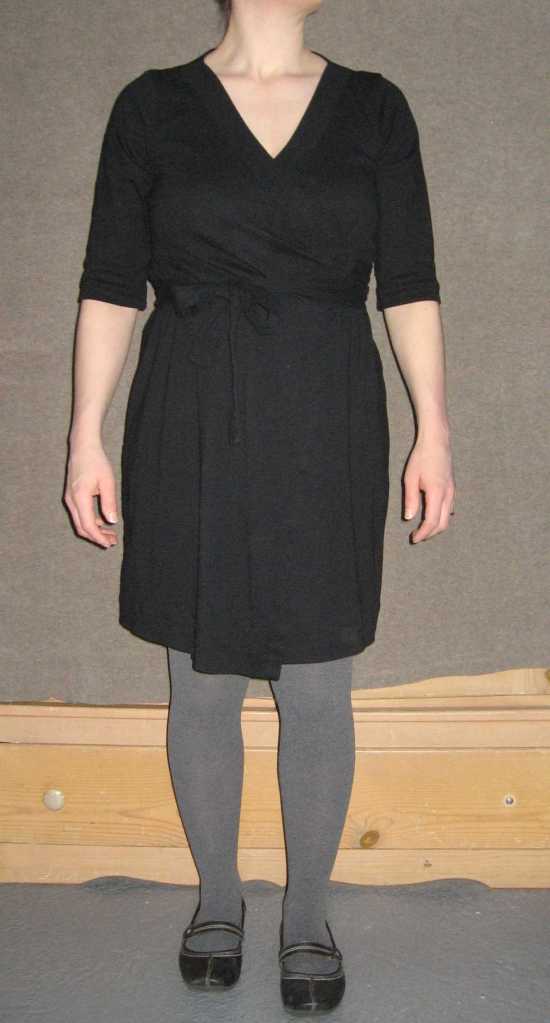
And finally, I made a wearable muslin of the Cashmerette Appleton dress. I graded down to a size 10 for most of the dress, but I went up to a size 14 at the back hip. After comparing the pattern pieces to my personal block pattern, I decided to shorten the pattern 1/2″ at the bust level. In retrospect, I’m not sure that was a good idea.  I think I also need to cut a larger size for the front hip and below, since it doesn’t overlap enough. Next time I’m going to try interfacing the vertical hems on the wrap skirt edges to see if that helps prevent the sagging and lack of wrapping problems, too. This is a flattering and comfortable dress, though, so I’m going to put in the work to get the fit and length right, and then I’ll get some good fabric to make more Appletons.

Appleton_front

Here are some overexposed pictures of the Appleton, so you can see the details:

Posted in Sewing

Giveaway Winner

And the winner of the holiday giveaway is . . .

2015Winner

Gill! Congratulations, I’ll email you the set of mini dress form patterns.

Posted in Uncategorized

Holiday Giveaway

For the holidays I’m giving away a set of all of my DIY miniature dress form patterns. These include:

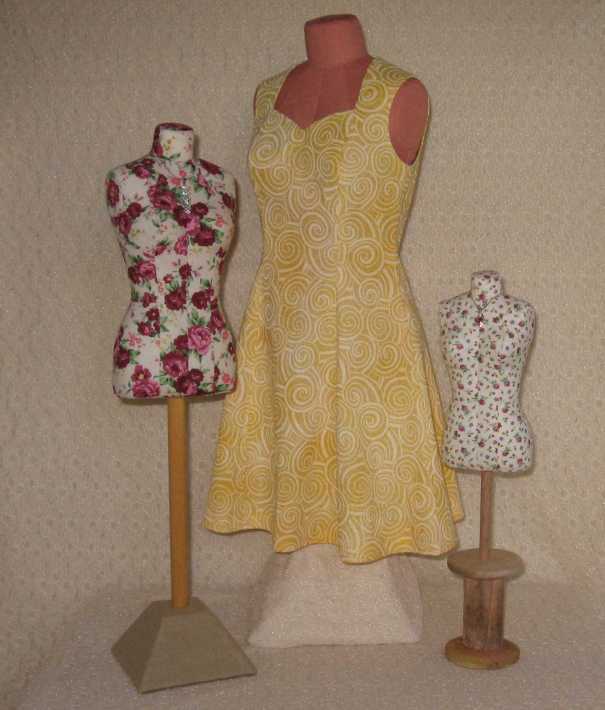
My favorite, the sewn and stuffed dress form. This one comes in three sizes (1/4 scale, 1/3 scale, and 1/2 scale):

MiniDressForms2

The stuffed dress form instructions include a pattern to make the cardboard stand shown in the picture above, on the left.

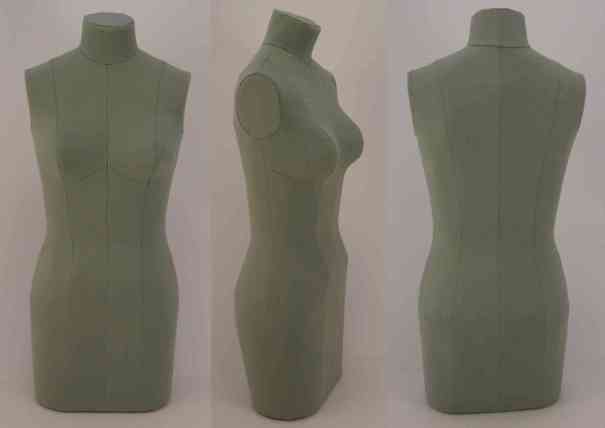
Next is the paper half-scale dress form:

Dressform3views

The paper forms can be covered with paper mache, and optionally covered with a sewn non-stretch cover,

3views

or a knit cover (the knit cover is free on Craftsy):

knit_covers

The paper dress form instructions also include a pattern to make the cardboard stand shown in the picture above.

The non-stretch cover can also be sewn and stuffed to make a dress form. It’s a little simpler to put together than the sewn dress form that comes in three sizes.

fabric dress form side

Also included is a set of basic block patterns that can be used for flat pattern making practice. These fit the paper dress form best, but can be used with the sewn forms if you alter the patterns a little (or use them as-is if you are not too picky about the fit).

half scale sloper patterns

I have a some free dress patterns available on Craftsy that will fit any of the half-scale forms:

For further details on the patterns, check out the pattern descriptions on Craftsy or Etsy.

To enter the giveaway, leave a comment telling me what you would use your dress form for. Would you use it as a decoration? To practice flat pattern making or draping? Or something else?

I’ll use a random number generator to pick a winner on January 1, 2016.

The patterns are pdfs and will be emailed to you, so the giveaway is open to everyone worldwide.

Good luck, and happy holidays!


Posted in Uncategorized

Treadling a Singer 201-2 Part 2

Last month I adapted a gear driven Singer 201-2 so I could use it on a treadle base, but I just now finished the project by installing the belt guard. This was my first time drilling holes in cast iron and tapping holes for screws. It actually wasn’t that difficult, and it felt very empowering.

I bought a bobbin winder from a Singer 201-3 to to use on my converted 201-2. The Singer 201-3 belt guard and bobbin winder assembly attaches to the sewing machine with two screws, which the 201-2 does not have holes for. The holes need to be drilled and tapped for the screws that will be used.

I needed to use a common screw size so I could easily get a tap and drill set to match, so I chose 8-32 screws, which are slightly smaller than the screws used to attach the bobbin winder on the Singer 201-3.

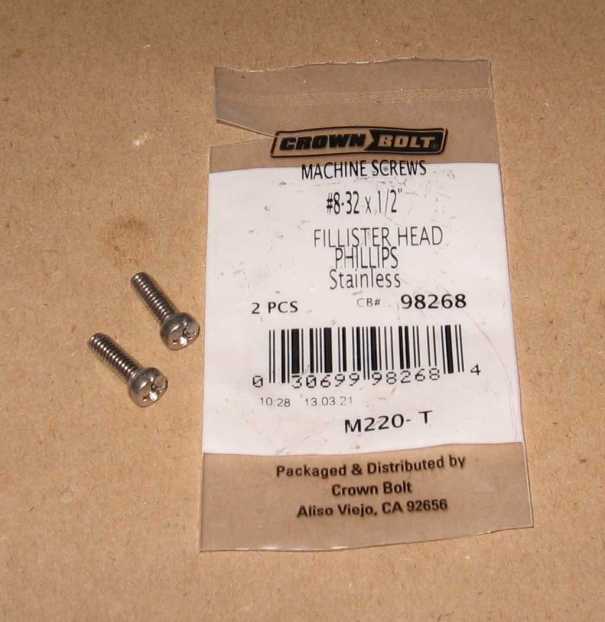
I realized that the heads on most machine screws would be too large to fit into the depression on the belt guard, and somehow I discovered that fillister head screws were what I needed. Most places will only sell you these machine screws in sets of 100, but fortunately I found 2-packs of stainless steel half-inch 8-32 fillister head screws online from Home Depot.

FillisterHead8-32Screws

I bought the cheapest tap and drill set I could find, since I only needed it for two holes and I don’t know if I’ll ever use it again. I was very careful with the drill bit and tap, and they worked fine. I discovered my husband already had a tap wrench, so I didn’t have to buy one.

I made a paper template to mark the hole locations, then used a center punch to mark the centers.

I was surprised to learn that cast iron is best drilled at low speed with no lubricant. It’s a good thing I looked that up. The cast iron flakes off as powder, so lubricant just gums things up. I used a vintage hand drill, since I have an easier time drilling straight with a hand drill, and it’s definitely low speed! It took a while to drill the holes, but it wasn’t difficult. I periodically pulled out the drill bit and cleaned off the iron filings.

HandDrillSewingMachine

When I looked up how to tap a hole in metal, I read lots of horror stories of taps breaking and having to be drilled out with diamond bits, so I was extra careful, especially since I was not using high quality tools. Basically, you just turn the tap clockwise until it starts to get hard to turn, back it off a quarter turn or more, then turn it clockwise again. I didn’t use lubricant when tapping the cast iron. I periodically removed the tap completely and brushed it off. The main thing is to never use a lot of force – if the tap starts to bind up, back it off a bit or remove it and clean it.

Singer201-2HolesDrilled

I put a drop of sewing machine oil on each screw, then installed the belt guard. The screws fit perfectly in my holes.

Singer201-2withBeltGuard

I put the balance wheel back on, then adjusted the bobbin winder so that the rubber ring presses against the hand wheel when the bobbin winder is engaged. I also had to adjust the position of the bobbin thread tensioner/thread guide on the base of the machine.

Singer201-2With201-3Guard

Now I can call this project done!

Posted in Treadle Sewing Machines, Vintage Sewing Machines

The Little Sewing Machine That Could

I mentioned in my last post that I bought a Singer 99k with a hand crank for my daughter. She is still too little to reach the pedal of a treadle sewing machine and is scared of electric machines, so I thought a hand crank might be good, since I’m trying to get my kids hooked on sewing as young as possible.

I have a reproduction hand crank that I put on my antique Singer 127 vibrating shuttle sewing machine. I had my daughter try that, but it was a bit of a stretch for her to reach the hand crank, she found the lack of reverse frustrating, and the hand crank handle fell off after a few minutes. I think the handle is just pressed into the hole – I don’t think anything actually broke. The gears grind a bit at a certain point in the rotation, too. I just don’t understand the mindset of the people who manufacture junk like this. I glued the handle back on with JB Weld. Hopefully it will stay on now.

reproduction hand crank

I figured a three quarter size sewing machine would be good. When I saw a Singer 99k on ebay that came with a vintage hand crank, I bought it, hoping the hand crank would be better than the one I have. I was so excited to find what I was looking for at a semi-reasonable price I snapped it up despite the fact it was sold by a new ebay seller and the shipping charges were a bit steep.

No matter how many times I keep telling myself not to buy sewing machines on ebay, I keep doing it. Maybe these pictures will deter you from making my mistakes.

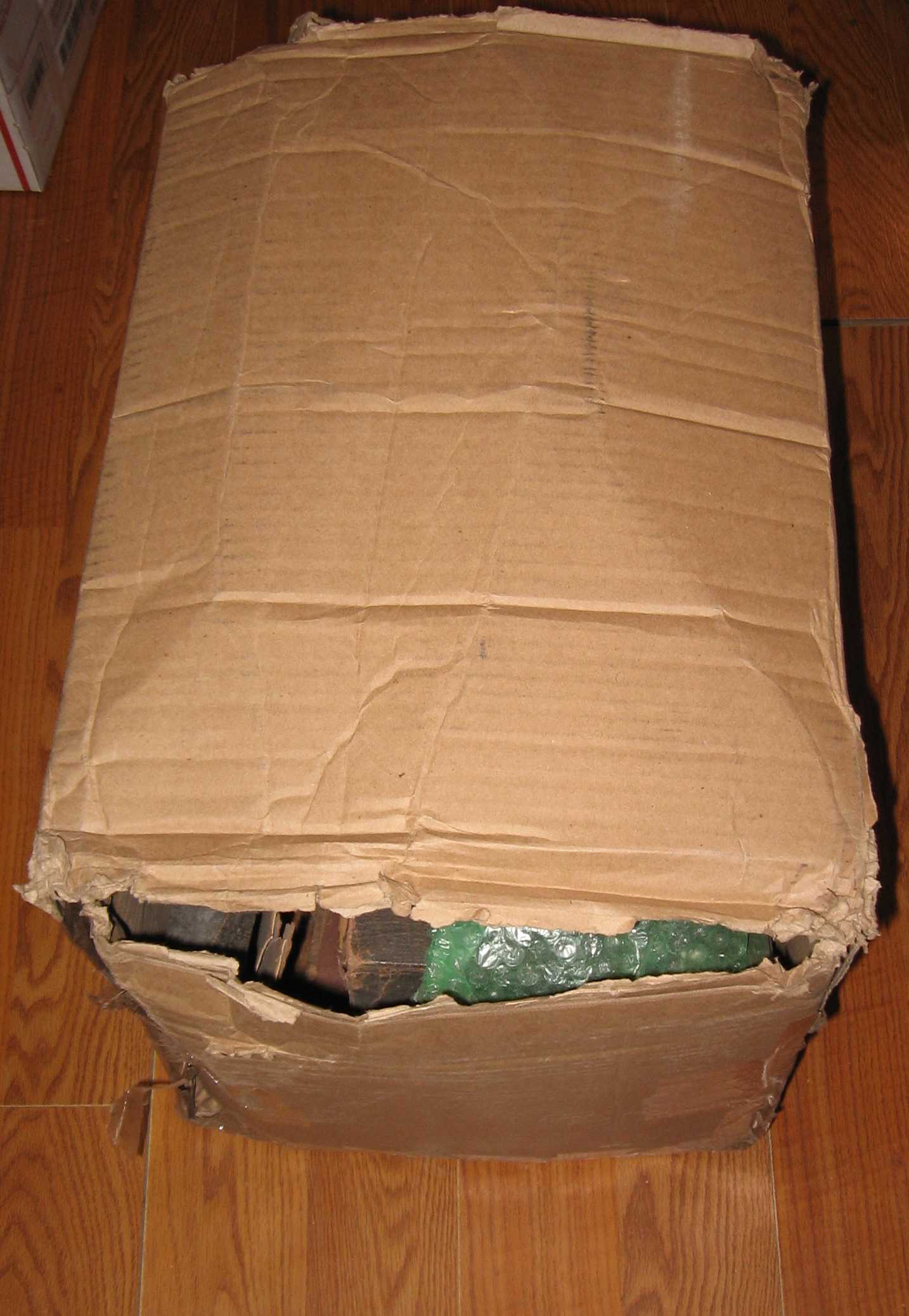
Here’s what the box looked like before I opened it. The box was thin cardboard, and the contents was shifting around, not packed tightly.

Unpacking Singer 99 1

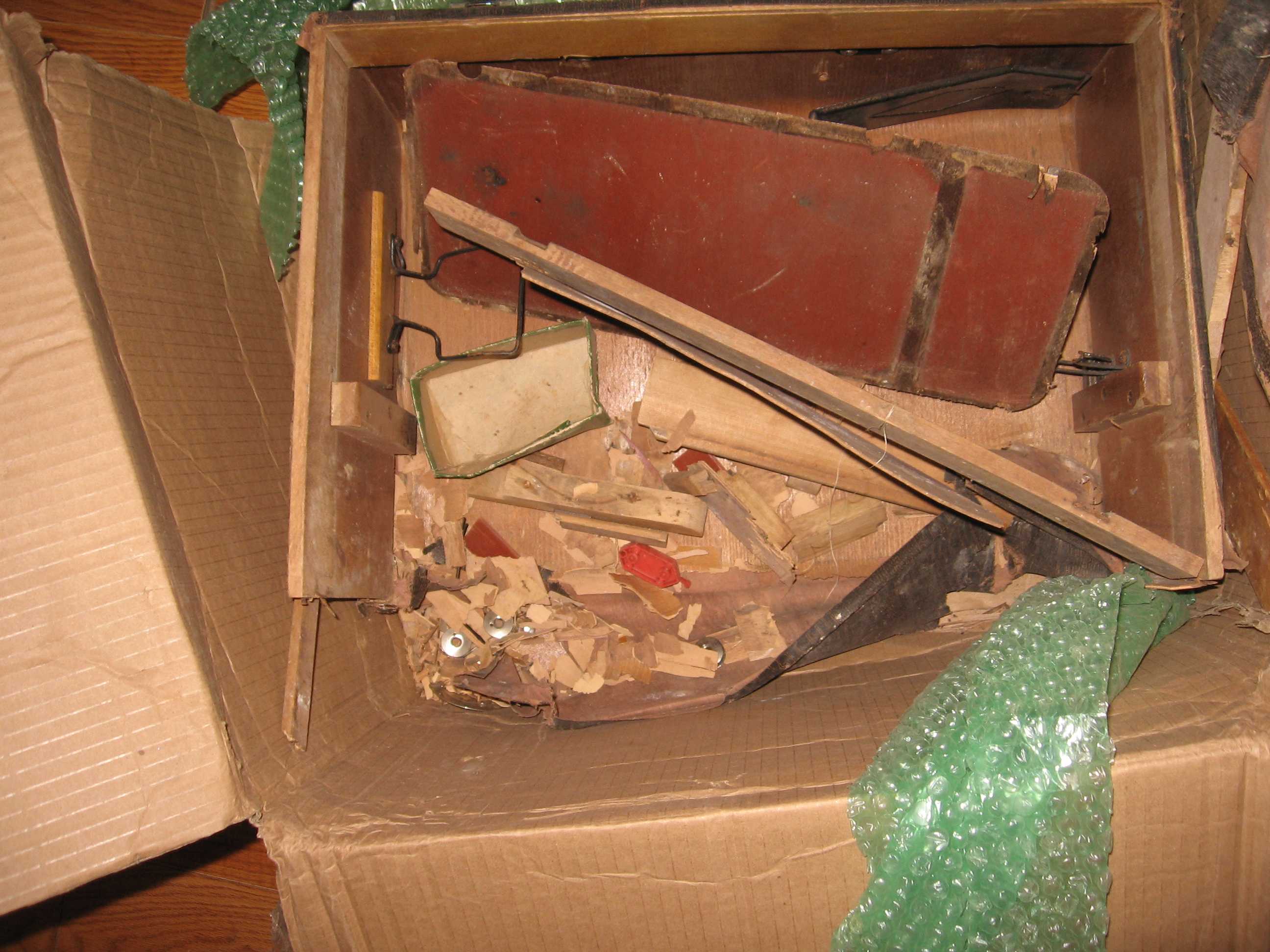
After opening the top, I found this. Obviously none of the money I paid for shipping was used to pay for packing material. They put a little bubble wrap around the outside of the case. The metal accessories were just tossed in with the sewing machine.

Unpacking Singer 99 2

When I took out the sewing machine, you could see the rubble the case was reduced to.

Unpacking Singer 99 3

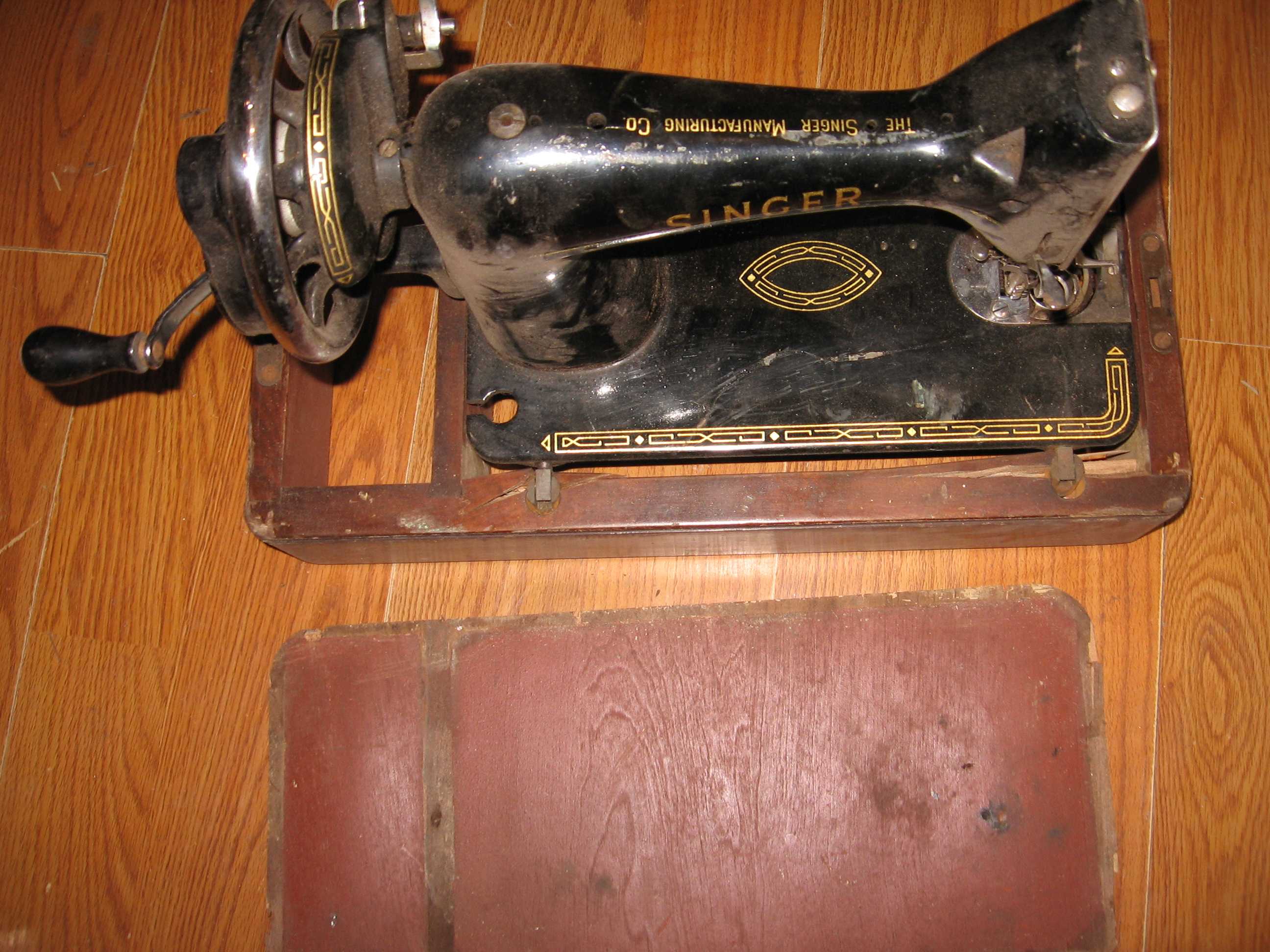
The wooden sewing machine base was broken, but amazingly the sewing machine itself appeared to be fine! It probably had a few new scratches and scrapes, but it had quite a few scrapes to begin with.

Unpacking Singer 99 4

I sifted through the rubble and found all of the pieces to the wooden base. I inexpertly glued them back together, so it works, but it’s lost any value it might have had as a collector’s item.

Singer 99 broken base

I’m overly optimistic when it comes to vintage sewing machines. I keep thinking – it’s so fun, you just clean them up, oil them, adjust the tension, and they run like new! Some of my machines were like that, but this one actually had a couple of things wrong with it. For a while I was afraid I wouldn’t be able to figure out how to fix it, but eventually I did. The spring that holds down the presser foot had broken and the upper tension release lever was bent so it was jammed against the side of the tension release pin. Oh, and the upper tension knob was rotated sideways. I finally figured out how to fix it all. The Tools for Self Reliance Sewing Machine Manual is a great resource for DIY refurbishing of Singer models 15, 66, 99, and 201. I could have saved myself some time if I had finished reading it before working on this machine.

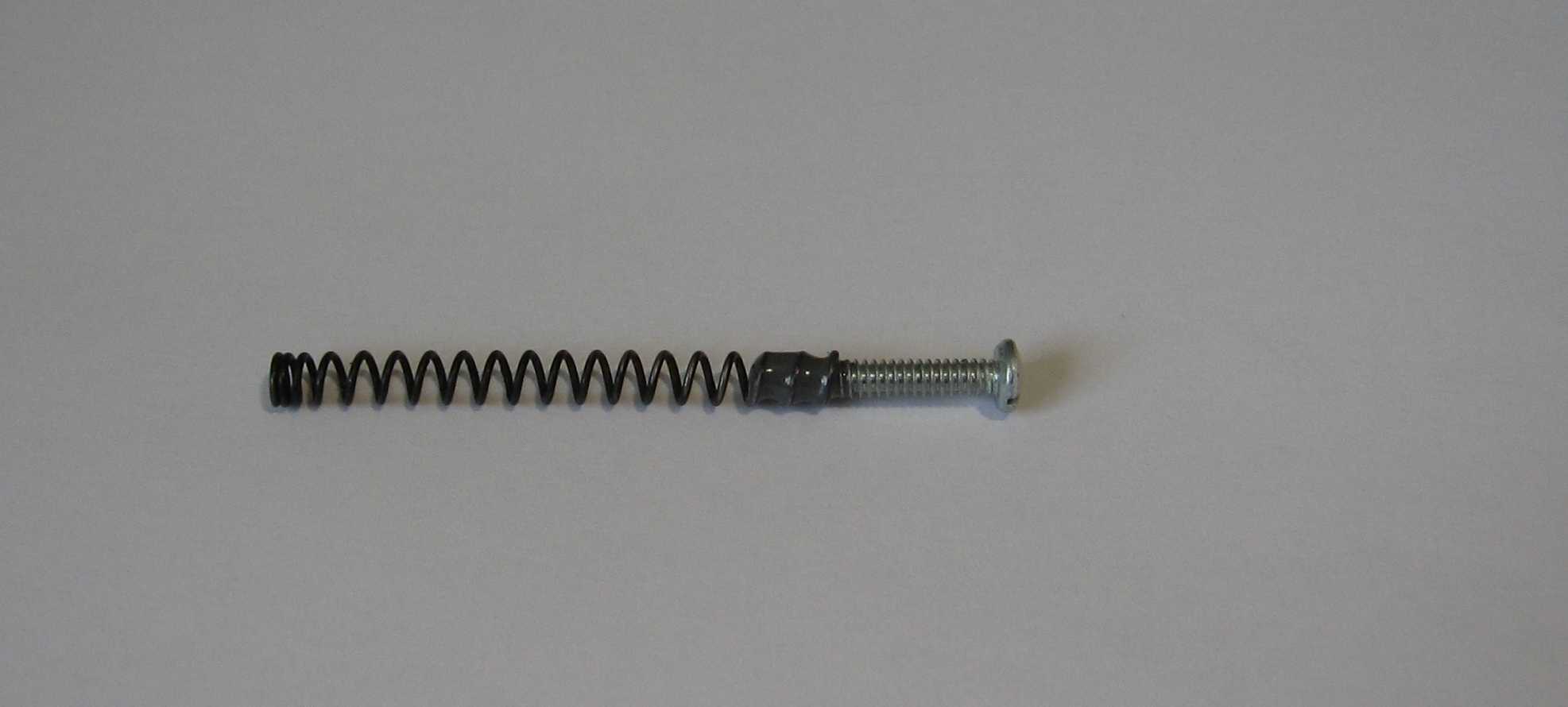
I was able to bend the tension release lever back into place and re-align the upper tension assembly, but that left the broken spring. I looked for used ones for sale, but the only one I could find was from a machine 30 years older than this one. I didn’t really want to pay money for an even older spring and wait for it to be shipped, so I decided to try to fix the spring.

I found a machine screw that just fit inside the spring and glued it in place with JB Weld. After it hardened most of the way I cut off the end of the screw, leaving just a little sticking out of the broken end of the spring and glued the other section of the spring onto it.

fixing 99k presser bar spring 1 fixing 99k presser bar spring 2

The next day, I installed it, and it worked perfectly. Here’s where that spring goes:

Here are some before and after photos. They’re always so much more dramatic when the sewing machine is dirty to start with.

Before:

Singer 99 before 1

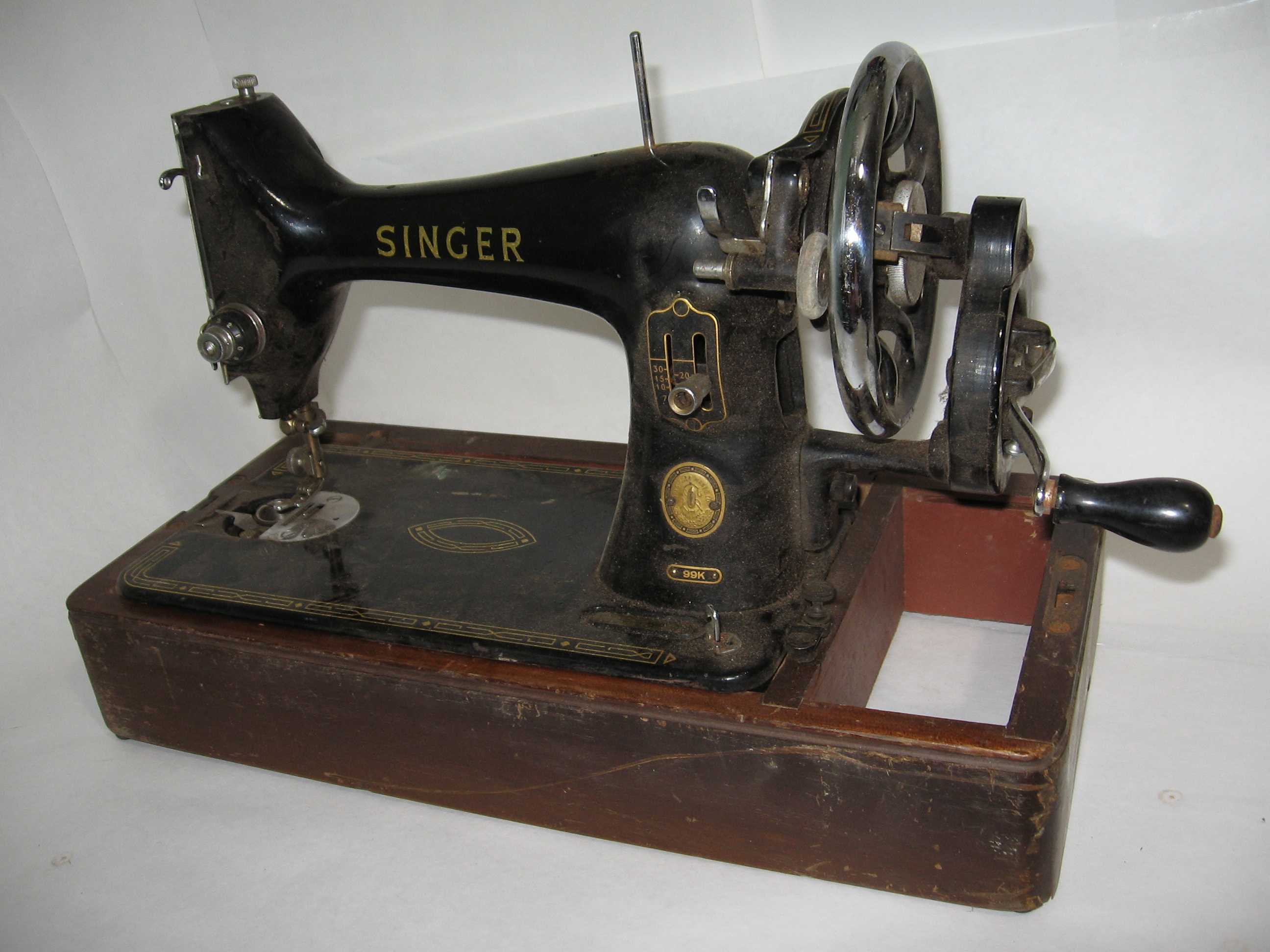
After:

Singer 99 after 1

Before:

Singer 99 before 2

After:

Singer 99 after 2

I ordered a replacement slide plate after the pictures above were taken. This little machine sews quite nicely now. And perhaps most importantly, my daughter loves it! I was worried after all this she might not even be interested in it, but she’s very excited. The sewing machine is set up in her room, and she gave it a good night kiss before bed. Today I helped her sew a dust cover for it with this machine.

Singer 99 stitching

My son is feeling a little left out, and wondered why his sister got a “new” sewing machine and he didn’t. I told him that the treadle Singer 252 that is set up in my overflow sewing area can be for his use whenever he wants. I guess it’s not quite the same as having a machine purchased and fixed up specifically for him, though.

Posted in Vintage Sewing Machines

Treadling a Singer 201-2 and Stuff

I’ve had another flare up of VSMAD (Vintage Sewing Machine Acquisition Disorder). I thought I had it under control, but apparently not. This disorder cannot be cured, but does occasionally go into remission.

I’ve acquired two new machines in the last month – a Singer 201 for myself, and a hand crank Singer 99K to teach my daughter to sew on. I am quite proud of myself, though, because I also gave away a sewing machine. This was the first time a sewing machine has left my possession. Sergers excluded, the Janome Magnolia 7306 I gave away was the only sewing machine that I owned that was manufactured in this century. It had a couple of stitches that my other machines don’t have, but it still just sat on the shelf since I’d rather sew on vintage machines, so I’m glad it went off to a good home.

My VSMAD flare up was triggered by a perfectly innocent comment in a post by Peter Lappin. In this post, he said he made buttonholes with his Singer buttonholer – the one that uses templates. I thought “Wait, what? Did Singer make buttonholers that DON’T take templates?” I’d only heard about the kind of buttonholer with templates, and I’m always complaining that I don’t have exactly the right size template even though I have every size template made for my buttonholer. I was pretty excited to learn that they made buttonholers that can be adjusted to make any size buttonhole. Peter made a video demonstrating this adjustable old-style buttonholer on his Singer 201 sewing machine. This buttonholer lets you adjust just about everything by turning various wing nuts and screws.

I bought one of these buttonholers quite inexpensively on ebay. No one seems to want them for some reason. I think they are great. If you are looking for one, search for Singer part #121795. They do take a bit of fiddling with to get everything set right, so I’ll probably use the template buttonholer if it has the size I want. I’ll be happy to have the adjustable buttonholer when I need another size, though.
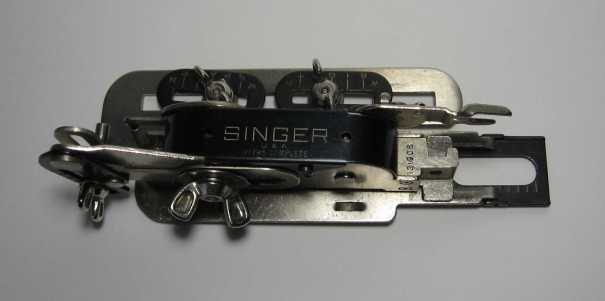
Buttonholer 121795

After seeing how the Singer 201 sewing machine in Peter’s buttonholer video could drop the feed dogs, I of course had to research that model of sewing machine. I quickly realized why I had always ignored this model – in the US, almost every Singer 201 you will find is a 201-2, which is the gear driven “potted” motor version. I’d always just thought of the 201 as “that industrial looking model that I can’t put on a treadle base” and ignored it. But after reading more about this sewing machine, I found out that it came in other versions besides the potted motor – 201-1 (treadle), 201-3 (belt driven motor), and 201-4 (hand crank).

I’d been trying to replace my treadle Singer 252 with a treadle Singer 328k, since I know the plastic gear deep inside the 252 is likely to break at some point in the next few years, but I don’t enjoy sewing on the 328k. I recently got a different handwheel for it, though, so I can treadle it at twice the speed as before. I added an update to the end of my previous post about the 328k showing the modification I had to make to get the other handwheel to work.

When I read about how absolutely wonderful the Singer 201 is to sew on, I had to have one, of course, since the 328k just isn’t making me happy as my main sewing machine. And of course the 201 would have to go on a treadle base, since I’m kind of crazy about sewing on treadle sewing machines. The belt driven 201-3’s can be found on ebay, but they are typically “refurbished”, ship from Canada or the UK, and cost several hundred dollars. I started wondering if I could convert a potted motor version to be treadled and save some money.

I found this flikr page detailing the steps needed to convert a 201-2 to be treadled, belt driven, or hand cranked. Yes, it can be done! There is also a tutorial on Quilting Board that demonstrates converting a Singer 15-91 potted motor to treadle, which is a very similar process. You’ll need a spoked handwheel (aka balance wheel), and if you want a bobbin winder on the converted 201, you’ll need a belt guard from another machine (see next paragraph). To install a belt guard and bobbin winder, you’ll have to drill and tap a couple of screw holes, but other than that, the conversion just involves using a screwdriver.

I bought a belt guard and bobbin winder from a 201-3 from the UK on ebay. If you can’t find a belt guard from a 201-3, I think it would also work to get a Singer 15-90 or 15-88 belt guard and replace its bobbin winder with the bobbin winder from the 201-2 potted motor assembly. The model 15’s use class 15 bobbins, which have a larger hole than the class 66 bobbins the 201’s use, so you won’t be able to use the model 15 bobbin winder.

To convert a potted motor sewing machine to treadle or hand crank you need a Singer nine spoke handwheel. A spoked wheel from a Singer model 15, 66, 99, 127, or 128 should work. I’ve read about the poor quality of the reproduction spoked handwheels, so I wouldn’t suggest getting one of those. I guess you could use a solid handwheel for treadling if you happen to have one, but these typically have a larger diameter at the belt groove, which will make it sew slowly.

For converting to belt driven motor, you would want the solid handwheel from one of the above mentioned models with the larger diameter at the belt groove so you won’t strain the motor. Occasionally you will run across a solid handwheel that has the same small diameter at the belt groove as the spoked wheels, so watch out for that.

I haven’t gotten around to installing the bobbin winder yet, since I’ll have to buy some tools to drill and tap the holes. The sewing machine works perfectly fine without it, though, and I just wind bobbins on another machine for now. You know, since I don’t exactly have a shortage of sewing machines . . .
12/2/2015 I did install it! Installing the belt guard/bobbin winder.

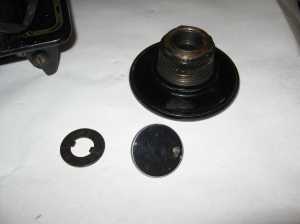
I wanted to use the stop motion knob that came on the 201 instead of the one that came with the spoked balance wheel I bought, since the knob from the 201 was much prettier. I tried using the 201-2 stop motion knob with the washer from a model 128, but they didn’t fit together right. I then tried the washer from the 201-2, and it seemed to work fine, but I later realized that metal was being scraped off the washer, so I switched to using the rusty old washer and knob that came with the handwheel.

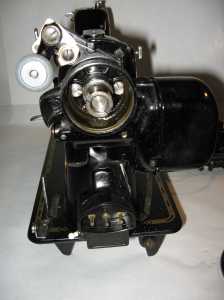
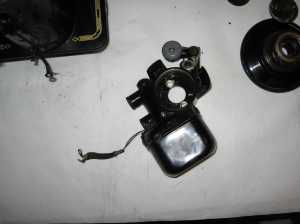
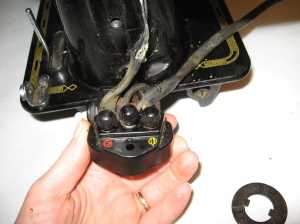
Here are a few pictures of the process. I wonder if that pin I found in the electrical connector had anything to do with the melted wiring?

I removed the light, since I didn’t trust the wiring and I don’t like the front mounted lights anyway. I wrapped a gold ribbon bandage over the holes. In case you were wondering, no, I don’t stick pins in it. I sew with a bright lamp nearby, and without the light cover in the way to cast a shadow, there is enough light on the needle area. The blue tape on the stitch length adjuster has the stitch lengths marked in millimeters. I’m trying to think of a more attractive option to mark the stitch lengths, but the blue tape works for now. The sewing machine is on a temporary cobbled together table top, which sits on a treadle base I just found on Craigslist for $25. Eventually I’ll find or make a better table top.

Singer 201-2 on treadle

A couple of things I learned while cleaning up this machine:

Don’t put gear lubricant on the gears of a Singer 201! They want oil. In a very un-me-like fashion, I started cleaning and oiling without reading the manual first, and since I saw some old grease in the lower right gear cover, I proceeded to put gear lubricant on all of the gears. I noticed a significant increase in the amount of force necessary to turn the handwheel. Then I read the manual, and it says to OIL the gears, so I had to clean off all of the goop and put sewing machine oil on the gears. The sewing machine turned much more easily after I cleaned off the lubricant and oiled the gears.

Here is a very good guide for removing and replacing the 201’s bobbin case. It is much easier to understand than the directions in the manual.

The Singer 201 is often called the best quality home sewing machine Singer ever made and sewing on it is compared to driving a luxury car. After sewing on my 201, I absolutely agree. Everything is sturdy, machined perfectly, and the gear drive makes it sew very smoothly. It does great with both thick and thin fabric, and it is an absolute joy to sew with.

Usually after buying a vintage machine, I feel the need to get a parts machine to go with it. However, the 201 is so well built and sturdy I don’t think I’ll need a parts machine. I look at it, and think “What could possibly break?” Maybe the check spring on the tension assembly might need replacing in a few decades, but I already have parts machines that have the same spring. If I happen to run across a 201-1 or 201-3 at a good price, I’m not sure I’d be able to resist buying it, though.

I had a conversation with my husband that went something like

DH:  So, now that you have the best sewing machine ever made, can you stop buying sewing machines?
ME:  Of course not.

Although, maybe I should TRY to stop. I’m running out of places to stash sewing machines.
Posted in Treadle Sewing Machines, Vintage Sewing Machines

Homegrown Linen Dishcloth

When I started this blog and picked the name, I was really excited about the little patch of flax I grew in my yard. Then we moved, I lost my nice little garden patch, life happened, and I didn’t do much with the flax. It’s been sitting in my shed for the last three years, but fortunately flax straw keeps just fine.

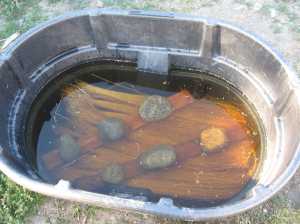
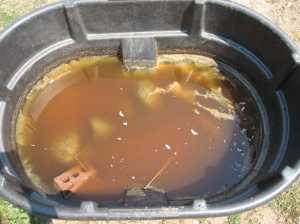
I finally got around to retting the flax this past summer. I put it in water, weighed it down, and let it sit for a few days. I didn’t exchange any of the water, so it got pretty disgusting! I was afraid I’d retted it too long, since the fibers seemed to be breaking off at the root ends, but I later figured out they were under retted overall. I think I need to suspend them with the root ends out of the water for further retting. Fortunately you can start and stop retting any number of times, so I can rett them some more later.

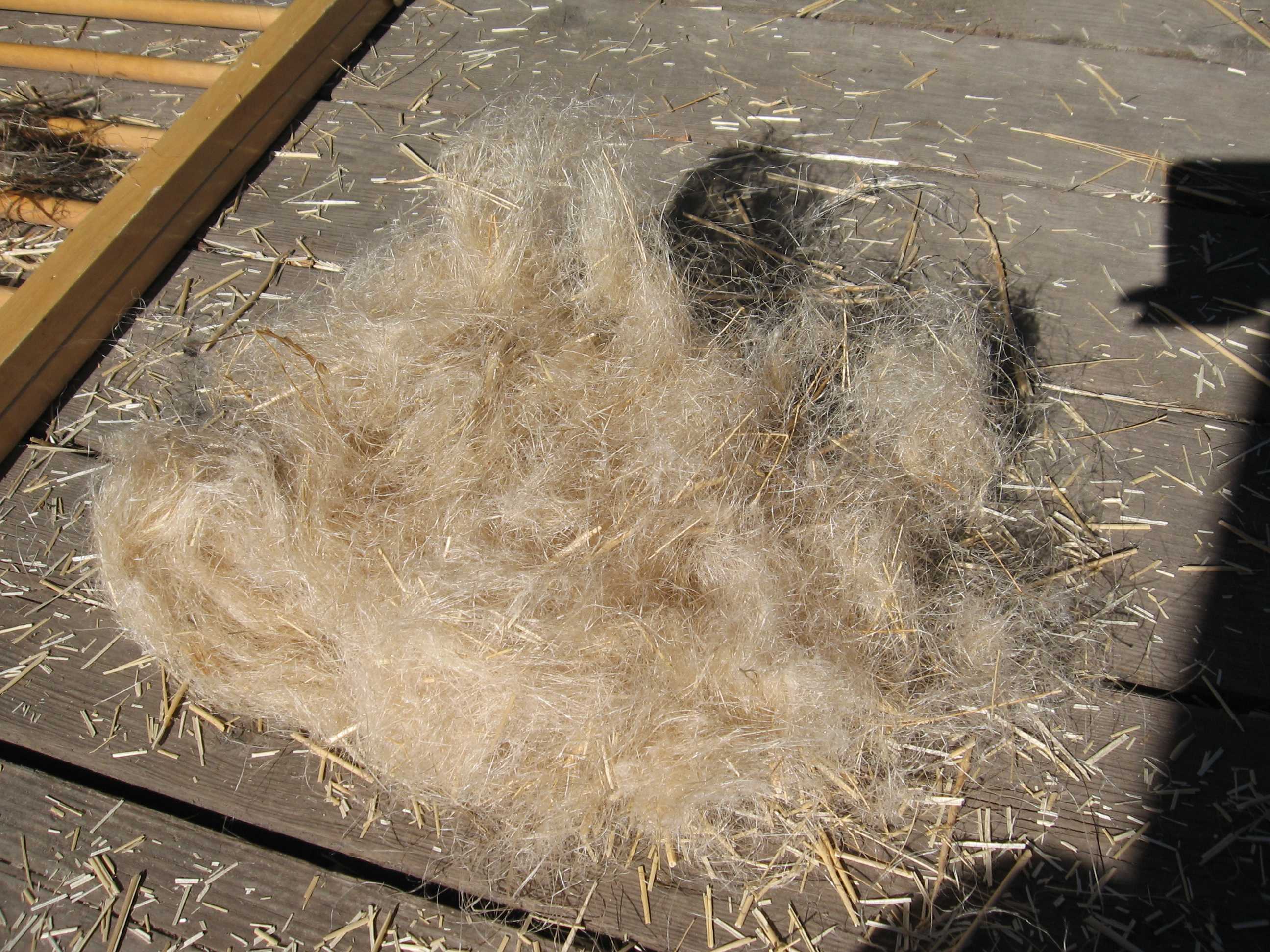
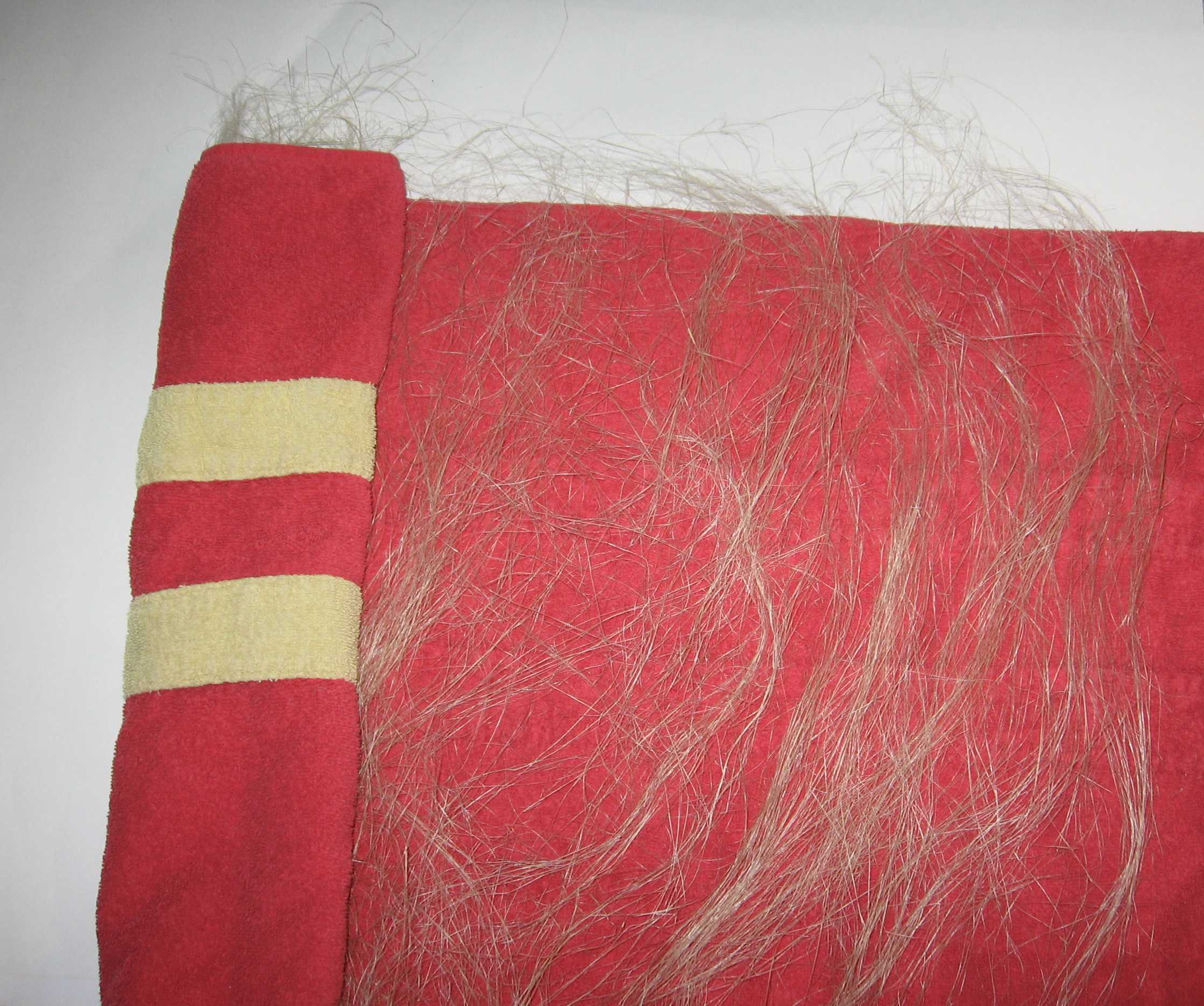
I pulled out a few of the thicker-stalked bundles, since they rett faster than the thin stalks. I don’t have any flax processing tools yet, so I improvised. I stomped on the flax to break it, tried scutching with a scrap of wood over the edge of my picnic table, and heckled with a sharp pointed metal brush cleaning comb and a dog comb.

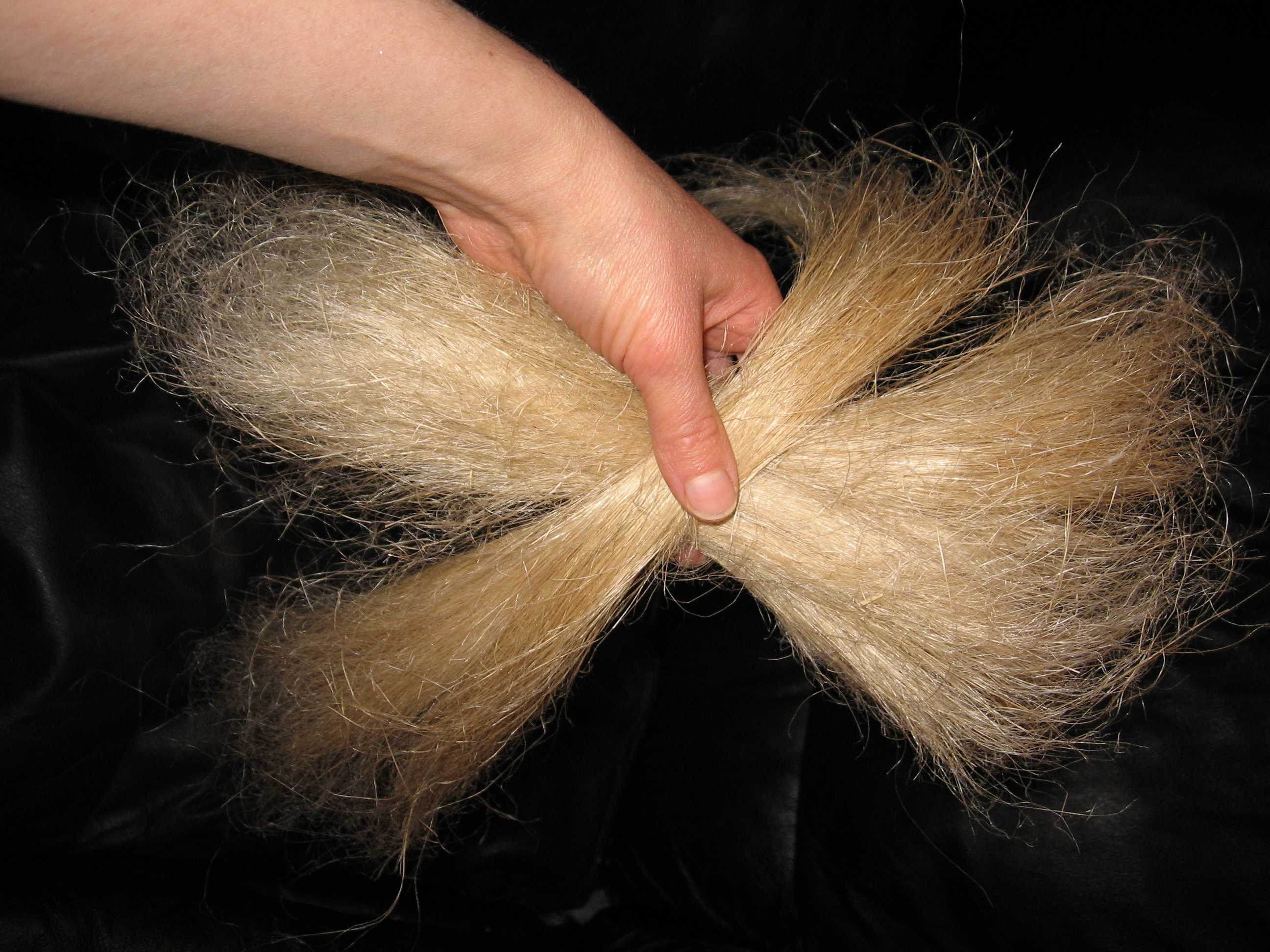
Since my flax wasn’t retted enough, I had to handle it pretty roughly to separate the fibers. I didn’t get any really long fibers, since they all broke off. I gave up after three or four bundles, but I combed through the tow to pick out the longest fibers and got a decent sized handful of tow fibers. I got a few longer fibers that were about a foot and a half long.

linen towflax ready to spin

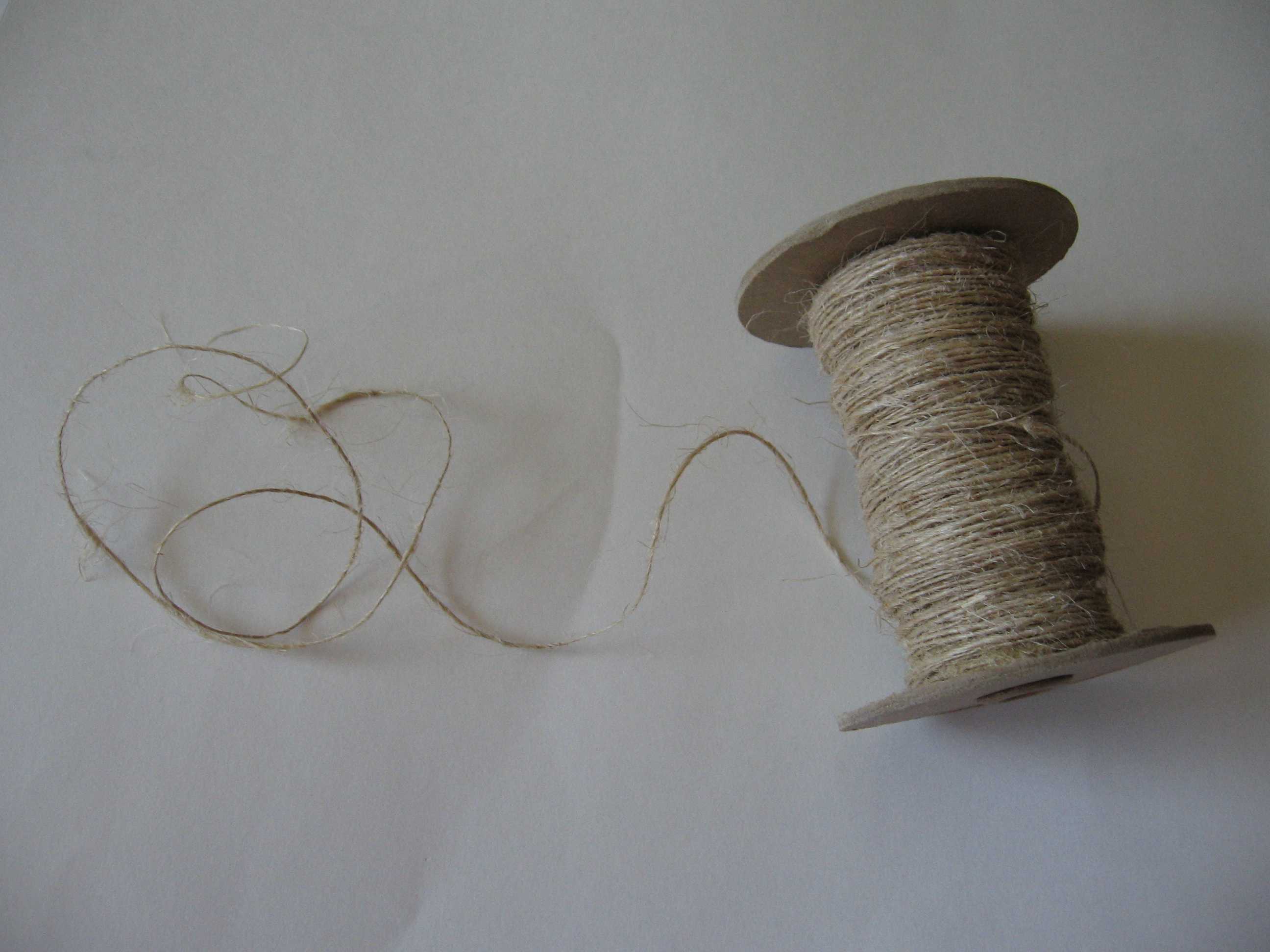
I spun the shorter fibers by just grabbing a small handful and spinning from the end. I spread out the longer fibers on a towel with the ends peeking out, rolled it up loosely, and spun the fibers from the roll. This method is described in the book Handspinning Flax.

flax in towel for spinning

I have an older version of the all-metal Columbine spinning wheel. I bought a high speed pulley for it, which was described as “experimental”, but after fiddling with it for a while, I decided it doesn’t work. I couldn’t get it to take up the yarn at all. I switched back to the regular pulley and got my flax spun into fine yarn.

spun linen yarn

After reading some recipes for scouring flax, I realized I already had the perfect detergent – Charlies Soap powdered laundry detergent. I could go on forever about how wonderful this detergent is. I discovered it when I was cloth diapering my kids, and now I will never use any other detergent as long as they keep making this stuff. It does what laundry detergent is supposed to – cleans your clothes, then washes out. What a radical idea, huh? When I feel other people’s clothes, they feel heavy and waxy from all of the detergent and dryer sheet residue. Several members of my family with sensitive skin get rashes from wearing clothes washed in other detergent, since most detergents these days are designed to leave residue in your clothes so dyes, brighteners, scent, softeners, and other toxic stuff are left on the fabric. OK, I’ll stop gushing about my laundry detergent now. Maybe.

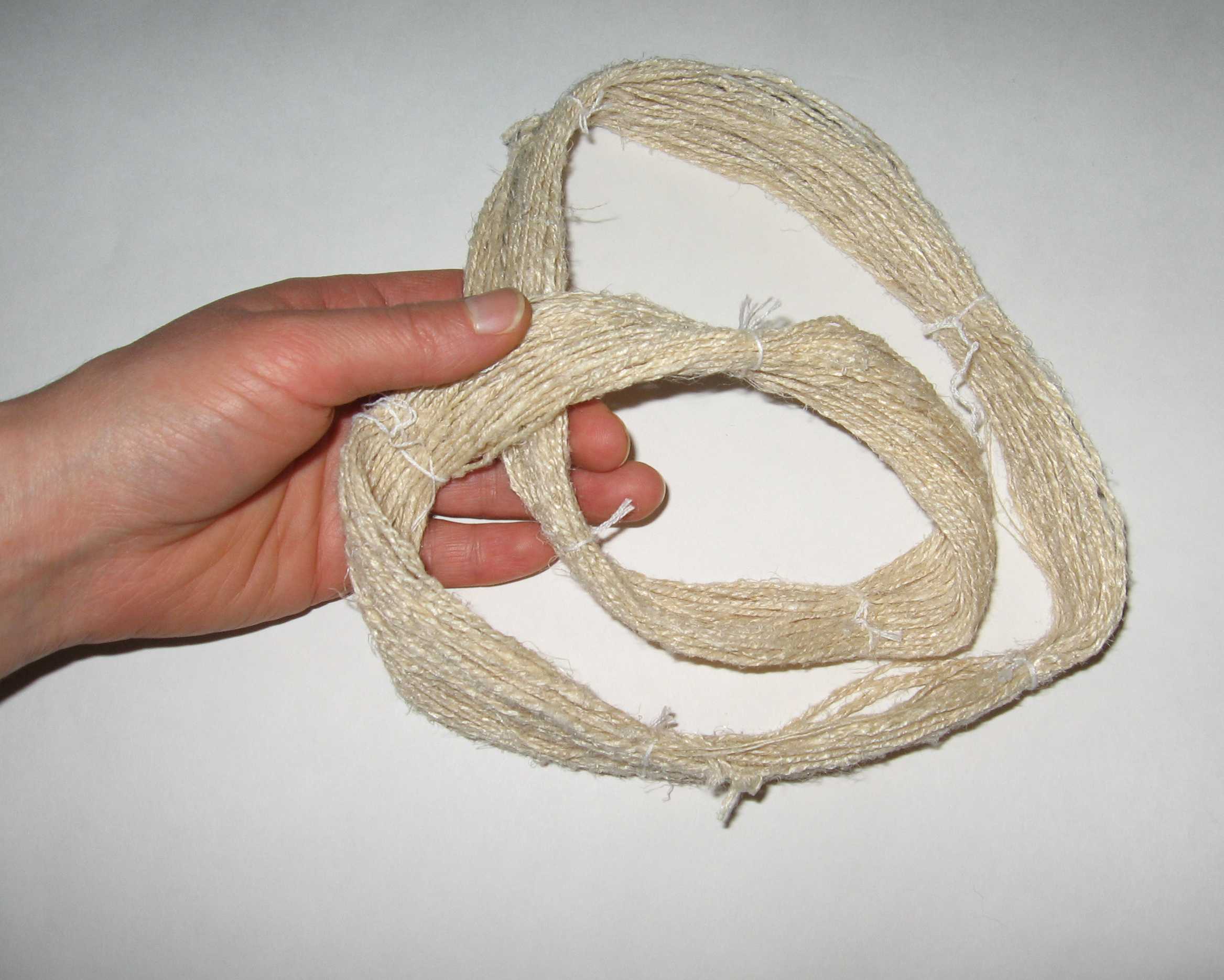
I plied my yarn, then boiled it with some Charlies Soap powdered detergent for a couple of hours. I ended up with 44 yards of yarn.

scoured double ply linen yarn

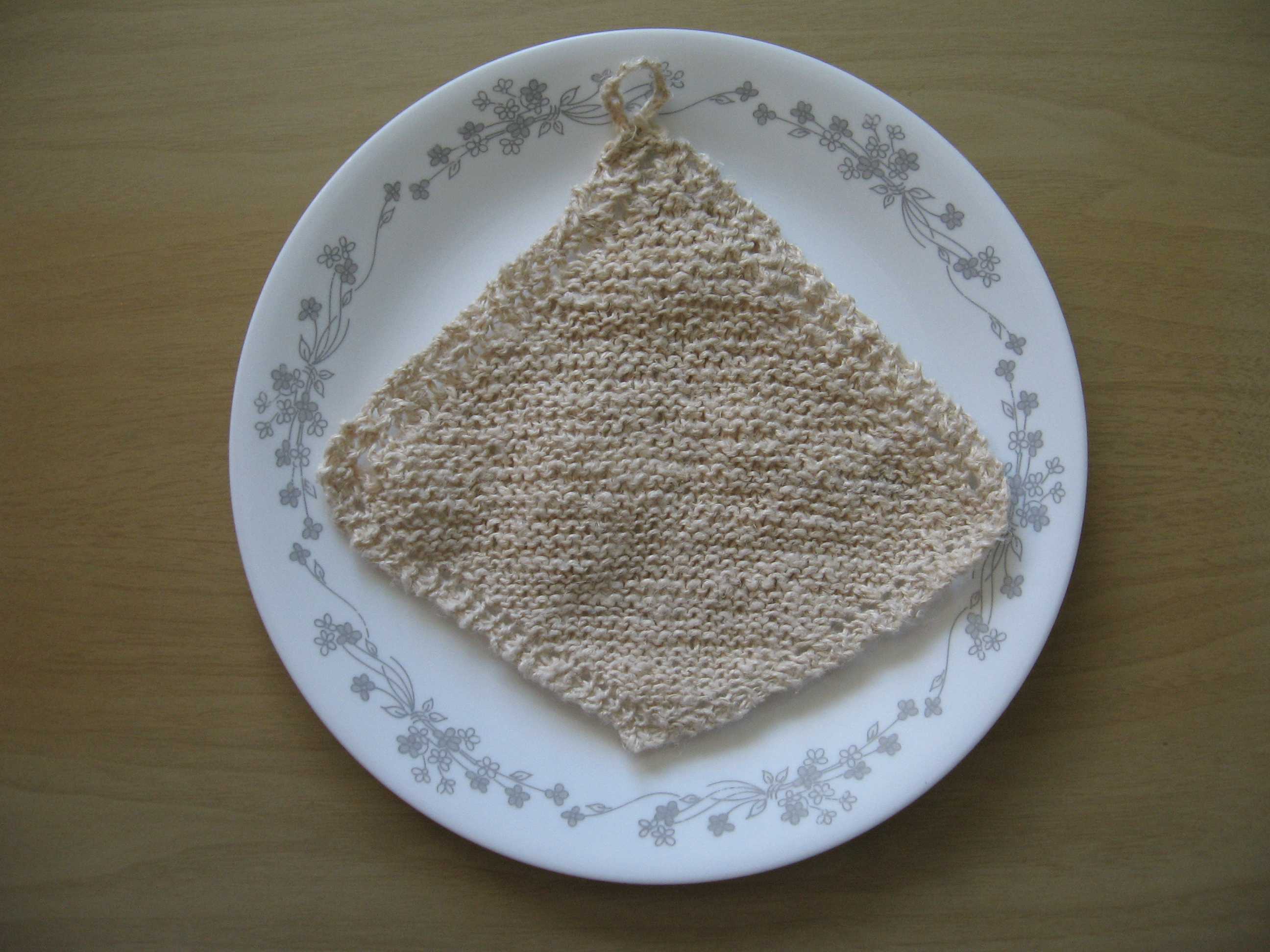
I wanted to make something small that I would actually use regularly, so I knitted the yarn into a dishcloth using this pattern. The non-stretchy linen yarn was very difficult to knit with, so next time I have some linen yarn I’ll try crocheting instead.

The dishcloth was supposed to be square, but my yarn thickness and tension varied, so it came out skewed. The shape reminds me of a stingray. It can go swimming in my kitchen sink.

knitted linen dishcloth

So, the question is, will I do a better job keeping up with washing the dishes now that I have this lovely dishcloth to use?

Posted in Growing and processing flax
Translate
Follow Grow Your Own Clothes on WordPress.com

Enter your email address to follow this blog and receive notifications of new posts by email.

Categories